
SACRAMENTO, Calif. — A mother who spent nearly three decades building a life in the United States has been reunited with her daughter following a federal judge’s order to reverse her deportation to Mexico.
Maria de Jesús Estrada Juárez, a 42-year-old Mexican national, had been protected from removal under the Deferred Action for Childhood Arrivals program, which shields individuals brought to America as minors from deportation if they maintain clean records.
Her protection ended abruptly on February 18 when she attended a scheduled immigration appointment and was taken into custody by Immigration and Customs Enforcement officials. She was removed from the country within 24 hours.
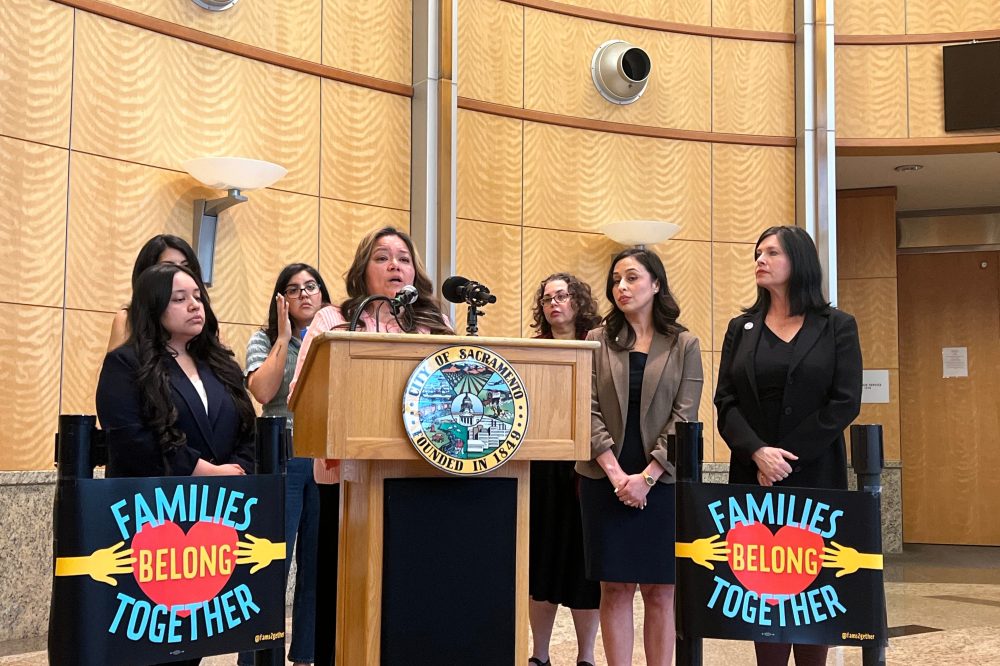
“I didn’t get to say goodbye,” Estrada Juárez told reporters during a Tuesday press conference in Sacramento. “It all happened so fast. This has been one of the most painful experiences of my life.”
Standing beside her daughter and becoming emotional while recounting her ordeal, the mother described the sudden separation that tore their family apart.
“It’s hard to describe what it feels like to lose your mother so suddenly, especially when you believed she was safe,” explained 22-year-old Damaris Bello, Estrada Juárez’s daughter. “It was like grieving someone who was still alive.”
The deportation represents part of a broader pattern under the current Trump administration, which has detained multiple DACA recipients as part of its immigration enforcement strategy.
Immigration rights advocates point to Estrada Juárez’s case as evidence that Dreamers need stronger, more permanent legal protections.
According to Talia Inlender from UCLA School of Law’s Center for Immigration Law and Policy, judicial orders mandating someone’s return after deportation are uncommon occurrences.
“But, perhaps unsurprisingly, it feels like this is happening with more frequency under the current administration which is prioritizing speed and quotas, rather than fairness and process, in facilitating removals,” Inlender stated.
Government officials justified the deportation by citing a 1998 removal order issued when Estrada Juárez was still a teenager, shortly after her arrival in America. Though she was sent to Mexico at that time, she returned weeks later and received DACA status in 2013. Authorities reactivated the decades-old order following her February arrest.
During her separation, Estrada Juárez stayed with family members in Mexico while worrying constantly about her daughter.
“You can’t enjoy life when the most important part of your life is not there,” she reflected.
U.S. District Judge Dena Coggins, a Biden appointee, issued emergency relief on March 23, requiring federal authorities to bring Estrada Juárez back within one week. The judge determined her removal constituted a “flagrant violation” of DACA protections and violated constitutional due process guarantees.
The Department of Homeland Security stands by its actions in the case.
“ICE follows all court orders,” a department representative stated. “This is yet another ruling from a Biden-appointed activist judge.”
Estrada Juárez’s legal team maintains she had no knowledge of the 1998 order, which they argue was never properly finalized.
“DACA gives you a vested right to not be deported once it’s granted,” said Stacy Tolchin, a Pasadena-based immigration lawyer. “I really don’t understand what they’re doing.”
Bello, who welcomed her mother home Monday evening, says the family is working to recover from the traumatic experience while hoping others won’t face similar ordeals.
“Having her back home means everything to me,” she shared. “It means we can begin to heal, to rebuild and to move forward together as a family.”