
DAKAR, Senegal (AP) — A catastrophic tunnel collapse at a coltan mining operation in eastern Congo has claimed the lives of at least 200 workers, according to reports from the rebel-controlled facility.
Government officials and rebel leaders are pointing fingers at each other over who bears responsibility for the tragedy, while also disagreeing about the actual number of casualties. However, experts confirm this represents one of the most devastating mining accidents in recent memory.
This disaster comes on the heels of a similar incident that occurred in January, which also resulted in more than 200 fatalities in a region already struggling with humanitarian challenges and active warfare.
The Rwandan-supported M23 rebel organization captured the town of Rubaya and gained control of its mining operations in May 2024.
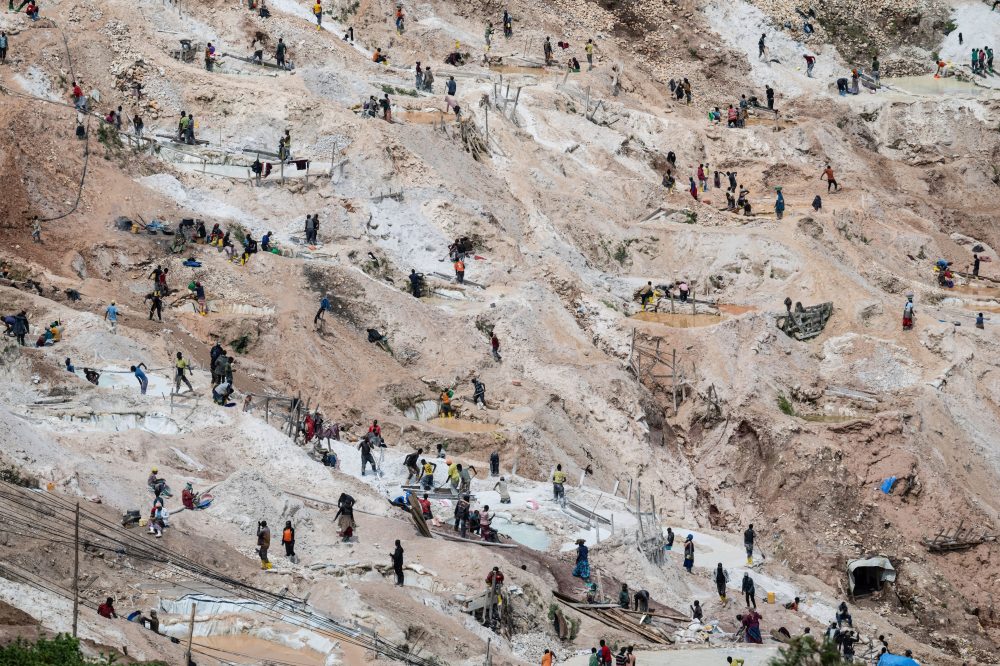
The tunnel collapse occurred on Tuesday when multiple hand-excavated shafts gave way, trapping workers inside, according to Congo’s Ministry of Mines.
Located approximately 25 miles west of Goma, the regional hub, the mining site employs thousands of workers who primarily use manual labor techniques. Workers create extensive tunnel systems, frequently running alongside each other, with minimal structural reinforcement and no emergency escape routes should disasters occur.
Information about the incident remains limited due to the site’s isolated location and pressure from both rebel forces and mine operators to suppress details following the accident.
Ibrahim Taluseke, who works as a miner at Rubaya, explained to The Associated Press that mine operators face financial obligations of $300 per victim’s family, creating motivation to downplay casualty figures.
“Imagine if you give a high number, these owners could even eliminate you. Because often they even hide the victims’ bodies to avoid compensation,” Taluseke stated.
Additional miners provided conflicting casualty counts from the disaster.
Given the challenges of reaching Rubaya, researchers hold different views about what caused these consecutive collapses.
Christian-Géraud Neema, who serves as a nonresident scholar with the Carnegie Africa Program, attributed the disaster to severe rainfall and stressed the importance of questioning official accounts.
“It’s normal for Kinshasa to exaggerate the numbers,” he explained, noting that such accidents occur regularly and cautioning against linking the recent collapses directly to rebel management of the facilities. “We should not be shocked; we should expect another collapse in three weeks’ time or in a month,” Neema added.
Guillaume de Brier, who conducts research for the International Peace Information Service (IPIS), acknowledged that while the recent disasters rank among the most lethal in years, M23’s takeover of the mining operations has contributed to the problems.
“Because of M23, there are no more civil society protections or state services,” de Brier explained. The absence of oversight during active conflict has led to increased worker numbers, as many people have become unemployed and cannot secure jobs outside the small-scale mining industry, he added.
The facilities extract coltan, which stands for columbite-tantalite, a mineral ore containing the valuable metals tantalum and niobium.
These materials are classified as essential raw materials by major powers including the United States, European Union, China, and Japan. Tantalum finds its way into smartphones, laptops, and car electronics, plus aircraft engines, missile systems, and GPS equipment. Niobium serves critical roles in pipeline construction, rocket manufacturing, and jet engine production.
A United Nations investigation revealed that since capturing Rubaya, M23 has collected taxes on monthly trading and transportation of 120 metric tonnes of coltan, earning no less than $800,000 monthly. U.N. specialists report the coltan then moves to Rwanda for export. However, researchers note that even prior to M23’s control, the mineral flowed to Rwanda, with the primary change being the elimination of Congolese middlemen from the process.