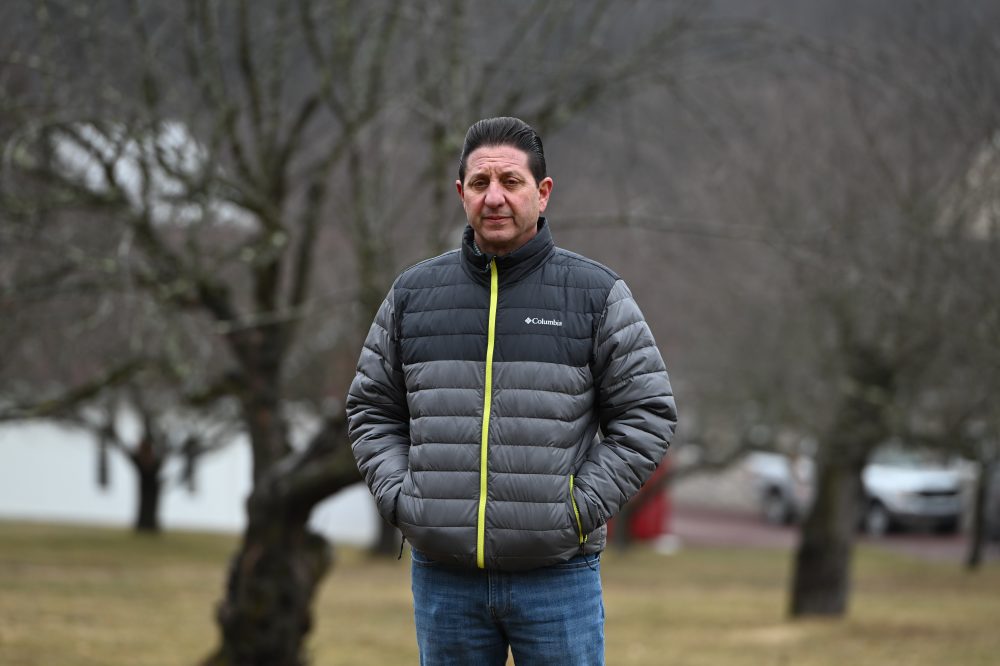

SUGARLOAF, Pa. — John Zola once considered his 40-acre Pennsylvania property a slice of heaven, complete with apple orchards nestled in rolling hills, a barn, meadows, and enough space for four family homes — one for him and his wife, and one each for their three grown children.
That dream turned into a nightmare when a utility contractor appeared at his door in late 2024, announcing plans to construct a massive 500-kilovolt transmission line directly through his land.
The towering 240-foot metal structures would dwarf his century-old apple trees by ten times their height, casting shadows over the family homes and the recreational areas where his grandchildren swim and play basketball.
Similar transmission projects are rapidly multiplying nationwide as utilities scramble to supply electricity to massive data processing facilities operated by major technology corporations, sometimes transmitting power across hundreds of miles.
While President Donald Trump views artificial intelligence advancement as essential for America’s economic competitiveness and national defense, the technology’s enormous energy requirements threaten to strain the electrical grid beyond capacity — leaving property owners like Zola trapped in the crossfire.
PPL, the regional utility company, maintains it has worked to minimize community impact while fulfilling its duty to provide reliable electricity service. However, Zola believes their only concern is profit.
“They don’t look at whose lives they are destroying, whose property they are destroying,” Zola said.
These massive transmission projects represent the newest battleground in conflicts over technology companies’ enormous infrastructure needs.
Communities have organized fierce resistance against numerous giant data centers, citing concerns about increased utility bills and permanent damage to their neighborhoods.
Transmission line opponents share similar motivations: they argue these projects violate private property rights and pose lasting threats to protected public spaces, agricultural land, home values, and pristine water sources — all to provide electricity they believe offers them no benefit.
While transmission construction has historically encountered obstacles and lengthy approval procedures, two decades of stable electricity consumption didn’t create pressing needs.
However, energy experts warn the grid remains outdated, inefficient, and with surging demand, risks causing widespread power failures during extreme weather. Utility companies maintain that any new transmission infrastructure — including lines primarily serving large customers like data centers or industrial facilities — helps everyone by increasing overall grid capacity.
Some congressional members want to exempt these projects from state or certain environmental oversight, while some technology companies are attempting to construct their own power facilities or locate adjacent to existing ones, partly to sidestep regulatory complications.
These aren’t neighborhood distribution lines mounted on wooden poles. Instead, they’re high-capacity lines supported by steel towers standing five or six times taller, designed to transport bulk electricity over vast distances.
Certain projects — including the Sugarloaf line potentially crossing Zola’s property — need corridors spanning 200 feet in width.
Major utility corporations predict their capital expenditure growth will primarily stem from transmission construction, with transmission investment expected to nearly double to approximately $50 billion annually between 2019 and 2028.
However, this expansion is generating pushback from property owners, environmental groups, municipal leaders, consumer protection advocates, and entire states.
In Texas Hill Country, the Hill Country Preservation Coalition emerged to oppose construction of the southernmost segment of three 765-kilovolt lines — representing the highest voltage level used domestically — that Texas authorities approved to cross the state in east-west “superhighway” paths.
Coalition founder Jada Jo Smith describes it as a “Goliath” that will be extremely difficult to stop. To reduce potential harm, the organization is urging state officials to select an alternative, somewhat longer route that follows existing highway rights-of-way.
“Why would you choose a route that would potentially harm our most iconic rivers that we have left in the state of Texas?” Smith said.
Pennsylvania’s consumer protection official, Darryl Lawrence, is challenging a proposed $1.7 billion transmission line extending more than 200 miles from West Virginia across half of Pennsylvania.
He questions whether less expensive options exist, whether the anticipated data center demand will actually develop, and why grid managers want to bring power into a state that typically exports electricity as a major producer.
West Virginia residents are also opposing two planned transmission lines that would connect coal-burning power plants to northern Virginia, known as “data center alley.”
In the Midwest electrical region, a $22 billion transmission proposal has sparked months of controversy, with utility commissioners from North Dakota, Montana, Arkansas, Mississippi, and Louisiana asking federal authorities to reject it.
“I think you may see more of those,” said Todd Snitchler, president and CEO of the Electric Power Supply Association, which represents independent power plant owners. “These are real dollars and consumers are paying a lot of attention.”
The Indiana-headquartered Midcontinent Independent System Operator informed federal regulators in documentation that the lines are essential to meet increasing demand from manufacturing and data centers, stating that the necessity for new power transmission “has never been greater.”
In eastern Pennsylvania, Amazon and other developers have so many data processing projects planned that PPL forecasts its peak electricity demand will more than triple by 2030.
PPL, serving over 1.5 million electricity customers, contends that the 12-mile Sugarloaf project will reduce disruptions by utilizing and expanding an existing power line corridor that previously housed a removed residential line, instead of creating an entirely new pathway.
The company has proposed paying property owners for land access rights, but landowners fear that refusal could lead PPL to pursue eminent domain legal action to force agreements.
The proposed line would pass approximately 100 feet from where Zola’s grandchildren sleep. Recently, Zola reported that holdout property owners received increased financial offers from PPL.
“My offer went from $17,000 to $85,000,” Zola said. “Just like that. And there’s no amount of money for me. And when you come here, you’ll understand why.”