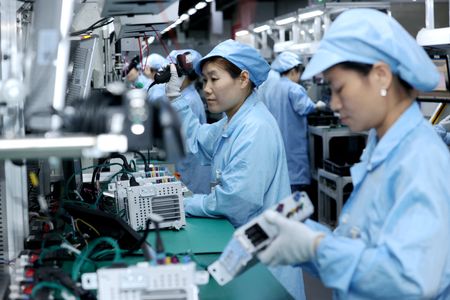

Manufacturing activity in China surged to a five-year peak during February, according to new data from a private industry survey released Wednesday in Beijing.
The RatingDog China General Manufacturing Purchasing Managers’ Index, produced by S&P Global, jumped to 52.1 last month, up from January’s reading of 50.3. This figure significantly exceeded expert predictions of 50.2 and represents the strongest performance since December 2020. Readings above 50 indicate sector expansion, while those below signal decline.
These findings stand in sharp contrast to government data published earlier the same day, which indicated manufacturing continued shrinking for a second straight month in February.
Industry experts note that varying survey methodologies and different participant groups frequently lead to conflicting results between private and official measurements.
Strong consumer appetite for Chinese-made products drove February’s growth, with new order volumes climbing for nine consecutive months at the fastest rate since December 2020. This demand boost pushed production growth to its highest point since June 2024.
International demand showed particularly notable improvement, with export orders increasing at the sharpest rate recorded since September 2020.
One furniture manufacturer from eastern China, speaking anonymously, reported order increases of 30%-40% in January compared to the previous year, with February continuing the upward trend due to enhanced supply chains and improved overseas warehouse operations.
RatingDog founder Yao Yu expects manufacturing growth to continue moderately in coming months.
“Looking ahead, the sustainability of this momentum depends on persistent demand and whether confidence translates into more active hiring and investment,” Yao stated.
Economic analysts believe China stands to gain from recent U.S. Supreme Court decisions blocking President Donald Trump’s emergency trade tariffs from last year, potentially providing competitive advantages as tariff disparities with other nations narrow.
The U.S. Trade Representative announced Monday that America will work toward more balanced and equitable bilateral trade relations with China while monitoring Beijing’s adherence to last year’s trade agreement.
Chinese factory owners expressed increased optimism about future production in February, with overall business sentiment reaching an 11-month high, according to the S&P survey.
Despite rising order backlogs in February—when many plants typically send workers home for Chinese New Year celebrations—companies remained conservative about staffing decisions. Employment grew minimally for the second consecutive month, marking the first back-to-back increases since mid-2021.
Heightened demand prompted manufacturers to increase purchasing activities, creating greater cost pressures. Input price inflation accelerated to its fastest pace since June 2022, with metal costs particularly concerning survey respondents.
Consequently, manufacturers raised their selling prices for the second month running, with price increases reaching a 15-month high.
China plans to announce major economic objectives for 2026 during annual parliamentary sessions beginning Thursday. Market observers are closely monitoring the upcoming Five-Year Plan report, which will outline the nation’s economic development strategy, technology innovation priorities, and environmental transition goals.