
A groundbreaking but controversial climate initiative will see Japan transporting its industrial carbon emissions across international borders to Malaysia for underground storage, marking the first such venture in Southeast Asia.
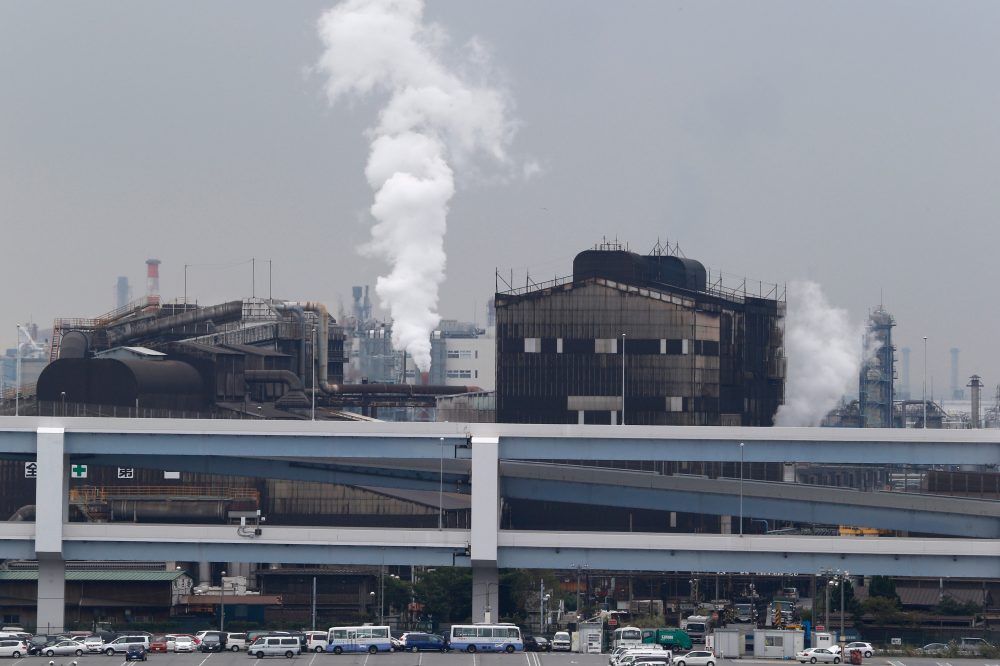
The ambitious plan involves capturing carbon dioxide from Japan’s most polluting sectors – including power generation, oil refining, cement production, shipping, and steel manufacturing – then shipping it to Malaysia for permanent burial within the coming years. Environmental critics, however, dismiss the technology as an expensive diversion from proven climate solutions.
Malaysia is working to establish itself as the region’s central hub for this disputed three-stage technology that involves capturing, moving, and storing carbon dioxide underground. Currently, fossil fuels power approximately 81% of Malaysia’s electrical grid, leading climate advocates to argue that carbon capture diverts resources from established emission-reduction strategies like renewable energy development.
As one of the globe’s largest carbon producers, Japan’s cross-border storage plan could establish a blueprint for other Southeast Asian countries with similar geological storage capabilities, including Indonesia and Thailand, according to industry experts.
However, opponents warn this approach could hinder already struggling worldwide emission reduction efforts.
“The plan dangerously shifts the burden of climate change onto Malaysia rather than onto Japan,” stated Rachel Kennerley, a carbon capture specialist with the Washington-based Center for International Environmental Law.
The technical process begins by capturing emissions at their source – facilities like refineries or power plants. Various methods exist, from retrofitting existing infrastructure to installing vacuum-style systems that extract emissions from the air.
Though Japan and Malaysia haven’t released comprehensive project details, the captured carbon dioxide will require separation from other industrial gases before being converted to liquid form and transported via specialized vessels to storage locations, most likely in exhausted natural gas fields off Malaysia’s Sarawak state coast on Borneo island.
Following injection into underground formations, these storage sites require continuous monitoring to prevent potential leaks.
Major fossil fuel corporations like Exxon Mobil and Shell, along with various governments, champion this approach as a climate strategy that provides transition time for nations and industries moving toward cleaner energy sources.
The European Union’s inaugural offshore carbon storage operation, capturing Danish emissions for injection beneath North Sea waters, is scheduled to begin by mid-2026. Norway launched a facility last year to test international carbon transportation.
Grant Hauber from the U.S.-based Institute for Energy Economics and Financial Analysis described “an almost fantastical theoretical uptick” in carbon capture interest, calling it something that “offers a tantalizing promise that just won’t deliver.”
While the International Energy Agency recognizes carbon capture, utilization and storage as a climate tool, the IEA’s most recent Net Zero Emissions projections estimate it will account for under 5% of emission reductions by 2050.
Malaysia enacted legislation last year to promote its carbon capture sector. The Ministry of Economy projects this emerging industry could contribute up to $250 billion to the national economy over three decades, though officials declined to provide specifics.
Malaysia’s government-owned energy company, Petronas, is spearheading construction of a $1.1 billion offshore carbon storage facility that will be the world’s largest when operations begin by decade’s end. Petronas representatives declined to comment.
Eqram Mustaqeem, who has campaigned against carbon capture in Malaysia, criticized the investment approach: “We’re spending high amounts of money on a technology that is under-delivering and unproven” instead of funding proven decarbonization methods like solar energy expansion or electrical grid improvements.
Fossil fuels provide the majority of Japan’s energy needs, placing the nation among the world’s five highest carbon emitters.
Japan is funding nine carbon storage locations, including three in Malaysia, as part of efforts to reduce net emissions. Officials estimate these sites will store 20 million tons of carbon annually by 2030, representing approximately 2% of Japan’s yearly emissions.
Malaysia will receive payment for each ton of stored emissions, while Japan plans to deduct those amounts from its total carbon output calculations.
Representatives from Japan’s leading project agencies – the Ministry of Economy, Trade and Industry and the Japan Organization for Metals and Energy Security (JOGMEC) – did not respond to comment requests.
Government records indicate multiple Japanese companies plan to transport emissions to Malaysia.
Ayumi Fukakusa from Friends of the Earth Japan characterized the concept of exporting emissions internationally as “carbon colonialism.”
Beyond questioning carbon capture’s effectiveness, critics oppose managing emissions rather than eliminating them entirely.
“Japan gets to keep polluting and driving climate change, while claiming to ‘clean up’ its emissions by shipping the carbon to Malaysia,” Kennerley explained. She warned this approach would transform Malaysia into “a carbon dumping ground for industrial pollution” while undermining genuine climate action.