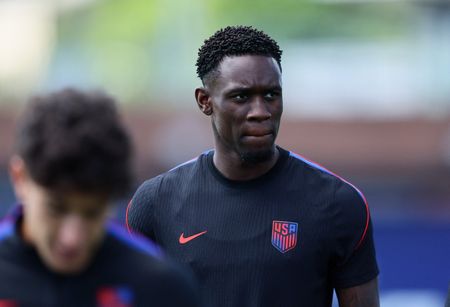

Brazilian Senator Flavio Bolsonaro traveled to Washington to ask the Trump administration at a Monday hearing to hold off on a proposed 25% tariff on Brazilian goods — at least until after Brazil’s October election — in an effort to separate himself from trade levies his political opponents have pinned on him.
Back in June, the Trump administration put forward the tariff proposal, citing alleged trade violations including illegal deforestation and what it described as unfair electronic payment practices. The announcement came shortly after Bolsonaro — son of former Brazilian President Jair Bolsonaro and a presidential hopeful himself — had met with top U.S. officials.
That timing gave Brazilian President Luiz Inacio Lula da Silva, who is widely expected to seek reelection, the opening to blame the right-wing senator for helping bring on the tariffs. Bolsonaro has rejected that accusation.
After the senator later met with U.S. President Donald Trump, the Brazilian government released a statement calling the visit troubling. “It is deplorable that, once again, members of the Bolsonaro family are traveling to the United States to advocate for foreign interference in Brazil,” the statement read.
The younger Bolsonaro’s effort to make U.S.-Brazil relations a central campaign issue fits into a broader pattern of Trump’s increasing involvement in Latin American politics, which has included the capture of former Venezuelan President Nicolas Maduro in Caracas and backing right-wing candidates such as Colombia’s Abelardo De La Espriella, who narrowly won his presidential race last month.
In a formal filing with the U.S. Trade Representative, Bolsonaro pushed back against new tariffs, writing that imposing them now “would hand the current Brazilian government precisely the political victory it has been engineering.”
Public opinion in Brazil appears divided on the matter. A survey released last month by polling firm Quaest found that 47% of Brazilians sided with Lula’s claim that Bolsonaro asked the U.S. to impose new tariffs, while 35% believed Bolsonaro’s counter-claim that he had actually asked for the opposite.
One academic observer described the senator’s Washington trip as an attempt at political damage control. “They are trying to do damage control,” said Leonardo Paz, a professor of international affairs at Ibmec and Fundacao Getulio Vargas, two academic institutions based in Rio de Janeiro.
Brazilian officials have spent months in negotiations with U.S. counterparts trying to head off the tariffs. But Bolsonaro contended that Brazil had not done enough to find common ground with Washington, and proposed that any decision on the levies be suspended for 180 days.
In his submission to the U.S. Trade Representative, Bolsonaro wrote: “Brazil holds general elections in October 2026, and the political landscape that determines the viability of any negotiated resolution will be redefined within roughly ninety days.”
The U.S. has until July 15 to decide whether to move forward with the so-called Section 301 tariffs. If imposed, the tariffs would still exempt certain products, including beef, coffee, rare earths, and aircraft parts.
This latest Washington visit is part of a continuing effort by the Bolsonaro family to cultivate support from the Trump administration. That effort has previously included negotiations to seek White House involvement in the legal case against the elder Bolsonaro, who faced trial over his attempt to reverse his 2022 election loss. Trump had imposed steep tariffs on Brazilian goods last year, characterizing that legal case as a witch hunt. The former president was ultimately convicted.
Despite the senator’s efforts, his push to prevent new tariffs appears to have gained little traction so far. In response to a letter Bolsonaro sent last month asking Washington not to pile on additional levies, Secretary of State Marco Rubio replied that U.S. officials “continue to have substantial differences in resolving the issues” that were cited as justification for the proposed tariffs.