
Brazilian aviation safety investigators released their long-awaited final report Thursday, concluding that a combination of ice accumulation, a failing de-icing system, crew decisions, and systemic problems at regional carrier Voepass all played a role in the August 2024 crash that claimed the lives of all 62 people aboard.
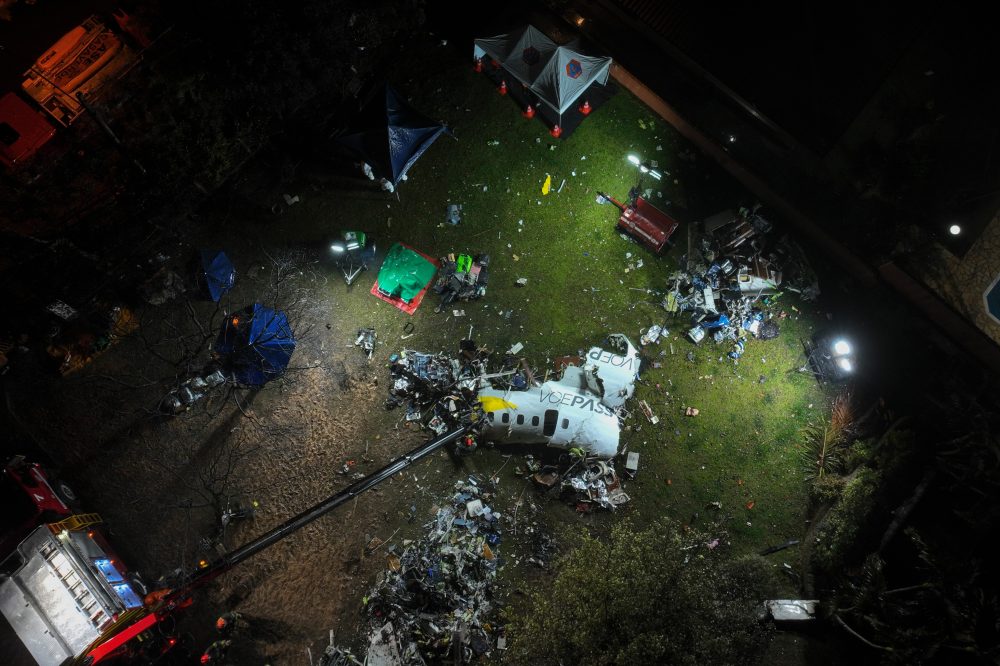
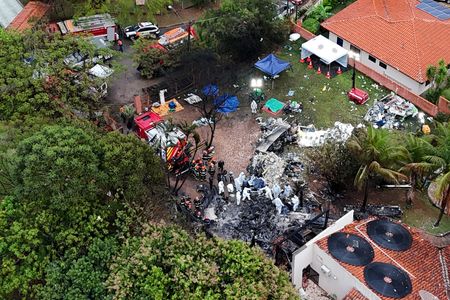
Voepass Flight 2283 went down on August 9, 2024, in Vinhedo, a town roughly 80 kilometers — about 50 miles — northwest of Sao Paulo. The disaster drew worldwide attention after video footage of the plane’s final moments, showing it spinning in a slow, leaf-like rotation rather than a traditional nosedive, spread rapidly across social media.
The ATR 72-500 aircraft had taken off from Cascavel in southern Brazil and was bound for Sao Paulo’s Guarulhos international airport when it lost control and fell to the ground.
Brazil’s Center for Investigation and Prevention of Aeronautical Accidents, known as Cenipa, determined that the plane flew into conditions ripe for severe icing, that the de-icing system failed multiple times, and that the flight crew toggled the system on and off repeatedly while icing alerts were active.
Lieutenant Colonel Paulo Mendes Froes told reporters that investigators identified a total of 19 factors that contributed to the crash, ranging from the emotional state of the crew and outside influences to dangerous weather and inadequate regulatory oversight.
A preliminary report issued in 2024 had noted signs of ice forming on the aircraft but stopped short of naming a single definitive cause — consistent with how aviation safety experts typically view crashes as the result of multiple overlapping failures.
The ATR 72 model has been involved in other incidents around the world in which ice buildup led to pilots losing control of the aircraft.
As part of its final report, Cenipa issued a formal recommendation to the European Union Aviation Safety Agency, urging it to collaborate with ATR — the plane’s manufacturer — to revisit the so-called “degraded performance” procedure, with the goal of keeping future crews from encountering similar dangerous situations. ATR is a joint venture between Airbus and Italy’s Leonardo. Neither ATR nor the European safety agency responded to requests for comment.
Voepass, the airline involved in the crash, sought bankruptcy protection in April 2025 — one month after Brazil’s aviation regulator, ANAC, suspended the carrier’s operations over safety concerns.
According to the report, the pilots failed to follow required procedures after eight separate “cruise speed low” warnings sounded during the flight. They also did not respond appropriately to a “degraded performance” alert, even though cockpit recordings revealed they had been discussing the amount of ice building up on the plane. The captain was recorded saying the de-icing system was not working properly, while the first officer admitted at one point that he had forgotten to turn the system on.
Cenipa suggested the crew may have been experiencing what are known as “inattentional blindness” and “inattentional deafness” — psychological phenomena in which an overwhelming workload causes a person to miss critical warnings or information right in front of them.
The investigation also uncovered broader cultural problems within Voepass itself. Investigators described what they called a “normalization of deviations” — a pattern in which unsafe shortcuts became routine and accepted within the company.
Cenipa found that earlier problems with the aircraft’s de-icing system had not been properly documented in maintenance records, and that some maintenance work was carried out without proper supervision.
“This stemmed from a culture of informality in which pilots and mechanics did not record aircraft-related issues in maintenance logs, with the aim of allowing the aircraft to continue operating the next day,” Froes said.
Investigators also noted that the plane should not have been cleared for departure at all, due to a fault in its windshield wiper system — though they clarified that this particular issue did not directly cause the accident.
Brazil’s aviation regulator ANAC said it will conduct a detailed technical review of the report’s findings and any recommendations that fall under its authority, a process expected to take up to 120 days.