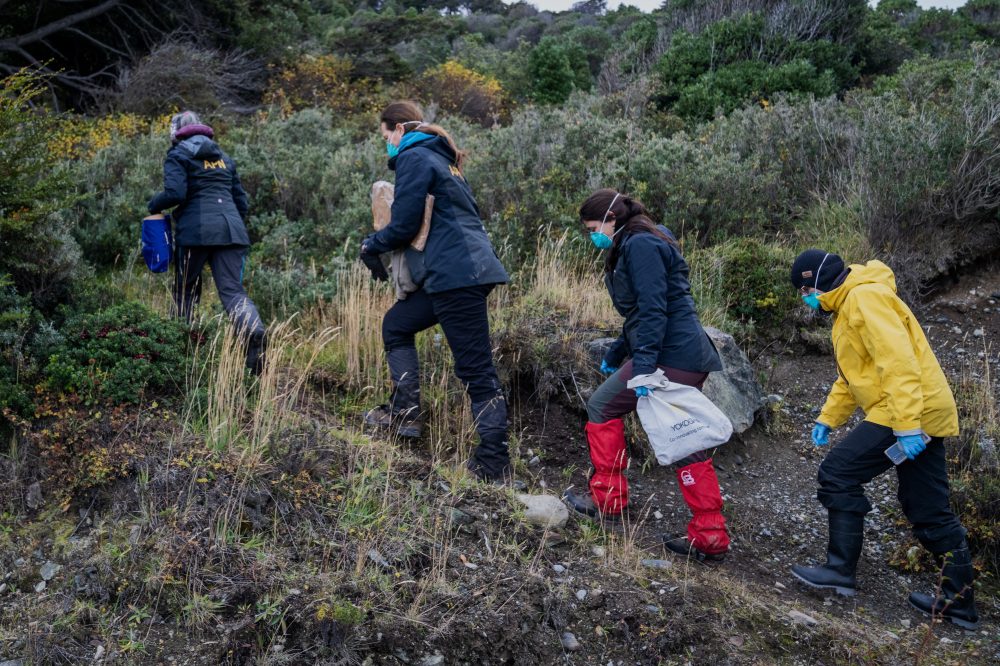

Argentine health officials announced Friday they are broadening their investigation into a deadly hantavirus outbreak that occurred on a cruise vessel last month, deploying research teams to capture and examine rodents in Mendoza province while awaiting laboratory findings from the southern city of Ushuaia.
Officials from Argentina confirmed that biologists from the U.S. Centers for Disease Control and Prevention will participate in next week’s research mission in Mendoza.
The unusual outbreak aboard the MV Hondius resulted from the Andes hantavirus, an illness transmitted by rodents native to Argentina and Chile and considered the sole hantavirus strain capable of human-to-human transmission under certain circumstances.
Tracing the transmission pathway presents significant challenges, and Argentine officials acknowledge they may never determine precisely where the initial known patients — a Dutch couple who perished in April — became infected before joining the cruise in Ushuaia. However, specialists believe understanding this outbreak will provide crucial insights into how this uncommon virus spreads and offer important guidance for future disease management.
While repatriated cruise passengers from over 20 nations have disembarked and entered specialized isolation facilities, disease investigators are analyzing the 11 confirmed hantavirus infections, including the movements of the three fatalities, to gain better insight into the transmission sequence.
Argentine researchers are attempting to trace the Dutch travelers’ journey, suspecting the shipboard virus originated from the man’s contact with rodent waste during their months-long journey through Argentina and Chile prior to the vessel’s departure. The standard incubation time before symptoms manifest is approximately three weeks but may last up to eight weeks.
Following news of the outbreak, Argentina’s Health Ministry identified Ushuaia as a potential infection source and dispatched investigators from the Malbran government research facility last month to gather rodent specimens from various forested locations surrounding the city.
Local officials in the tourism-reliant city of Ushuaia, known for its position at “the end of the world,” have strongly contested claims that the virus began there. Although the Andes hantavirus affects several dozen individuals annually in Argentina’s northern Patagonian areas, it has never been found in Ushuaia or the broader Tierra del Fuego archipelago.
The Health Ministry stated Friday that laboratory results from those examinations are still pending to establish whether the couple became infected in that location.
Ministry officials announced Friday that experts from Malbran, working alongside U.S. colleagues from the CDC, are preparing to examine rodents for hantavirus in Malargüe, Mendoza from June 8-12.
A representative from the Malbran Institute verified that the Dutch couple traveled through Malargüe while driving across the wine-producing Mendoza region toward the northeastern Misiones province during their final portion of travel in Argentina.
Malbran’s director, Claudia Perandones, conducted meetings with CDC investigators in Argentina on Friday regarding the operation, which she explained will require teams wearing extensive protective gear to collect blood specimens from deceased rodents and transport samples to the primary laboratory in Buenos Aires for analysis. Officials indicated test results may require up to one month.
The World Health Organization has emphasized that due to limited transmission risk, the hantavirus will not develop into a pandemic concern.
Nevertheless, the Andes hantavirus has generated worldwide alarm because of its fatality rate, reaching as high as 30%, and the present absence of treatments and preventive vaccines.