
WASHINGTON — A delegation of American officials recently traveled to Cuba for diplomatic meetings with government representatives, representing a fresh attempt at engagement despite escalating tensions between the two nations.
According to a State Department source who requested anonymity due to the sensitive nature of the discussions, a high-ranking U.S. official met with Raúl Guillermo Rodríguez Castro, the grandson of former Cuban leader Raúl Castro, during the visit last week. The elder Castro continues to wield significant influence within Cuba’s government structure despite no longer holding an official position.
The anonymous official declined to identify which American representatives participated in the meeting with Rodríguez Castro. However, a separate government source confirmed that Secretary of State Marco Rubio was not among the delegation members who visited Havana. Rubio, whose parents emigrated from Cuba and who has long opposed the Cuban government, previously met with the younger Castro in St. Kitts and Nevis during February.
During these significant diplomatic exchanges, first reported by Axios, American representatives pressed Cuban officials to implement substantial reforms to their economic system and governance structure, warning that the United States would not tolerate Cuba becoming a regional security risk, the State Department source revealed.
This mission represented the first time a U.S. government aircraft had touched down in Cuba outside of Guantanamo Bay Naval Base since 2016.
Cuba faces mounting challenges following an American energy embargo, while the Trump administration has characterized the Cuban government as both ineffective and oppressive. American conditions for sanctions relief have encompassed ending political persecution, freeing political detainees, and opening up the nation’s struggling economy.
Beyond these familiar issues, the delegations also explored an American offer to establish free and dependable internet access across the island using Starlink satellite technology, according to the State Department source.
These discussions came to light following Trump’s earlier statements this week suggesting his administration might turn its attention to Cuba once the conflict with Iran concludes.
“We may stop by Cuba after we finish with this,” Trump stated. He characterized the island as a “failing nation” and claimed it has “been a terribly run country for a long time.”
Cuban President Miguel Díaz-Canel responded by asserting that the United States lacks justification for military action against Cuba or attempts to remove him from power, while emphasizing his nation’s readiness to resist if necessary.
“The moment is extremely challenging and calls upon us once again, as on April 16, 1961, to be ready to confront serious threats, including military aggression. We do not want it, but it is our duty to prepare to avoid it and, if it becomes inevitable, to defeat it,” Díaz-Canel declared.
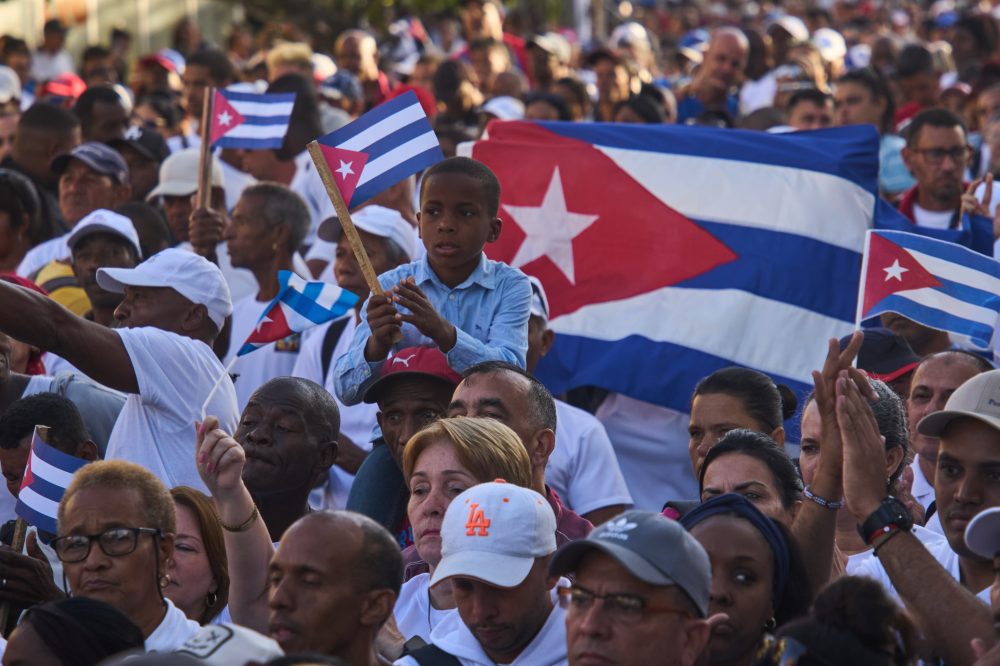
The Cuban leader made these remarks during a gathering of hundreds of supporters commemorating the 65th anniversary of when the Cuban Revolution declared its socialist principles.
Cuba’s Foreign Ministry has not yet responded to requests for comment regarding last week’s diplomatic discussions.