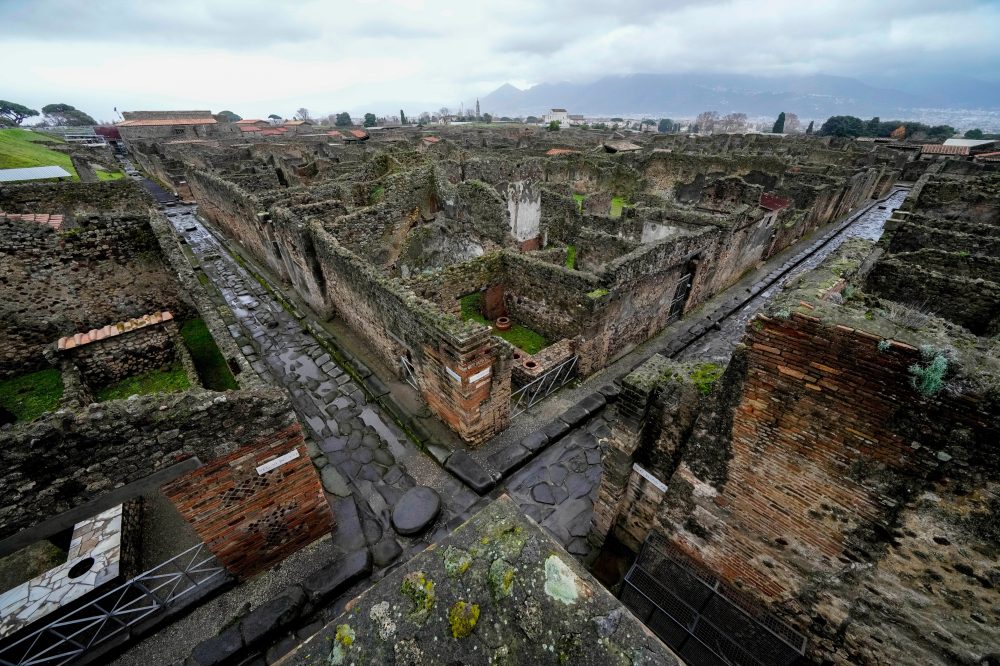

Scientists working at the famous ruins of Pompeii have achieved a groundbreaking first by using artificial intelligence technology to recreate the facial features of someone who perished when Mount Vesuvius erupted in 79 AD, burying the Roman city under volcanic ash.
The computer-generated image shows an elderly male who was among a pair of victims found trying to escape toward the coastline during the catastrophic eruption. Scientists believe this individual died during the early stages of the disaster when heavy volcanic debris was falling from the sky.
This innovative reconstruction emerged from a partnership between Pompeii Archaeological Park and the University of Padua, utilizing data gathered from excavation work conducted near the Porta Stabia cemetery area outside the ancient city’s boundaries.
The historic site near Naples, recognized as a UNESCO World Heritage location, became frozen in time when volcanic ash and pumice stone covered it almost two millennia ago, creating an extraordinary preservation of the city and thousands of residents.
When researchers discovered this victim, he was clutching a ceramic bowl above his head, which they believe was his desperate attempt to protect himself from the small volcanic rocks called lapilli that were raining down during the eruption.
Historical records from Roman author Pliny the Younger and others document how people tried using various items as shields while ash and debris covered their city.
Along with the makeshift helmet, the man was found with an oil lamp, a small iron ring, and 10 bronze coins – personal belongings that provide a glimpse into his final hours and everyday life in Pompeii before disaster struck.
The computerized facial reconstruction combined artificial intelligence with photo-editing technology to transform skeletal remains and archaeological evidence into a lifelike human appearance.
“The vastness of archaeological data is now such that only with the help of artificial intelligence will we be able to adequately protect and enhance them. If used well, AI can contribute to a renewal of classical studies,” Pompeii park director Gabriel Zuchtriegel said in a statement.
According to researchers, this project seeks to make archaeological discoveries more relatable and emotionally meaningful to the general public while keeping scientific accuracy at its core.