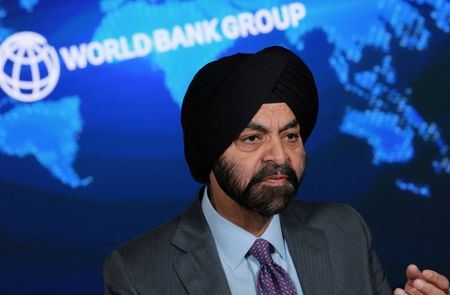

WASHINGTON – While ongoing Middle East conflicts capture headlines at this week’s global finance meetings in Washington, World Bank President Ajay Banga is raising concerns about a much larger challenge ahead: a massive shortage of employment opportunities for young people worldwide.
Banga warns that developing nations will face a staggering 800 million job shortfall over the coming decade and a half. With 1.2 billion individuals expected to enter the workforce in these countries during the next 10 to 15 years, current economic projections suggest only 400 million positions will be created.
The former Mastercard executive acknowledges the difficulty of maintaining focus on long-range planning while dealing with immediate global disruptions. Since the COVID-19 pandemic, a series of economic shocks have challenged world leaders, with the latest being the ongoing Middle East conflict.
Despite these pressing short-term issues, Banga remains committed to keeping global finance leaders concentrated on fundamental long-range problems including employment generation, electrical grid expansion, and clean water accessibility.
“We have to walk and chew gum at the same time. Short-velocity cycle is what we’re going through. Longer velocity is this jobs circumstance or water,” Banga explained during a Friday interview.
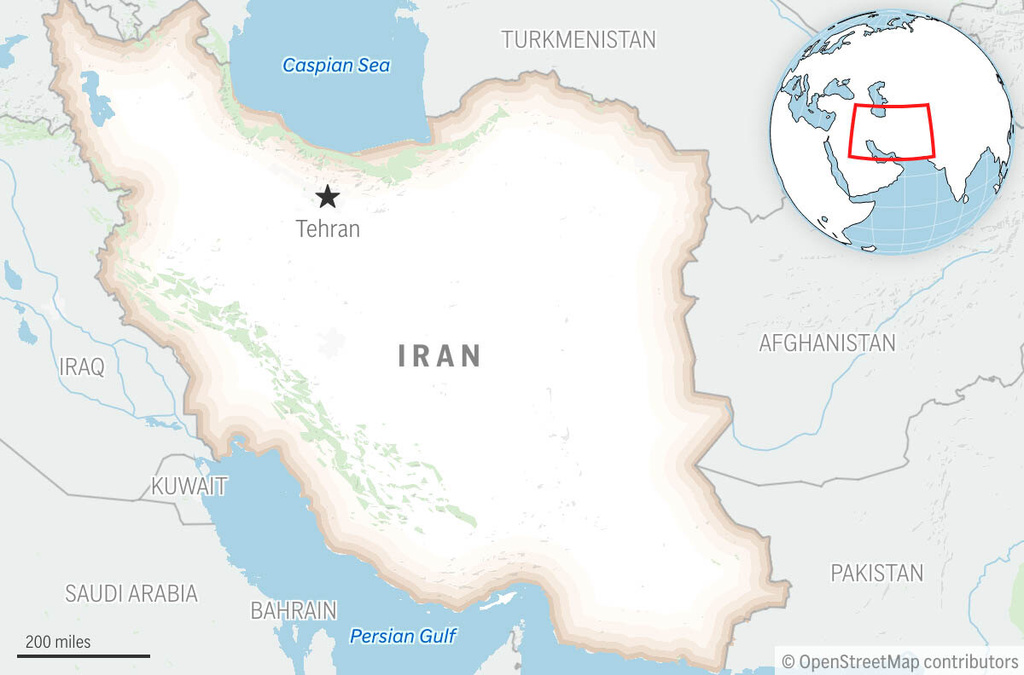
Thousands of international finance representatives are convening in Washington this week for the World Bank and International Monetary Fund’s spring conferences. The meetings occur amid tensions from the U.S.-Israel conflict with Iran, which threatens to dampen global economic growth and increase inflation rates.
Economic impacts will largely depend on how long the two-week ceasefire announced by President Donald Trump last week holds. Trump had threatened devastating strikes against Iran just hours before the truce was declared.
While the ceasefire has reduced most attacks, Iran continues its effective closure of the Strait of Hormuz, creating unprecedented disruptions to worldwide energy supplies. Additionally, fighting between Israel and Iran-supported Hezbollah forces in Lebanon continues.
The World Bank’s Development Committee has outlined strategies to collaborate with developing nations on improving policy and regulatory frameworks that have historically hindered investment and job creation.
Planned discussions will address permit transparency, anti-corruption measures, labor regulations, land ownership laws, business startup obstacles, logistics improvements, enhanced trade systems, and removing non-price trade barriers, according to Banga.
The World Bank leader expresses optimism about finding solutions that provide both employment and dignity for young workers while creating opportunities for private enterprises serving their needs.
“I don’t know that you can ever get to a situation of utopia and everybody is taken care of in the coming 15 years. I would doubt that’s going to happen, but if you don’t do it, the implications are quite severe in terms of illegal migration and instability,” Banga stated. United Nations statistics indicate more than 117 million people worldwide were displaced as of 2025.
Banga highlighted that companies from developing countries are beginning to expand internationally, citing examples like India’s Reliance Industries and Mahindra Group, along with Nigeria’s Dangote.
His conversations with officials from developing nations reveal strong interest in generating more and higher-quality employment opportunities for upcoming generations.
Beyond job creation, water access represents another major priority. The World Bank, working alongside other development institutions, plans to announce an initiative ensuring one billion additional people gain reliable access to clean water. This builds on existing programs connecting 300 million African households to electricity and improving healthcare services.
During last fall’s IMF and World Bank meetings, the institution emphasized human and physical infrastructure necessary for job creation. This fall’s Bangkok meetings will continue this focus while emphasizing private sector investment attraction, Banga noted.
The bank has identified five sectors suitable for investment that don’t rely on global trade or outsourcing from developed nations: infrastructure development, small-scale agriculture, primary healthcare, tourism, and value-added manufacturing. These areas are less vulnerable to immediate artificial intelligence disruptions, he explained.
“The problem is, we can’t do this alone. We’ve got to get this snowball to roll downhill, gathering a lot of snow as it goes along, to reach that amazing number of 800 million,” he concluded.