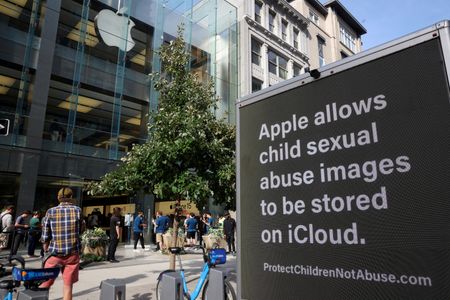

West Virginia’s attorney general has launched legal action against tech giant Apple, alleging the company’s iCloud storage service has become a major conduit for sharing child sexual abuse material.
Republican Attorney General JB McCuskey filed the groundbreaking lawsuit Thursday, marking what his office calls the first government case of its kind targeting Apple’s data storage platform for facilitating the spread of such illegal content.
The legal action centers on accusations that Apple chose to protect user privacy at the expense of child safety. McCuskey’s office referenced internal Apple communications, including a 2020 text message from the company’s former anti-fraud chief describing iCloud as “the greatest platform for distributing child porn” due to Apple’s policy decisions.
“These images are a permanent record of a child’s trauma, and that child is revictimized every time the material is shared or viewed,” McCuskey stated. “This conduct is despicable, and Apple’s inaction is inexcusable.”
The Mason County Circuit Court filing demands monetary damages and court orders compelling Apple to deploy stronger detection systems and redesign products with enhanced safety features.
Apple’s approach differs significantly from competitors like Google and Microsoft, which routinely scan uploaded content against databases of known abuse material maintained by the National Center for Missing and Exploited Children and similar organizations.
Before 2022, Apple avoided comprehensive scanning of iCloud uploads while keeping data accessible to law enforcement through warrants. The company had planned full encryption that would block police access, but scrapped those plans following FBI objections about hampering criminal investigations.
Apple announced NeuralHash technology in August 2021, designed to identify abuse material on users’ devices before upload while preserving privacy. However, security experts raised concerns about false positives, and privacy advocates worried about potential government surveillance expansion.
Following widespread criticism, Apple postponed NeuralHash deployment in September 2021 and ultimately canceled the program in December 2022. That same month, the company introduced optional end-to-end encryption for iCloud storage.
West Virginia officials criticized NeuralHash as inadequate compared to existing tools and easily circumvented. They argue Apple continues storing and syncing data without proactive abuse detection, enabling continued circulation of illegal images.
Apple did implement Communication Safety features that blur inappropriate content on children’s devices, though it abandoned broader iCloud scanning efforts.
The disparity in reporting numbers highlights the issue: Apple submitted 267 abuse reports to federal authorities in 2023, while Google reported 1.47 million cases and Meta filed 30.6 million reports.
This lawsuit parallels a proposed class action filed in California federal court by abuse victims depicted in such material. Apple has moved to dismiss that case, citing Section 230 of the Communications Decency Act, which typically shields internet companies from liability over user-generated content.
Apple has previously denied similar allegations and maintains it has not engaged in wrongdoing related to these claims.