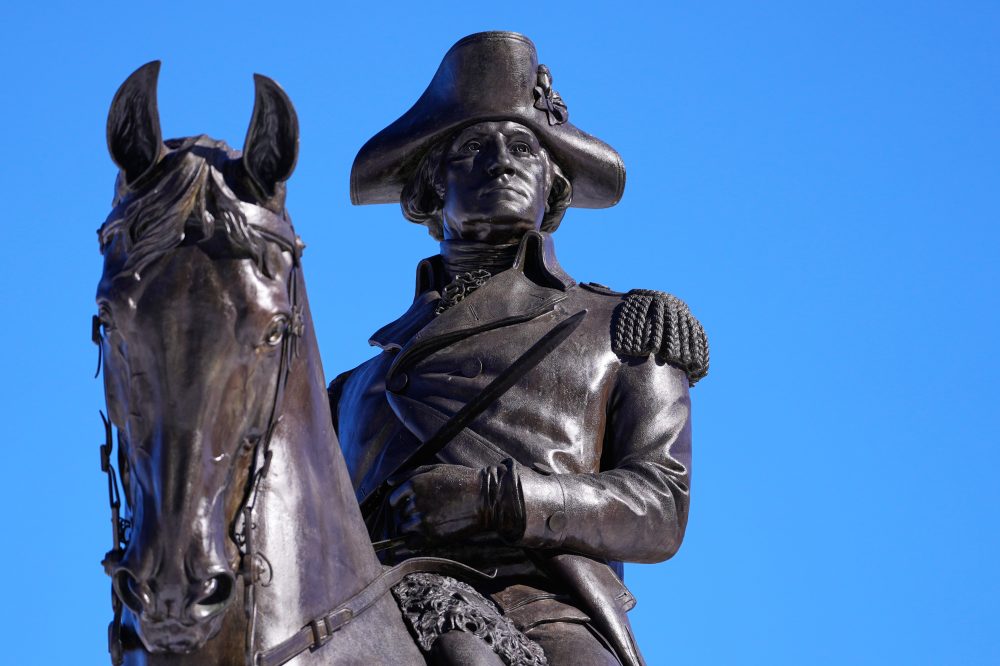

BOSTON — Long before George Washington took the oath as America’s inaugural president, he was orchestrating a pivotal military operation that would shape the course of the Revolutionary War. Two and a half centuries ago, Washington was concluding the Siege of Boston, his inaugural campaign leading the Continental Army.
After colonial militias trapped British forces in Boston following the clashes at Lexington and Concord in April 1775, the Continental Congress appointed Washington to command their newly established army. The goal was clear: drive the occupying British troops from the strategic port city.
By this date 250 years ago, Washington was wrapping up nearly a full year of military pressure that had confined roughly 11,000 British soldiers and numerous loyalist supporters within Boston’s boundaries. His masterstroke came through dispatching Henry Knox, a young bookseller turned artillery expert, on a grueling winter journey to Fort Ticonderoga in New York to haul back dozens of cannons.
These artillery pieces, dragged across hundreds of miles through harsh winter conditions, proved decisive when aimed at British strongholds. Facing severe supply shortages and constant bombardment, British commanders chose to evacuate the city by sea on March 17, 1776.
According to historians, this British withdrawal — still commemorated in Boston as Evacuation Day — eliminated loyalist influence at a crucial moment, cut off British access to a vital harbor, and delivered a tremendous psychological victory to colonial forces.
“The success of the Siege of Boston gave new life and momentum to the Revolution,” explained Chris Beagan, site manager at Cambridge’s Longfellow House, a National Historic Site that functioned as Washington’s command center during the war. “Had it failed, royal control of New England would have continued, and the Continental Army likely would have dissolved.”
This campaign represented a crucial proving ground for Washington himself. Having left military service nearly two decades earlier after fighting for Britain in the French and Indian War, the Virginia surveyor and planter faced serious questions about his leadership abilities. His Boston triumph secured his position as commander-in-chief throughout the remaining war years.
Doug Bradburn, president of George Washington’s Mount Vernon, noted that Washington began building America’s first truly national military force, drawing militia members from Massachusetts down to Virginia. By war’s end, the Continental Army included substantial numbers of Black and Native American soldiers, creating the most racially integrated fighting force until President Harry Truman desegregated the military in 1948.
Initially, Washington — himself a lifelong enslaver who relied on hundreds of enslaved people at Mount Vernon — resisted allowing formerly enslaved and free Black men to serve. However, facing manpower shortages, Washington recognized that “there are free Blacks who want to enlist and he needs them to keep the British from breaking out” during the siege, Bradburn noted.
Expelling British forces from Boston also transformed Washington into one of America’s most beloved public figures.
“He comes to embody the cause in a time before you have a nation, before you have a Declaration of Independence, before you’re really sure what is the goal of this struggle,” Bradburn observed. “He becomes the face of the revolutionary movement.”
Pulitzer Prize-winning military historian Rick Atkinson emphasized that Washington’s eight-plus years commanding troops prepared him for executive leadership. “Perhaps most important, it gave him a sense that Americans could and should be a single people, rather than denizens of thirteen different entities.”
Washington’s legendary status also spawned numerous false stories that endure today. The famous cherry tree tale — where young George supposedly confessed to chopping down his father’s tree, declaring “I cannot tell a lie … I did cut it with my hatchet” — was completely fabricated by an early biographer after Washington’s death, according to Mount Vernon historians.
Similarly, the persistent belief that Washington wore wooden dentures is entirely false. While he did use artificial teeth made from ivory, gold, and even human teeth, he never had wooden dental work, despite this myth being repeated by scholars well into the 1900s.
Beyond military and political achievements, Washington pursued diverse interests throughout his life. Mount Vernon records show he pioneered innovative farming techniques and championed westward expansion, purchasing up to 50,000 acres across several Mid-Atlantic states. After returning home, he constructed a whiskey distillery that became among the nation’s largest.
Washington’s relationship with slavery remained complex. While advocating for slavery’s eventual end and directing in his will that all enslaved people he owned be freed after Martha Washington’s death, he couldn’t legally emancipate all Mount Vernon’s enslaved population since he didn’t own them all.
For Washington enthusiasts, Presidents Day represents their biggest celebration. Originally created to honor Washington’s February 22 birthday, the holiday has evolved into a shopping event for many Americans. However, numerous locations still commemorate Washington’s legacy with special events.
This year’s tributes include a wreath ceremony at Washington’s Mount Vernon tomb, Continental Army demonstrations, a parade in Alexandria, Virginia, and even a month-long festival in Laredo, Texas, featuring carnival rides, pageants, air shows, and a jalapeño celebration.
Source: https://srnnews.com/no-george-washington-didnt-have-wooden-teeth-yes-he-led-the-siege-of-boston/