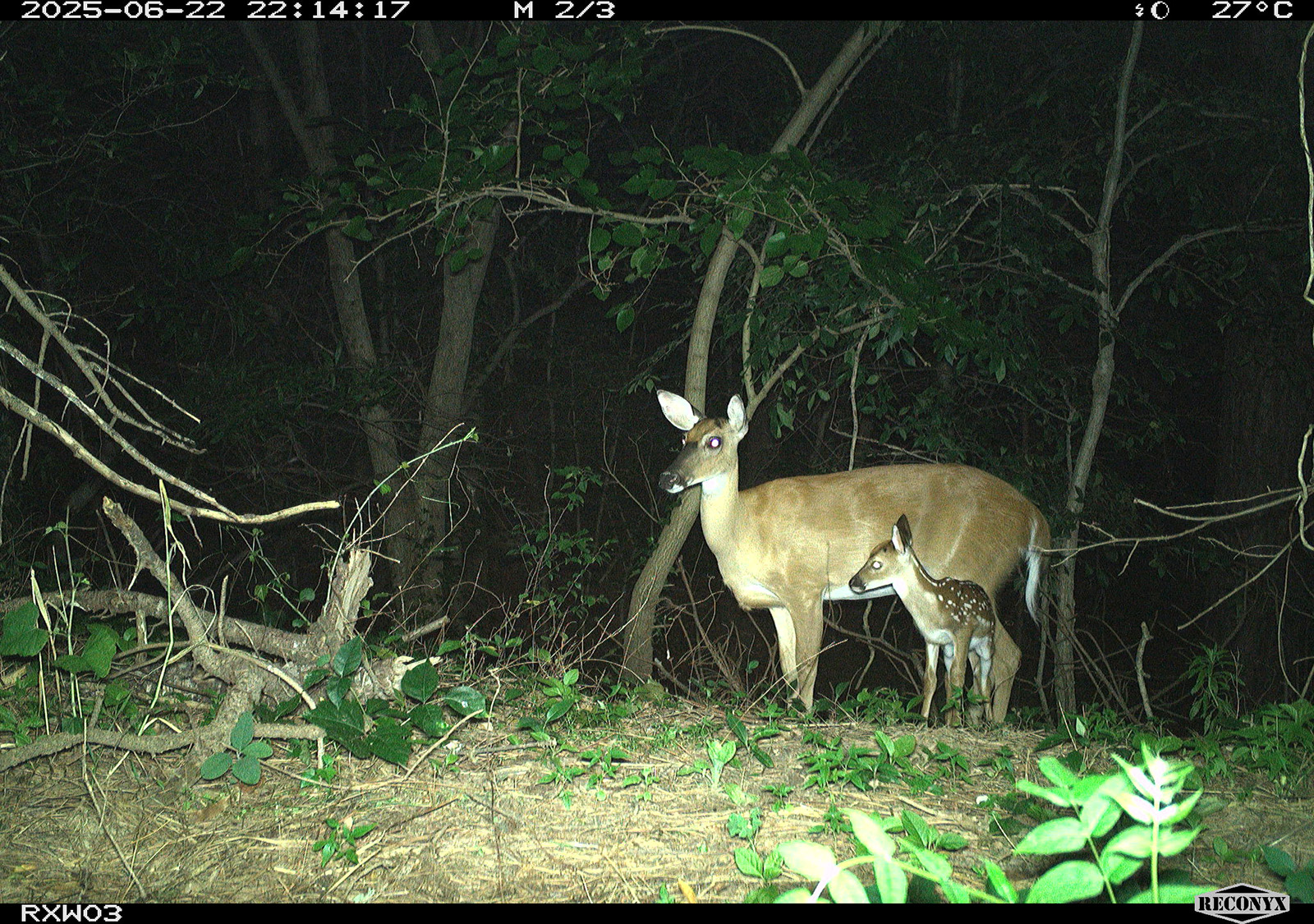

Wildlife researchers in Virginia got a firsthand look at just how many animal species call suburban areas home when they placed a monitoring camera outside their own office building. The Virginia Department of Wildlife Resources installed the trail camera near their Henrico headquarters, located in Richmond’s suburbs, and the footage revealed an amazing array of creatures sharing space with humans in unexpected places.
The automated camera system allowed scientists to monitor animal activity around the clock without disturbing the natural behavior of local wildlife. Positioned along an animal pathway in a small wooded area next to the facility’s parking lot, the device recorded every creature that passed by during a three-month period from May through July 2025. The camera installation was part of the Virginia Gray Fox Project, a collaborative research effort between the wildlife department and Virginia Tech University aimed at studying gray fox populations, which appear to be declining throughout the state based on field observations.
Though the target gray fox species didn’t appear on camera – these animals typically prefer more heavily wooded areas with less human development – the monitoring equipment captured numerous other wildlife species thriving in the suburban setting. Animals photographed included red foxes, coyotes, opossums, white-tailed deer, gray squirrels, raccoons, cottontail rabbits, and striped skunks. These creatures are commonly found throughout Virginia and have successfully adapted to living in rural, suburban, and even urban environments. Red foxes, coyotes, raccoons, skunks, and opossums are particularly adaptable because they eat a varied diet, allowing them to take advantage of different food sources and thrive in developed areas.
Spotting these and other wildlife species in residential neighborhoods has become increasingly common as human development expands into natural habitats. Residents can often discover a surprising variety of animals living nearby by simply paying attention to their surroundings. Wildlife experts emphasize that simply seeing these animals is not cause for alarm, but observers should always maintain a safe distance and give wildlife plenty of space.
Property owners can take several steps to minimize conflicts with wildlife while helping animals maintain their natural behaviors. The key is eliminating easy food sources that might attract animals to homes and yards. This includes avoiding feeding wildlife directly, securing garbage and compost bins, bringing pet food indoors, and installing proper fencing around gardens and chicken coops. Animals may also seek shelter or denning sites near human structures, which can be prevented by sealing openings under buildings and into structures – but only after confirming no animals are currently using these spaces. The best time for this type of prevention work is during late fall and winter months.
Maintaining wildlife’s natural wariness of humans is crucial for both animal and human safety. If wild animals approach people or pets, experts recommend backing away slowly, securing pets, and using noise and large gestures like yelling and arm waving to frighten the animal away. This type of hazing helps reinforce animals’ instinctive fear of humans and prevents them from becoming too comfortable in human-occupied areas.
Virginia residents experiencing wildlife conflicts can contact the state’s toll-free wildlife conflict helpline at 1-855-571-9003 or visit the department’s website for additional resources and guidance.