
LOUISA, Va. (AP) — Michael Shull never thought a Democratic representative from Washington’s affluent suburbs would speak for his rural Virginia community. For over thirty years, his region of expansive farmland and curving back roads has consistently chosen Republican candidates for Congress.
Now an extraordinary national battle over redistricting has emerged, with both major parties redrawing congressional boundaries to improve their odds in this November’s midterm contests. Virginia may join this trend as residents weigh new maps that would combine conservative farming communities with progressive suburban areas, weakening Republican electoral strength.
“Politicians should be elected to be their people’s voice,” said Shull, a Republican member of Augusta County’s board of supervisors. “Not their party’s voice.”
The constitutional amendment vote takes place April 21, with early voting already underway. Should voters approve the referendum and it withstands legal challenges, Shull’s county area would be divided between the 7th and 9th Congressional Districts. The 9th District would remain Virginia’s only Republican fortress, while the 7th District would form a lobster-like shape with its lengthy tail starting in Democratic Arlington and two arms extending south into farming regions.
Congressional boundaries typically get redrawn every ten years, but former President Donald Trump triggered a domino effect last year by pushing Texas Republicans to create new maps favoring their party in November. Following multiple redistricting initiatives, Republicans expect to gain nine additional U.S. House seats across Texas, Missouri, North Carolina and Ohio, while Democrats anticipate winning six more seats in California and Utah. Virginia could provide Democrats with four extra seats — potentially enough to flip the GOP’s narrow majority.
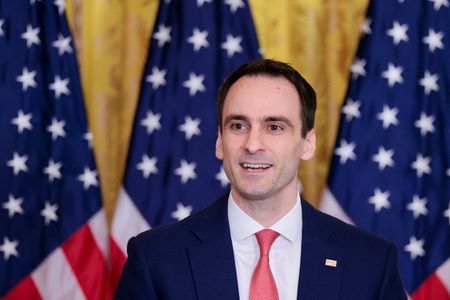
“It’s about making sure that we fight back to what Trump’s done,” said U.S. Rep. Don Beyer, D-Va. He emphasized the party must convince voters the referendum is “not about embracing gerrymandering.”
“I feel optimistic, but it’s close,” he said.
This referendum arrives as Virginia Democrats have attempted to gain traction in farming communities. Last year, Democrat Abigail Spanberger campaigned for governor in coastal oyster villages and agricultural towns to connect with more conservative voters. Prior to that successful campaign, she had served a congressional district blending city suburbs, outer suburbs and neighboring rural areas.
“Anyone who’s doing their job will be responsive to the communities that they seek to represent,” Spanberger said.
However, her outcomes varied. In counties with smaller rural populations, she exceeded Democrat Kamala Harris’ Virginia performance in the 2024 presidential election by roughly 6 to 7 percentage points. In more agricultural counties, Spanberger improved by approximately 2 to 4 percentage points.
Democrat Anthony Flaccavento, former congressional candidate and co-founder of the nonprofit Rural Urban Bridge Initiative, feels conflicted about the referendum.
“At some level, it feels like kicking the can down the road — which is something that my party has done for a long time — when it comes to winning back rural and working-class voters,” Flaccavento said.
Rural Democrats who are weary of being consistently outvoted by Republican neighbors are supporting the redistricting proposal.
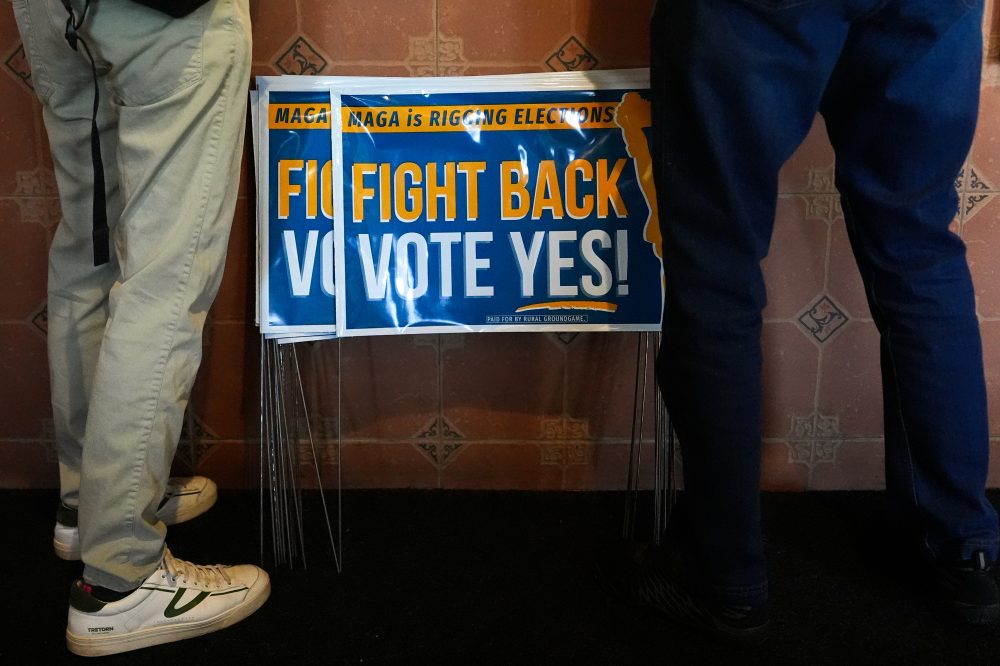
“Fight Back, Vote Yes,” read a sign at a No Kings demonstration in Louisa County. Another declared, “Vote Yes. Stop ICE. No Kings.”
State Del. Dan Helmer, who helped lead the redistricting initiative, met with demonstrators and addressed the enthusiastic crowd. Helmer is now among at least four Democrats seeking the 7th District seat.
Helmer said Republicans “think that in red areas like Louisa and in rural areas, that people don’t know what’s going on. But I’m looking around right now, I see strong, proud patriots who know exactly what is going on, who know that we have an aspiring dictator who is trying to take away our democracy.”
Jennifer Lee, a 33-year Louisa resident, expressed enthusiasm for the proposed district boundaries. Lee argued Republicans were maintaining a hypocritical stance, falsely claiming Democrat Joe Biden’s 2020 presidential victory was fraudulent while supporting Trump’s efforts to eliminate Democratic seats through gerrymandering.
“That’s their slogan, right? ‘Stop the steal,’” Lee said. “But they started ‘the steal.’ They’re stealing the seats now in all these districts.”
During a Democratic town hall at a rural Goochland County recreation facility, attendees enjoyed light refreshments and shared bottled water while discussing whether redistricting crossed ethical boundaries.
“I’m sorry, morality just goes out the door right now. We have to do what it takes for us to survive,” said Bruce Silverman, a local nephrologist. He planned to vote “yes.”
During the discussion, Roberta Thacker-Oliver rose to speak. She casts ballots in the rural 9th District, which would become more heavily Republican under the new configuration.
“In the redistricting, the 9th is going to become bigger and redder,” she said, adding, “I need to know what to tell my community about why they need to take one for the team.”
“What do we tell them?” she said.