
The Trump administration announced Wednesday that the United States will invest $5 billion toward using artificial intelligence to solve some of science’s most persistent problems across a wide range of fields.
According to a White House statement, the funding will be directed at efforts such as uncovering the underlying causes of chronic diseases, speeding up the development of new medications, and creating more durable construction materials, among other goals.
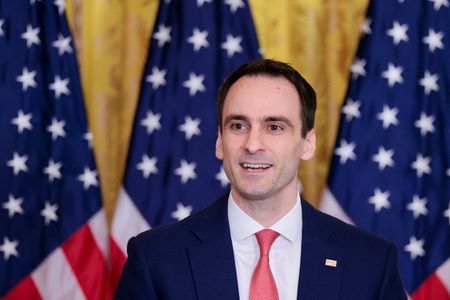
Michael Kratsios, the chief technology adviser to President Donald Trump, told Reuters that scientists participating in the initiative will gain access to the Department of Energy’s supercomputers, AI tools, and specialized data collections — everything needed to conduct experiments using advanced algorithms.
A total of 15 federal agencies are set to take part, among them the Departments of Health and Human Services, Energy, Transportation, Defense, and Interior.
“The White House is helping bring together all of the different agencies that work on different domains to make them part of this larger effort on AI for science,” Kratsios said.
Separately, a White House report authored by Kratsios and released Tuesday evening outlined plans to reshape how the federal government funds scientific research. The administration wants to shift support toward individual scientists and AI-driven work rather than channeling money through universities — a change that would give the administration greater say over how research dollars are spent.
“Federal support for science must be politically accountable,” the report stated.
Throughout his second term, President Trump has pushed to gain more influence over the distribution of federal research funding. Federal courts have resisted those efforts, with an appeals panel ruling in January that the administration cannot cut grant funding from the National Institutes of Health to universities conducting scientific and medical research.
AI systems rely on large amounts of data to recognize patterns, make predictions, and automate decision-making. The federal government holds some of the world’s largest data collections, covering areas such as chemicals, critical minerals, and patient health records.
Kratsios described the $5 billion initiative as a chance to train AI models using that government-held data and then apply those tools to answer pressing scientific questions.
Microsoft announced it will contribute $40 million worth of AI computing credits over the next three years to help support the effort.