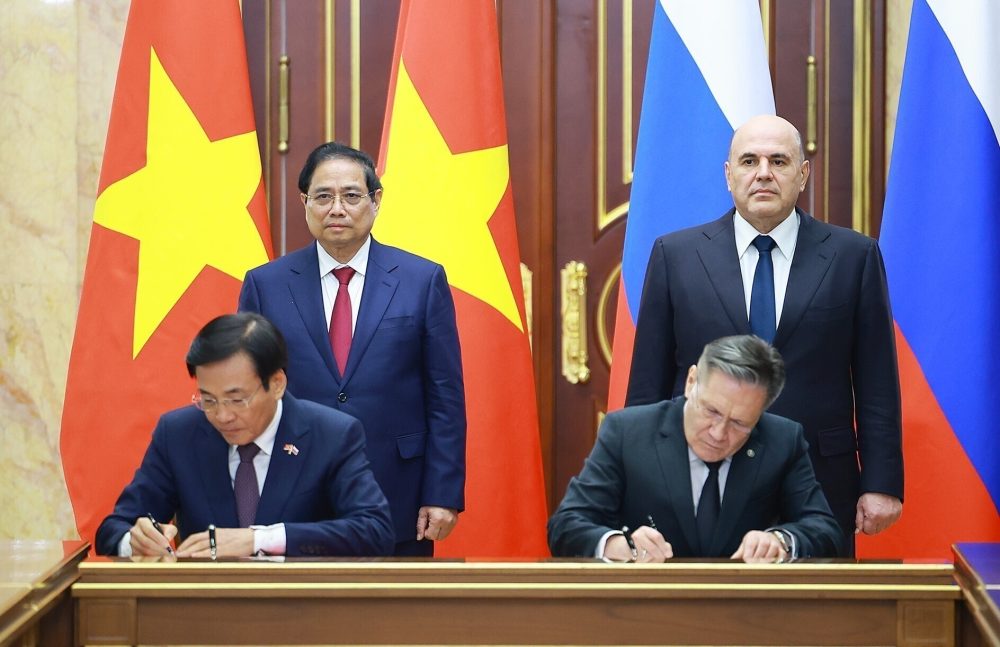

HANOI, Vietnam — Vietnamese and Russian officials have finalized an agreement to construct a nuclear power facility in Vietnam as the Southeast Asian nation resurrects its atomic energy program to strengthen power security and reduce carbon emissions.
The arrangement for the Ninh Thuan 1 facility, as reported by Vietnamese government media, marks a revival after two comparable projects were canceled in 2016 due to escalating expenses and safety considerations.
The pact was finalized Monday while Prime Minister Phạm Minh Chính conducted an official visit to Moscow, meeting with Russian Prime Minister Mikhail Mishustin. Both nations characterized the facility as a “symbolic project” representing their partnership, Vietnam’s official government publication reported.
The proposed facility aligns with Vietnam’s goals to achieve prosperity by 2050 through development as Asia’s next “tiger economy.”
The arrangement establishes plans for constructing two Russian-engineered reactors totaling 2,400 megawatts of generating capacity, modeled after an operational facility in Russia.
Energy security worries have intensified following the conflict in Iran, which sparked a worldwide energy crisis, elevating imported fossil fuel prices and increasing Hanoi’s urgency to find dependable, sustainable power alternatives.
Throughout Southeast Asia, rapidly expanding economies are embracing atomic energy for cleaner, more dependable electricity. Supporters argue it provides reduced emissions compared to coal, petroleum, and natural gas, while advanced technology has enhanced reactor safety, reduced size, and lowered construction costs.
Monday’s Moscow discussions extended beyond atomic energy to include expanding partnerships in petroleum, natural gas, technology, and infrastructure development.
Vietnam and Russia have sustained diplomatic relations since 1950, originating during the Cold War era. However, economic connections remain limited. Trade increased from $3.63 billion in 2023 to $4.77 billion in 2025, significantly below Vietnam’s commerce with China and the United States.
Russia continues as a primary weapons provider, although Hanoi is working to diversify its suppliers.