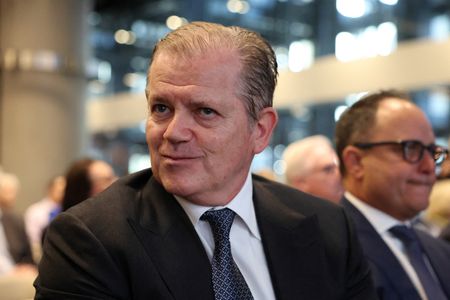

Greg Ward has spent years doing two things that demand precision above all else — growing a major bank’s mortgage portfolio and racing Porsches on a competitive circuit. Now, the Australian investment bank Macquarie Group has tapped him to lead the entire organization as its seventh chief executive in nearly six decades.
The announcement came on Thursday, and Macquarie’s share price barely moved in response — a reaction analysts interpreted as a sign that investors see stability ahead during a period of global economic and geopolitical uncertainty.
Those who know Ward from the racing world say his approach on the track mirrors what he brings to the boardroom. Dave Shylan, president of New South Wales Production Touring Cars, who is familiar with Ward’s history racing Porsche GTS cup cars, described the discipline required: “It needs exceptional attention to detail and preparation. There’s no mucking around. It’s far too expensive a category.”
Ward attended Macquarie University in Sydney — a coincidence of names — before joining Macquarie Bank shortly after it went public in 1996. Just one year later, at 29 years old, he was appointed chief financial officer. That position put him at the helm of the bank’s finances during the 2008 and 2009 financial crisis, a period that brought significant writedowns and major profit losses. The bank’s stock took nearly a decade to fully recover.
During those years, Ward also carved out time for motorsport. In 2008, he claimed first place in the GT Challenge Round driving a Porsche GT3 Cup Car, according to media reports. Arthur Magaitis, president of NSW Production Sports Racing Cars Association — which has hosted events Ward competed in — described him as “fierce, competitive” and, like many Porsche racers, “data driven.” Records from a motorsports database show he was still competing as recently as 2020, though Ward told journalists on a Thursday call that he hasn’t raced in years.
Outside of banking and racing, Ward also bought and sold a winery in the Hunter Valley north of Sydney during the 2000s. In 2020, he purchased a 40-hectare country estate to the south of Sydney for A$8.4 million (approximately $5.9 million U.S.), which includes a vineyard and cellar door.
While Macquarie was making international headlines by expanding its infrastructure funds, renewable energy investments, and commodities trading operations across Europe, North America, and Asia, Ward took a notably different direction within the company. In 2013, he became head of Macquarie’s retail banking division — one of its few Australia-only operations — at a time when the unit held less than one percent of a home loan market long dominated by four major lenders.
Ward transformed the division by leaning into a low-cost, online-only model with no physical branches. He combined competitive interest rates with fast, technology-driven loan approvals to attract customers away from traditional rivals, some of which began offering cash bonuses to fight back.
By the time he steps away from leading that unit, it holds nearly A$200 billion in mortgages and commands more than seven percent of the Australian home loan market, according to regulatory data. Analysts note that puts Macquarie within reach of the fourth-largest lender, ANZ, which holds about 13 percent of the market.
Investors responded positively to the leadership choice. Andy Forster, a portfolio manager at Argo Investments, which holds Macquarie shares, offered a straightforward assessment: “Greg knows the business well and his track record’s been good. I don’t think anything is radically going to change.”