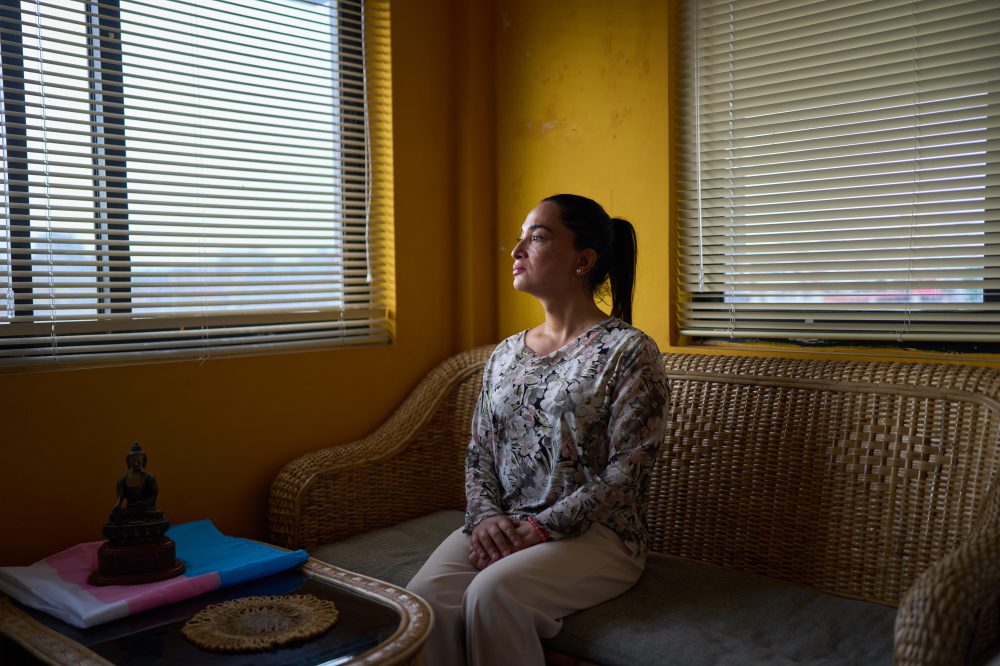

HETAUDA, Nepal — A new investigation by The Associated Press has revealed the devastating human toll that U.S. foreign aid cuts have taken on aid workers in Nepal, with many former humanitarian employees now turning to sex work simply to survive.
When President Donald Trump eliminated the United States Agency for International Development last year, more than 280,000 humanitarian jobs vanished along with it. While the impact on the millions of people those programs once served has been widely covered, far less attention has been paid to what happened to the workers themselves.
Through interviews with health officials, humanitarian workers, and 15 former aid workers in Nepal who have since entered the sex trade, the AP documented the desperation of individuals who spent years serving society’s most vulnerable populations.
When asked for comment, the U.S. State Department told the AP that the Trump administration had revitalized its assistance programs with a focus on efficiency, effectiveness, and partnership. The department also noted that the United States contributes more to health and humanitarian assistance than any other nation in the world.
“The rest of the world needs to contribute more and share the burden,” the department stated.
Trump dissolved USAID last year, calling it a waste of money, even though foreign aid accounts for just 1% of the U.S. budget. Of the 281,000 jobs eliminated, only 23,000 belonged to Americans, according to Sadie Healy, who heads a global health consulting firm and has been monitoring job losses tied to the cuts. The remaining positions were held by people overseas — many of them low-income locals living in conflict zones or economically struggling regions where other work is hard to come by. These workers served as outreach staff, data collectors, drivers, and medical workers on the front lines of programs addressing everything from HIV to childhood malnutrition.
In Nepal alone, an estimated 35,000 aid workers lost their jobs as a result of the USAID cuts, according to Arjun Bhattarai, president of the NGO Federation of Nepal. Given that the country was already grappling with high unemployment, the consequences for these workers have been especially severe.
USAID had long been central to Nepal’s HIV prevention efforts. One major program was operated by the Blue Diamond Society, Nepal’s foremost LGBTQ+ advocacy organization. The society relied on USAID for 85% of its funding and employed many staff members who were themselves gender and sexual minorities. These employees worked as counselors, health assistants, and outreach workers. They operated 20 clinics throughout Nepal, providing antiretroviral medication to people living with HIV, as well as PrEP — a drug taken by HIV-negative individuals to prevent infection. They also distributed free HIV tests, condoms, and lubricant to reduce transmission risk.
When the funding dried up, the society was forced to shut down its services. More than 1,200 clients were left without access to PrEP, and 262 of the organization’s 350 staff members lost their jobs.
Outside of non-governmental organizations, legal employment for openly transgender people in Nepal is virtually impossible to find, says executive director Manisha Dhakal. As a result, between 35% and 45% of the society’s former employees have turned to sex work, she says — now walking the same streets alongside the very people they once worked to protect.
For these former aid workers, the choice came down to sex work or starvation.
The public health consequences are significant. With U.S. funding cuts also eliminating access to PrEP in Nepal — except for pregnant and breastfeeding mothers — health experts are warning of a potential spike in HIV rates among the growing number of sex workers and LGBTQ+ community members.
Because of widespread discrimination, many transgender people are too frightened to visit hospitals to obtain antiretroviral medications, meaning a number have stopped taking them entirely — dramatically increasing their risk of transmitting the virus, Dhakal says. Condoms and lubricant are financially out of reach for many, leading some to engage in unprotected sex.
What may look like a localized crisis could quickly become a global one, warns Dr. Sarbesh Sharma, director of Nepal’s National AIDS and STD Control Centre, because diseases do not stop at national borders.
“Borders are for humans,” he said. “We have a lot of migrant workers, we have a lot of overseas students, we have an open border with India. So those make it not only a Nepal concern, it can become a global concern.”
All 15 of the former aid workers-turned-sex workers who spoke with the AP said they are fully aware of the dangers they face. One woman, who is HIV positive, told the AP she lives in constant fear of passing the disease to others, yet still goes out nearly every night because she has no other way to afford food.
Most of the workers spent months searching for other employment, only to be turned away as soon as potential employers discovered they were transgender. Many have been forced into unprotected encounters with clients, and nearly all have experienced violence, including gang rape.
They typically earn just a few dollars per client, requiring several customers each night just to cover basic expenses like food and rent — and sometimes they return home having earned nothing at all.
Bharati Thapa, who previously worked in HIV prevention as a field supervisor and peer educator before the funding cuts, described being attacked on her very first night working the streets. Two tourists picked her up and took her to a guest house, where eight additional men were waiting. She was physically assaulted and raped before managing to escape.
“My life is at risk now,” she said quietly. “I fear that I may contract HIV and sexually transmitted infections. I fear being beaten up and harassed by customers. I fear the police taking me away at night. How can I not be afraid? There is risk from all sides.”