
A parasitic infection linked to prolonged, watery diarrhea has now sickened close to 1,300 people across Michigan and neighboring Ohio, marking the largest outbreak of its kind in Michigan’s recorded history and one of the biggest in the United States in recent years.
No fatalities have been reported, and investigators have not yet pinpointed where the cyclospora parasite is coming from. Similar illness clusters are also being looked into across 28 other states.
Michigan health authorities first alerted the public about the outbreak last week, at which point more than 170 cases had been confirmed — all concentrated in the southeastern part of the state — dating back to June 22. The state typically sees only around 50 such cases in an entire year.
By Wednesday, Michigan’s case count had climbed to 992, with roughly 40 people requiring hospitalization. Just over the state border, Lucas County in Ohio had logged 306 cases as of Wednesday, with the broader northwest Ohio region reporting more than 400 total infections.
Tracking down the source of cyclospora outbreaks is notoriously difficult, but Michigan’s chief medical executive, Dr. Natasha Bagdasarian, told the Associated Press on Wednesday that “there is clearly a linked outbreak happening right now.”
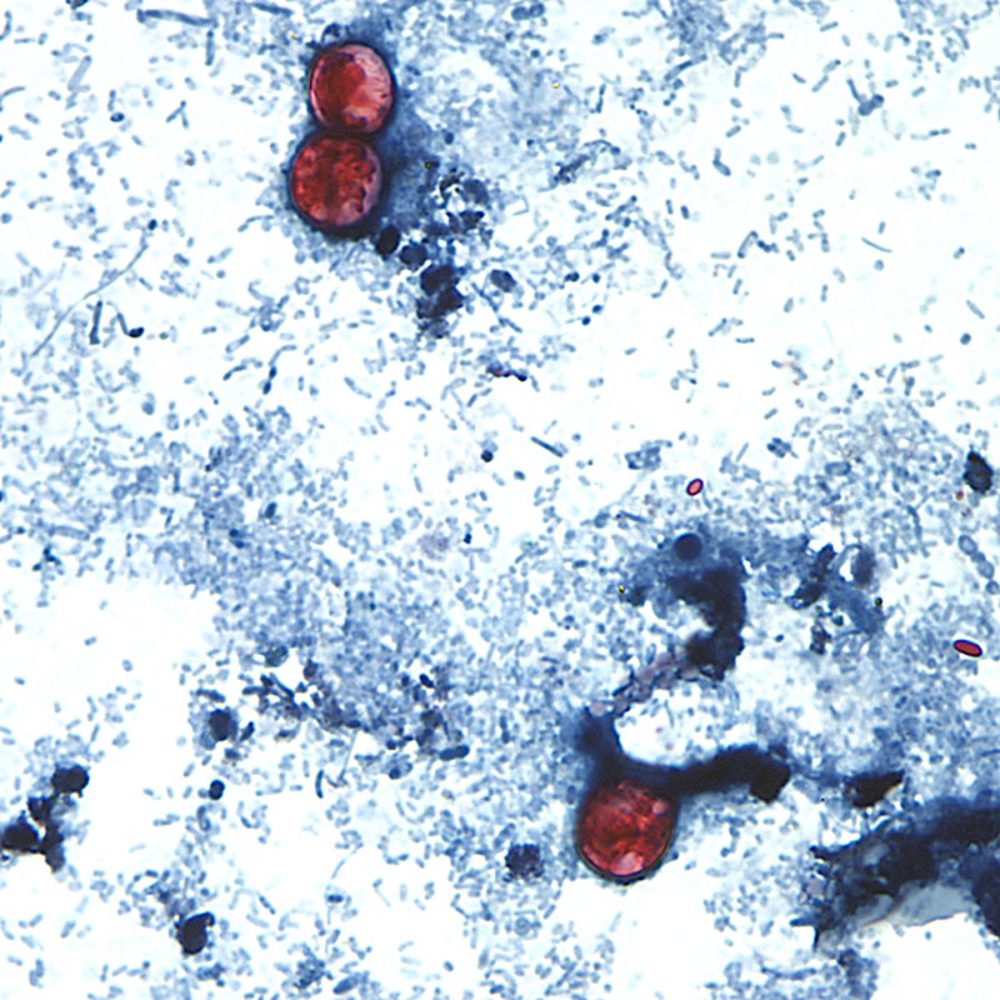
Cyclospora is a tiny, round parasite that the U.S. Centers for Disease Control and Prevention describes as causing watery diarrhea “with frequent and sometimes explosive bowel movements.” The illness it produces, known as cyclosporiasis, is rarely life-threatening and can usually be treated with antibiotics. Outbreaks are most common during late spring and summer months.
The parasite thrives in warm conditions, infects the intestines, and spreads through fecal matter. Past outbreaks have been traced to fruits and vegetables irrigated with water contaminated by feces.
Cyclospora is less common than other foodborne illnesses like salmonella or E. coli. For many years, only a handful of U.S. outbreaks were documented annually, but that number began climbing roughly a decade ago, with a notable spike in 2018 and 2019. Researchers point to climate change and improved detection methods as likely reasons for the increase.
Detailed data on cyclospora outbreaks is limited, but available records show that only a small number of documented outbreaks in the past two decades have exceeded 1,000 cases. Notable examples include a 1997 outbreak tied to raspberries from Guatemala that sickened more than 1,000 people in the U.S. and Canada, and a 2019 outbreak connected to basil from Mexico that affected more than 2,400 people.
Melanie Firestone, a foodborne illness researcher at the University of Minnesota, explained that the true scope of cyclospora cases is hard to measure because some standard food poisoning tests are not designed to detect the parasite. “So there is a lot of underreporting when it comes to this,” she said.
Additional complications arise because the parasite cannot be cultured in a laboratory setting, making it difficult to gather evidence from contaminated produce. Investigators also struggle to identify which specific food item people who fell ill had in common, especially when the culprit might be a single ingredient — such as basil or cilantro — used across many different dishes.
There is also the possibility that contaminated food is being distributed to both grocery stores and restaurants through the same supply channels, further complicating efforts to trace the source. Investigations of this type can stretch on for months and sometimes never reach a definitive conclusion.
While cases appear to be concentrated in and around southeastern Michigan, officials do not consider this a national health emergency. Dianna Blau, the CDC’s acting parasitic diseases branch chief, said there is no indication the parasite has mutated to become more contagious.
Thousands of cyclospora cases are reported in the U.S. each year, and it remains unclear how unusual this year’s numbers will ultimately be. However, current CDC national data shows the case count so far is four times higher than at the same time last year — though that federal data significantly lags behind what states are currently reporting.
Dr. Bagdasarian acknowledged that Michigan’s thorough approach to investigating and reporting cases may be “part of the reason why this looks like a Michigan problem.”
Health officials advise anyone experiencing diarrhea that does not resolve on its own within a few days to seek medical care and specifically bring up the possibility of cyclospora infection.
The most effective way to reduce the risk of infection is to avoid food or water that may have been exposed to contamination. Fresh produce should always be thoroughly washed before eating, though officials caution that the parasite can cling stubbornly to certain foods, meaning washing alone may not fully eliminate the risk.
While the source of the current outbreak is still under investigation, Michigan health officials are recommending that consumers buy whole heads of lettuce rather than pre-washed, bagged lettuce or salad mixes. They advise removing the outer two or three leaves and washing the remaining leaves under running water. Cooking vegetables when possible is also recommended.