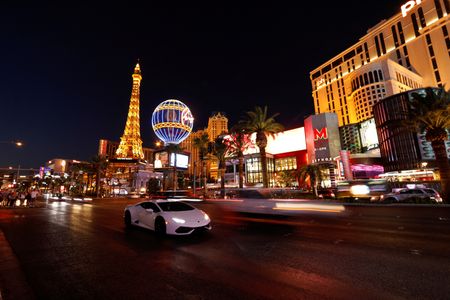

LAS VEGAS – The entertainment capital is experiencing a tourism downturn that mirrors nationwide economic concerns, as visitor numbers dropped to their lowest levels since the pandemic.
Las Vegas welcomed 3.1 million fewer tourists in 2025 compared to the previous year, marking a 7.5% decline that represents the steepest drop since record-keeping started in 1970, excluding pandemic years. The Las Vegas Convention and Visitors Authority released the concerning figures this week.
James Chrisley, who directs the Clark County Aviation Department, described the pattern at Harry Reid International Airport: “Our peaks are still peaks, and our valleys are softer.”
The decline becomes most apparent during weekdays, when Friday’s bustling crowds with rolling luggage and packed ride-share lines give way to a much quieter Monday atmosphere at the airport.
Airport passenger volumes dropped approximately 6% in 2025, with December seeing a particularly sharp 10.3% decrease despite typically strong holiday travel patterns. Major airlines including American, Southwest, and Allegiant serve the facility.
University of Nevada economist Andrew Woods believes the situation reflects consumer behavior rather than broader economic trends. “I think this is more of a microcosm of where the American consumer is than necessarily telling us where the American economy is going,” Woods explained.
Unlike other major vacation destinations such as Honolulu, Orlando, and Disneyland, Las Vegas faces unique challenges from escalating costs and additional fees that particularly impact budget-conscious travelers, according to Woods.
The tourism decline primarily affects leisure travel, while business conventions continue performing well. This distinction matters significantly since leisure visitors form the backbone of the city’s economy.
Federal Reserve surveys and airline earnings reports indicate a growing divide between high-income travelers who maintain their booking patterns and middle-income households reducing travel expenses due to financial pressures.
Tourist Fernanda Loiza from Guatemala suggested that current immigration policies under the Trump administration may discourage some international visitors who fear complications during their stays. “Some people are afraid of coming and openly and freely enjoying Las Vegas,” she observed.
Tour guide Michael Hillman pointed to pricing concerns among visitors he encounters. “Ten bucks for a bottle of water,” he noted. “People don’t see a deal anymore.”
The financial impact appears clearly in casino company earnings. MGM Resorts reported decreased revenue and profits at Las Vegas properties during the fourth quarter and full year 2025, with budget-oriented hotels like Luxor and Excalibur showing particular weakness.
Caesars Entertainment announced similar results Tuesday, with Las Vegas segment profits falling roughly 20% year-over-year on approximately 5% lower revenue for 2025.
Hotels have responded with increased promotional offers and dining credits since late 2025, while CoStar Group data shows midweek revenue per available room declined about 11% during the year.
“Las Vegas remains a predominantly leisure-driven hotel market,” said CoStar senior market analyst Michael Stathokostopoulos, noting that inflation and economic uncertainty push travelers to cancel trips, reduce stay lengths, or choose less expensive options.
Airlines have adjusted schedules accordingly, with U.S. carriers scheduling approximately 7% fewer seats into Las Vegas for the first quarter of 2026 compared to the same period last year.
International travel shows similar patterns, particularly from Canada, a crucial overseas market. Canadian airlines have reduced capacity by roughly 30% for the quarter, partly due to political tensions including tariff disputes and immigration policy concerns.
Casino workers experience the downturn most directly through reduced tips and fewer available hours. Joe Spica, a Cosmopolitan bellman and Culinary Workers Union representative, described the impact on his family of three.
“They’re not tipping as much,” Spica said. “Tips have gone ridiculously down. And then when I go to the grocery store, every single thing I buy has somehow gone up.”
Ted Pappageorge, secretary-treasurer of Culinary Workers Union Local 226, explained that economic slowdowns typically begin with disappearing extra shifts rather than major layoffs, affecting part-time and on-call employees first.
Federal statistics highlight the local economic squeeze, with Las Vegas wages remaining below national averages while local inflation and unemployment rates exceed national levels.
Job seekers like 26-year-old Shuang Woo face particular challenges, receiving multiple automated rejections and struggling to secure interviews. She recently enrolled in dealer training as an alternative.
“It’s been really tough,” Woo explained. “The entire city runs on tourism.”
Industry observers note that Las Vegas follows two consecutive record-breaking years and may be adjusting to more sustainable levels. The crucial test period approaches this spring as families make summer vacation decisions.
Drive-in traffic from Southern California, a key visitor source, will provide an early indicator of recovery prospects for the tourism-dependent economy.