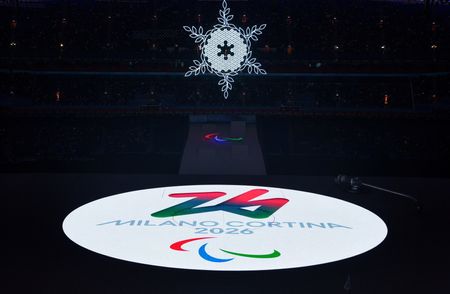

MILAN, Feb 19 – The Italian government is challenging the International Paralympic Committee’s controversial decision to permit athletes from Russia and Belarus to participate with their national symbols at the upcoming Milan Cortina Winter Paralympics next month.
Italian Foreign Minister Antonio Tajani and Sports Minister Andrea Abodi expressed strong opposition to the ruling, stating it conflicts with the Games’ fundamental values during the ongoing conflict in Ukraine.
In a Wednesday evening statement, the Italian officials declared their government “categorically disagreed” with the IPC’s September General Assembly decision. They emphasized that Italy stands with 33 other nations and the European Commission in opposing the restoration of these privileges.
Italian leadership is formally “asks the International Paralympic Committee to reconsider this decision,” arguing that “the prolonged violations of the ceasefire by Russia, and of Olympic and Paralympic ideals, supported by Belarus, are incompatible with participation except as neutral individual competitors.”
The Milan Cortina Winter Paralympic Games are scheduled to take place from March 6 through March 15 in Italy.
Following Russia’s 2022 military invasion of Ukraine, both nations faced exclusion from Paralympic events. However, they regained complete membership status within the IPC after member organizations voted in September 2025 to remove their partial suspensions.
Belarus served as a crucial launching point for the invasion operations.
Although individual sports federations within the Paralympic program had maintained their prohibitions on competitors from these nations, Russia and Belarus successfully challenged the International Ski and Snowboard Federation’s ban through the Court of Arbitration for Sport in December.
The situation differs from the current Winter Olympics, where a restricted number of Russian and Belarusian competitors are participating as independent neutral athletes without national symbols, as the International Olympic Committee continues to sanction both countries’ Olympic Committees.