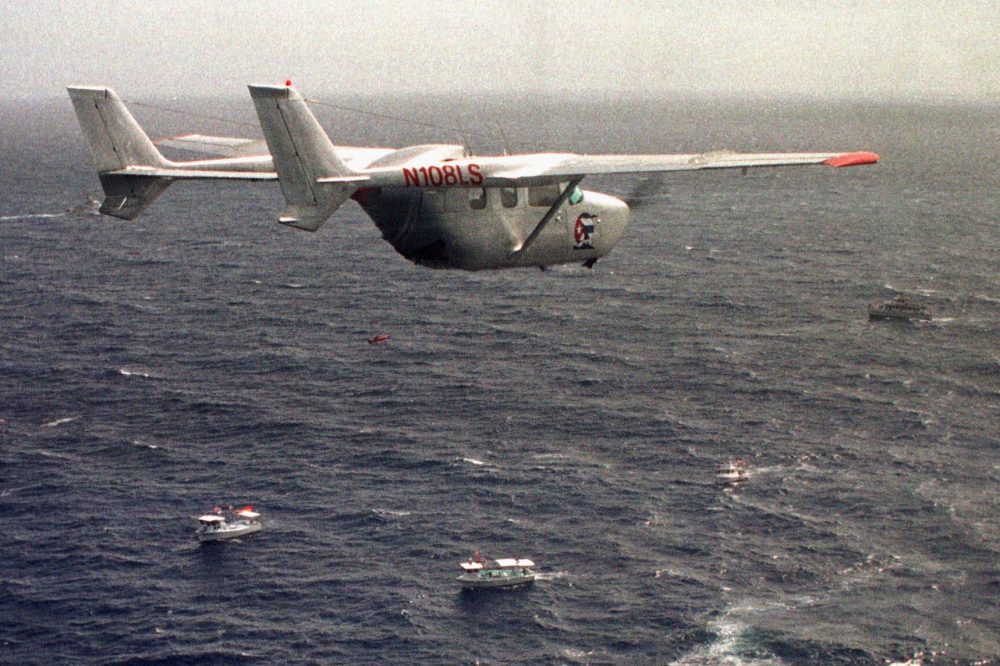

Federal prosecutors have brought charges against former Cuban President Raúl Castro and five military pilots for their involvement in shooting down civilian aircraft operated by Miami-based Cuban exiles in 1996.
The charges were announced Wednesday as part of the Trump administration’s ongoing efforts to pressure Cuba’s socialist government. Prosecutors allege Castro and the military aviators conspired to terrorize and intimidate Cuban exiles by destroying aircraft operated by the Brothers to the Rescue organization.
Castro, who is now 94 years old, served as defense minister when MiG fighter jets targeted the civilian planes.
According to prosecutors, Castro’s five alleged accomplices, all members of the Cuban Revolutionary Air and Air Defense Force, participated in training exercises around February 1996 designed to “find, track, pursue and intercept” aircraft operating near Cuban waters in preparation for Brothers to the Rescue missions.
The charging document indicates these training operations occurred under Castro’s authority and with guidance from an unindicted co-conspirator.
The five pilots named in the indictment are Lt. Col. Lorenzo Alberto Pérez-Pérez, José Fidel Gual Barzaga, Lt. Col. Luis Raúl González-Pardo Rodríguez, Emilio José Palacio Blanco and Raúl Simanca Cárdenas.
Prosecutors claim Pérez-Pérez and another pilot who was not charged destroyed two aircraft on Feb. 24, 1996, while they were flying in international airspace, resulting in the deaths of four Americans.
In a television interview with Cuban state media shortly after the incident, Pérez-Pérez described intercepting the first plane and issuing warnings based on instructions from air traffic controllers. He claimed the aircraft disregarded his warnings.
“We tried to dissuade their crew members, but they continued to dangerously approach the Cuban coast, and then we received the order to interrupt the flight of the first aircraft,” Pérez-Pérez said at the time. “Afterward, we conducted the same operation with the second plane, which also refused to change its direction.”
The indictment claims Castro approved the use of lethal force following Brothers to the Rescue flights that scattered pro-democracy materials over Cuba in January 1996. Federal prosecutors assert Castro and his older brother, Fidel Castro, who held the presidency then, made the ultimate decisions regarding orders to kill.
Pérez-Pérez had been previously charged in the U.S. in August 2003 with murder, aircraft destruction and conspiracy.
Prosecutors also allege that on the day of the fatal attacks, Gual Barzaga, Simanca Cárdenas and González-Pardo Rodríguez pursued but did not destroy a third aircraft.
González-Pardo Rodríguez, age 65, is the only defendant currently in U.S. custody. He was charged in November for allegedly providing false information on immigration paperwork.
The U.S. Department of Justice stated that he incorrectly claimed he never received weapons or military instruction, never participated in any organization that used or threatened to use weapons, and never served in military or police forces. In fact, prosecutors said, “he received such training and served in the Cuban military as part of the Air Defense Force.”
He is set to receive his sentence later this month after entering a guilty plea in February.
All five pilots and Castro are charged with one count of conspiracy to kill U.S. nationals. Castro and Pérez-Pérez also face additional charges of murder and aircraft destruction.
Limited information is available about Gual Barzaga, Palacio Blanco and Simanca Cárdenas.
The charging document alleges that Pérez-Pérez and Palacio Blanco departed from the San Antonio de los Baños airfield, located near Havana, in separate fighter aircraft. Pérez-Pérez sought permission to shoot down the civilian planes approximately 20 minutes after takeoff.
While Pérez-Pérez engaged the two aircraft, according to the indictment, Gual Barzaga and Simanca Cárdenas shared a third fighter jet, and González-Pardo Rodríguez operated a fourth aircraft on standby. Prosecutors claim the waiting pilots monitored Pérez-Pérez’s radio communications requesting authorization to attack the planes, and they later joined him in pursuing the third civilian aircraft.
The federal charging document contains an undated photograph showing González-Pardo Rodríguez and Pérez-Pérez examining a document beside a fighter jet.