
No computers, no artificial intelligence chatbots, and no technology whatsoever. Students don’t even get pens or paper for this type of assessment.
Chris Schaffer requires his biomedical engineering students at Cornell University to face instructors directly for what he terms an “oral defense.” This ancient testing approach, dating back to Socrates, is experiencing a renaissance as universities grapple with AI-assisted cheating.
“You won’t be able to AI your way through an oral exam,” Schaffer explains. He began using oral defenses during the previous semester.
Faculty members have moved beyond wondering whether students will use artificial intelligence for assignments. The pressing concern now centers on measuring genuine student learning.
University instructors nationwide observe concerning patterns as AI technology advances. Students return flawless take-home essays and written work, yet struggle to discuss their submissions when questioned. While AI’s long-term effects on critical thinking remain unclear, educators fear students increasingly view intellectual effort as unnecessary.
Emily Hammer, who teaches Middle Eastern Languages and Cultures at the University of Pennsylvania, now combines oral testing with written papers in her seminar courses.
“It comes across as if we’re trying to prevent cheating,” Hammer explains. “That’s not why we’re doing this. We’re doing this because students are actually losing skills, losing cognitive capacity and creativity.”
While Hammer prohibits AI usage on writing assignments, she acknowledges enforcement challenges. She warns students that defending material they didn’t personally write will create “a very stressful situation.”
Bruce Lenthall, executive director of Penn’s Center for Teaching and Learning, describes Hammer’s approach as part of “a massive shift toward in-person assessments” at the Ivy League institution. Penn joins a growing group of universities offering faculty training on oral examination techniques.
American undergraduate education traditionally doesn’t emphasize oral testing, unlike European institutions. England’s Oxbridge tutorial system features weekly student-faculty discussions. Some U.S. colleges adopted oral exams during COVID-19 to address online cheating concerns, with interest surging after ChatGPT’s 2022 debut.
Engineering professor Huihui Qi at the University of California, San Diego launched a three-year oral exam research project during the pandemic. Multiple universities have since requested her expertise for faculty workshops.
New York University reports increased oral assessment usage. More instructors require office hours, assign presentations, and call on students during class. Faculty members express a need to “look my students in the eye and ask, ‘Do you know this material?’” according to Clay Shirky, vice provost for AI and technology in education.
Panos Ipeirotis, a professor at NYU’s Stern School of Business, created an AI-powered oral exam for his AI product management course final. He describes this approach as “fighting fire with fire.”
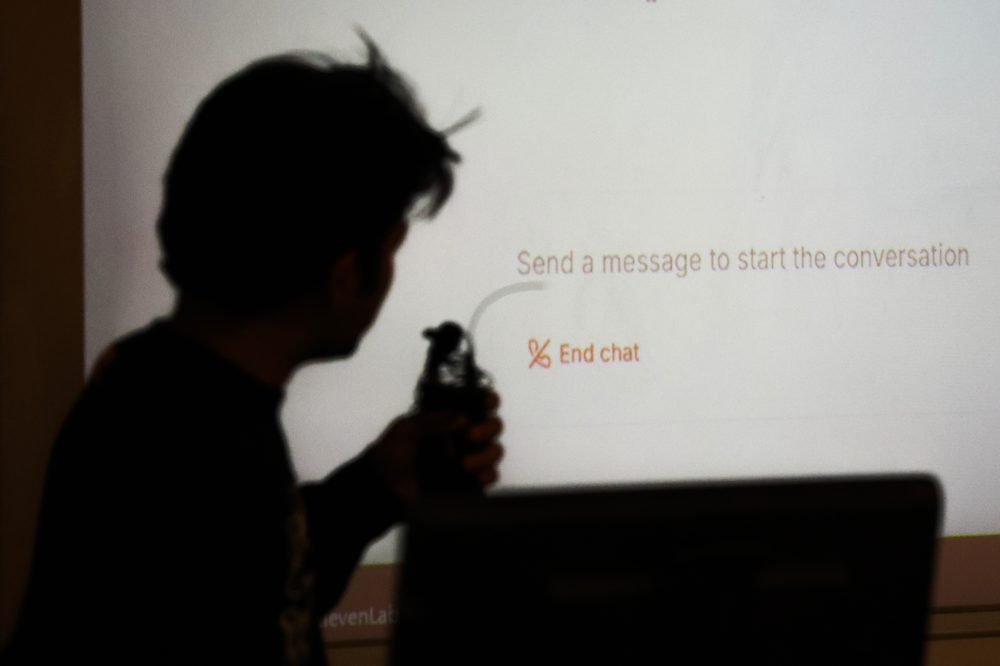
Students access the system from home at convenient times. A cloned professor’s voice greets them, saying “Hi there,” requesting identification, then announcing readiness to begin testing.
The chatbot questions students about group projects and explores details based on responses. When students struggle, the AI provides hints, criticism, and encouragement. Ipeirotis uses AI assistance for separate grading.
“We wanted to check: Do you know what your team did? Were you a free rider? Did you outsource everything to AI?” Ipeirotis explains. He developed this tool with ElevenLabs, a company creating AI voice agents for job interviews.
Current semester students are improving the AI agent, and Ipeirotis plans universal implementation in his courses.
“I want oral exams everywhere now. I want to pair it with every single written assignment,” Ipeirotis states. “I don’t trust written assignments anymore to be the result of actual thinking.”
Student reactions were mixed last semester. Business major Andrea Liu found the chatbot’s voice surprisingly realistic but noted choppy conversation flow with strange pauses. Multiple simultaneous questions created confusion, and the absence of visual human contact felt uncomfortable.
“It felt kind of awkward to be talking to what was pretty much a blank screen,” the 21-year-old Liu observes.
However, she agreed with concerned educators: “There is no perfect world where AI exists and kids are not abusing it.”
Educators across humanities and STEM fields, including computer science, worry that students avoiding necessary mental challenges won’t develop skills needed for advanced coursework and careers.
Schaffer’s Cornell biomedical engineering course requires 20-minute Socratic questioning sessions after written problem set submissions throughout the semester. With 70 students, Schaffer shares responsibilities with teaching assistants, who grade only oral defenses rather than written work. This approach “incentivizes” students to complete assignments or understand material sufficiently for explanation.
Cornell’s Center for Teaching Innovation features Schaffer’s class in its new “Oral Assessment Workshop.” Other Cornell examples include a religious studies professor conducting 30-minute “final conversations” instead of traditional exams, and an engineering course providing four-minute mock interviews for each student in a 180-person class.
Critics note oral exams may trouble shy students or those with severe anxiety. Carolyn Aslan, who leads Cornell’s oral exam training, suggests advance format clarification and gentle opening questions help address concerns.
“Sometimes it’s actually good to get that quiet student one-on-one, and you finally get to hear from them. Sometimes that is the breakthrough,” Aslan notes.
Several of Schaffer’s students initially felt nervous but ultimately preferred oral testing.
“I honestly liked it a lot,” says Cornell junior Olivia Piserchia, a biomedical engineering major. Despite initial anxiety about oral defenses, she valued individual instructor time. This prevented feeling lost in large classes and helped develop technical communication skills needed for employment.
“Having that live check-in holds you accountable,” Piserchia explains. “It’s a lot harder to look people in the eyes and say out loud, ‘I don’t know this.’ And, that makes you realize, ‘I should study this.’”