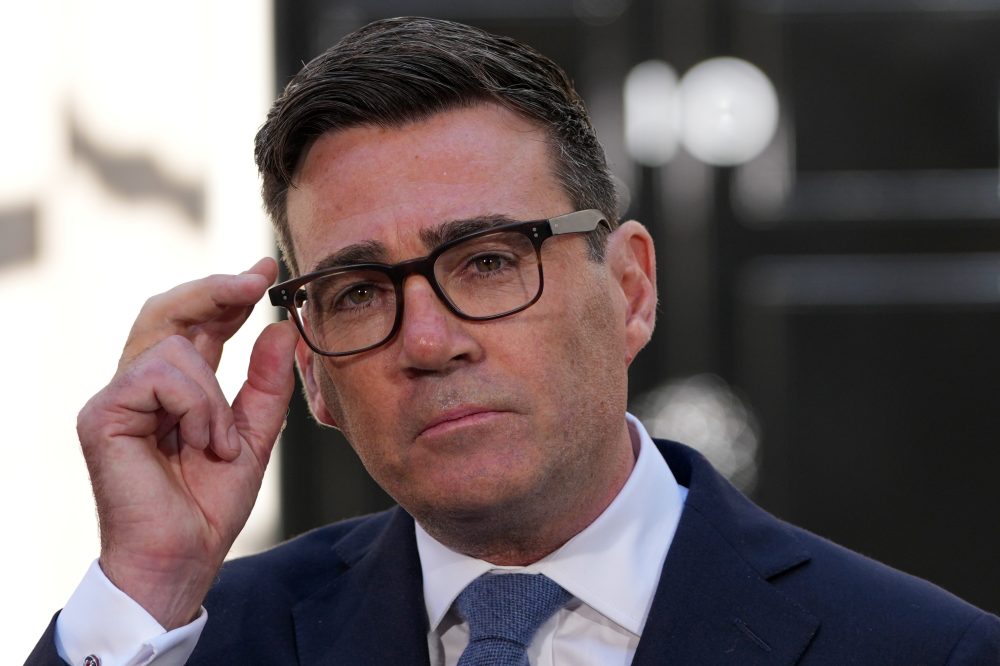

LONDON (AP) — Newly installed U.K. Prime Minister Andy Burnham is set to convene his Cabinet for the first time on Tuesday, following a swift and decisive removal of allies loyal to his predecessor, Keir Starmer, from government positions.
Burnham took an early step toward fulfilling his campaign promise to give citizens “breathing space” in their finances, unveiling a reduction in energy bill taxes that is expected to save the typical household roughly 45 pounds — about $60 — annually. The tax cut is scheduled to go into effect on October 1, with the savings financed by abandoning a digital ID card initiative that had been proposed under Starmer.
The former mayor of Greater Manchester officially stepped into 10 Downing Street on Monday after succeeding Starmer as leader of the ruling Labour Party, making him Britain’s seventh prime minister since 2016. Starmer, who had won a decisive election victory just two years prior, was pushed out by members of his own party following a string of policy reversals and political blunders.
In his debut address as prime minister, Burnham outlined ambitious goals: lowering the cost of living for ordinary citizens, spreading political power away from the center, breathing new life into British industry, and putting an end to rough sleeping among the homeless population.
He then moved quickly to put his own stamp on the government.
Starmer’s Treasury chief, Rachel Reeves, has been replaced by John Healey, a former defense secretary who stepped down in June, publicly criticizing the Treasury for inadequate military spending during a period of heightened global threats. After his resignation, Healey described the Treasury as “a dead hand on dynamic government” and said it was “in denial.”
Healey has previously argued that defense spending — projected at 2.6% of GDP next year — should climb to 3% by 2030. As the new finance minister, he will now be responsible for making that happen.
Meanwhile, Wes Streeting, whose departure from the health secretary role in May contributed to Starmer’s downfall, has been handed the defense portfolio.
In a stark reminder of the security challenges facing the new government, a Russian warship conducted a live-fire weapons drill in the English Channel on Monday — the same day Burnham assumed office.
The Ministry of Defense reported that the frigate Neustrashimy was being shadowed by the Royal Navy when it carried out the exercise in international waters approximately 46 miles (74 kilometers) south of Plymouth in southwest England.
“The Royal Navy monitored that exercise throughout, continues to track the vessel’s activity closely, and stands ready to protect U.K. national security,” the defense ministry stated.
Among other notable Cabinet selections, Ed Miliband has been named Foreign Secretary, Angela Rayner takes on the Housing Secretary role, and Jonathan Reynolds becomes Business Secretary with an expanded remit that now includes innovation and science.
Louise Haigh, a close Burnham ally credited with helping propel him to the top of the Labour Party, has been appointed First Secretary of State and Chancellor of the Duchy of Lancaster — a role that effectively makes her deputy prime minister.
Home Secretary Shabana Mahmood, who has been at the center of efforts to tighten immigration rules, will remain in her position.
Among those shown the door by Burnham are former Deputy Prime Minister David Lammy, ex-Business Secretary Peter Kyle, and Starmer’s former chief secretary, Darren Jones.