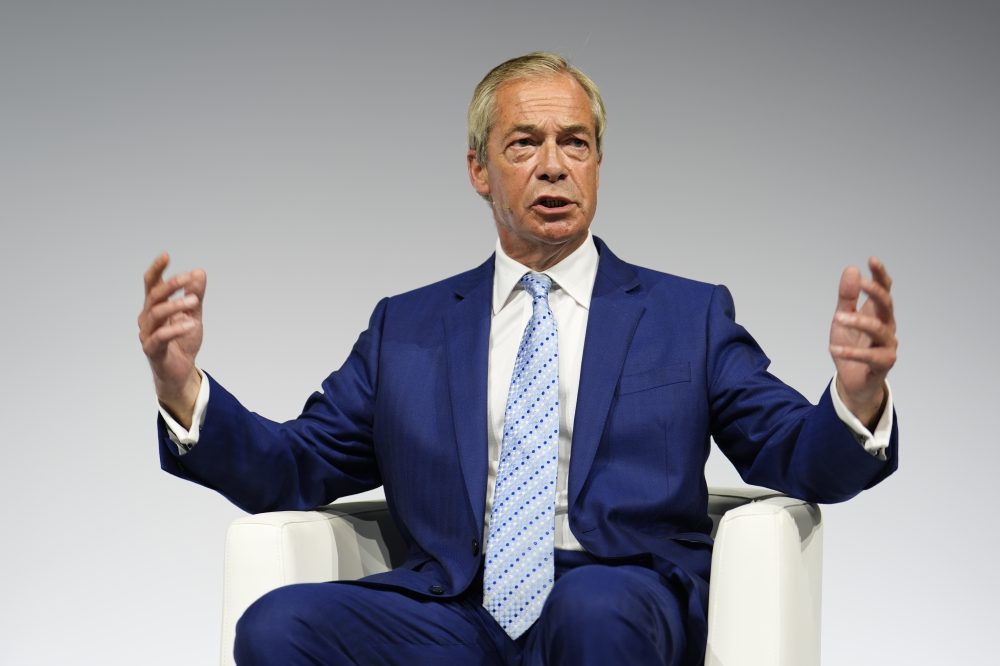

LONDON (AP) — Nigel Farage is a politician who typically thrives in the spotlight, but he has gone noticeably quiet in recent weeks.
The leader of the anti-immigration party Reform UK has pulled back from his near-weekly press conferences and regular media appearances as scrutiny mounts over financial gifts he allegedly failed to disclose.
Farage, a well-known British supporter of U.S. President Donald Trump, insists he has done nothing wrong. Still, the questions surrounding his finances have fueled speculation about whether his political future — once seen as a possible path to prime minister — could be in jeopardy.
Reform UK holds just eight of the 650 seats in the House of Commons, yet the party consistently outpolls both the ruling Labour Party and the main opposition Conservatives in public surveys.
Farage is already the subject of a probe by Parliament’s standards watchdog over a 5 million pound ($6.7 million) gift from a Thailand-based cryptocurrency billionaire. Then on Sunday, an opposition politician called on the same watchdog to launch a second investigation — this time over donations from a convicted fraudster.
Liberal Democrat lawmaker Josh Babarinde stated that “there is a serious question as to whether Mr. Farage met his obligations under the Code of Conduct” for members of Parliament.
The Sunday Times has published claims about Farage’s financial ties to George Cottrell, a 32-year-old aristocratic crypto-gambling entrepreneur who has served as an on-and-off aide to the Reform UK leader.
Cottrell was taken into custody at Chicago’s O’Hare airport in 2016 while traveling alongside Farage. He faced 21 counts related to money laundering, fraud, blackmail, and extortion after allegedly offering to launder money for undercover agents who were posing as drug traffickers. He ultimately pleaded guilty to a single wire fraud charge, admitting he had tried to deceive criminals on the dark web by pretending to be a money launderer. He spent eight months behind bars.
Despite his criminal history, Cottrell remains close to Farage. The Sunday Times reported that Cottrell provided funding for Farage’s staffing and security ahead of Britain’s 2024 general election, as well as access to a London townhouse located near Buckingham Palace.
Reform Treasury spokesman Robert Jenrick described Cottrell as an “old friend” of Farage with no official role in the party. Jenrick confirmed that Cottrell had covered expenses for Farage’s security and staff but said those payments were made “before he became a Member of Parliament” in July 2024.
Under U.K. rules, newly elected lawmakers are required to disclose any gifts valued at more than 300 pounds ($400) that they received in the prior 12 months — unless the gift “could not be reasonably thought by others” to be connected to their political activities.
Farage responded to the allegations by calling the situation an “establishment hit job.”
“I have done no wrongdoing, followed the rules and I am now considering legal action against The Sunday Times,” he said in a statement.
Parliamentary standards commissioner Daniel Greenberg is separately investigating a 5 million pound ($6.6 million) donation Farage received from Christopher Harborne, a British businessman based in Thailand. Farage has characterized that money as a personal gift used to pay for security, and says it was received before he won his seat in the House of Commons.
Should Farage be found in violation of parliamentary rules, he could face suspension. A suspension lasting 10 days or more would give voters in his Clacton constituency in eastern England the right to call a special election for his seat.
Such an outcome would deal a significant blow to a party whose rise mirrors the nationalist, anti-immigration approach associated with Trump. Farage has made the issue of migrants crossing the English Channel in small boats a central part of his platform — calling it an invasion — though critics accuse him of inflaming the issue rather than solving it.
Reform UK, which has attracted several high-profile defectors from the Conservative Party, scored major gains in local and regional elections in May. Those results contributed to Prime Minister Keir Starmer being pushed out by members of his own Labour Party.
However, Reform UK has also dropped three consecutive special elections it had hoped to win, raising questions about whether its support is beginning to slip. The most recent defeat came against Labour’s Andy Burnham, who is expected to succeed Starmer as prime minister within weeks.
The controversy surrounding Reform UK’s funding has renewed calls to overhaul Britain’s political finance laws. While strict limits exist on election spending, political parties are currently allowed to accept unlimited donations so long as donors are U.K. voters or businesses registered in Britain.
In March, the government announced plans to ban cryptocurrency donations to political parties and impose an annual cap of 100,000 pounds ($134,000) on donations from British voters living abroad. Reform UK had received 12 million pounds ($16 million) from Harborne in the previous year alone.
On Monday, the government expanded that policy, saying the 100,000 pound cap would also apply to donors who relocate to the U.K. from abroad, for one year following their arrival.