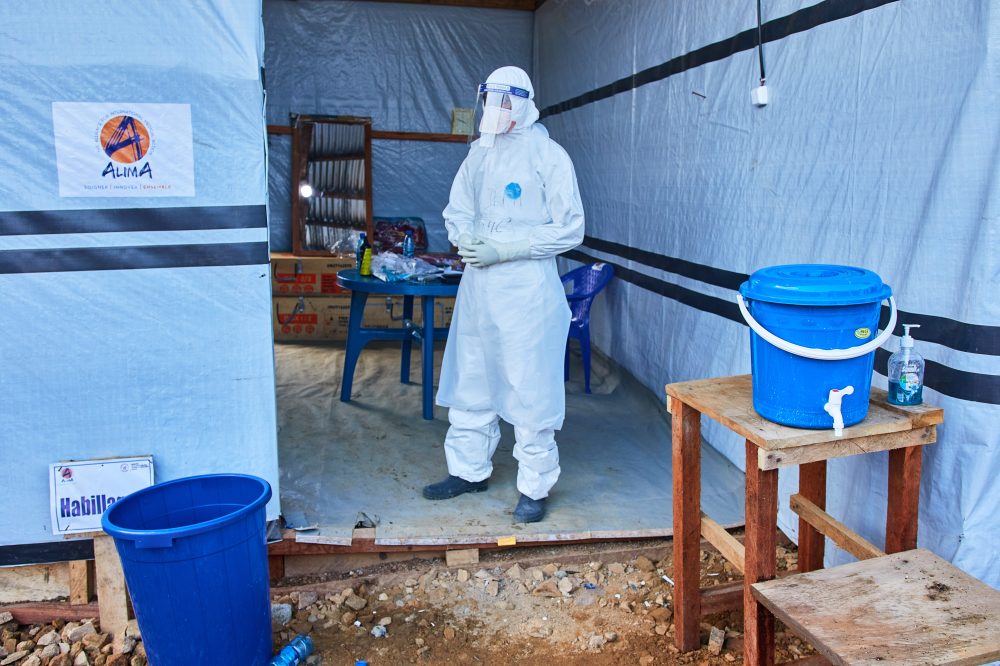

BUNIA, Congo — More than 500 people have lost their lives in Congo’s ongoing Ebola outbreak, with the total death count reaching 506 out of 1,561 confirmed cases, according to the country’s Ministry of Health. The grim figures were released Sunday night as the outbreak continues to spread faster than response teams can contain it.
Adding to the crisis, frontline health workers deployed in Ituri province — the heart of the outbreak — issued a 24-hour strike warning on Sunday. They say they will walk off the job unless authorities address unpaid benefits and unacceptable working conditions.
The workers, most of them health professionals, have been pushing through exhausting shifts while also facing physical attacks from residents and widespread public doubt about the existence of the virus.
In a formal notice sent to the government — a copy of which was obtained by The Associated Press — workers both inside and outside hospitals stated they have received no benefits since the outbreak began in May and lack the basic supplies needed to do their jobs.
Their complaints also include low pay, what they described as the “arrogance” of teams dispatched from the capital city of Kinshasa, and the “excessive” reliance on workers brought in from other provinces rather than hiring locally in Ituri. Inadequate equipment was also cited as a major concern.
The strike threat arrives just days after clinical trials got underway in the region, raising fears about what a work stoppage could mean for that progress. A strike could also seriously set back efforts to slow the disease’s spread, which has now reached three eastern provinces, including North Kivu and South Kivu.
Response efforts have been further complicated by the fact that the current outbreak is caused by the Bundibugyo strain of Ebola, for which there is no approved vaccine or treatment. This stands in contrast to the more common Zaire strain, which does have a vaccine and was responsible for most of Congo’s previous 16 Ebola outbreaks.
Health officials have not yet identified the outbreak’s original patient and still face the enormous task of tracking down potentially tens of thousands of people who may have had contact with infected individuals.
The World Health Organization has stated that the first month of this outbreak was already the deadliest opening stretch ever recorded for an Ebola crisis.