
When temperatures soar, it’s not just people who struggle — birds and other wildlife are also at serious risk from extreme heat and humidity, experts say.
Birds play a vital role in ecosystems around the world. They pollinate flowers, keep pest populations in check, spread seeds, and can even act as early warning indicators of environmental problems. Protecting them during dangerous heat events matters.
David Bird, an emeritus professor of wildlife biology at McGill University, noted that birds are a remarkably diverse group and are often well-equipped to handle extended stretches of hot weather. Their body temperatures naturally run higher than those of mammals — some birds maintain temperatures around 38 degrees Celsius, or about 100 degrees Fahrenheit, and some run even warmer.
To stay cool, birds can adjust their feathers and increase airflow through a complex internal system of air sacs. They also change their behavior in response to heat.
Still, every bird has a limit. Aimee Van Tatenhove, a postdoctoral fellow at the Cornell Lab of Ornithology, explained that this threshold varies depending on the species. “This level differs by species, and as you can imagine, species that live closer to the poles are often much more susceptible to heat than species that live closer to the equator,” she said. “Prolonged intense heat like Europe is experiencing right now is likely pushing many species toward their maximum heat tolerances, putting them at risk of heat illness or death.”
Unlike humans and some other mammals, birds don’t sweat. Instead, they rely on other natural cooling methods. Some species — including common backyard birds — will open their beaks and pant, similar to how a dog cools itself. Others flutter the loose skin on their throat in a behavior called “gular fluttering.” Birds also frequently seek out shade and cool off in birdbaths, fountains, and shallow ponds.
There are several things people can do to help birds during a heat wave. In the near term, setting out shallow containers of fresh water in safe locations — away from predators — can make a real difference. Experts do caution that these water sources need to be kept clean.
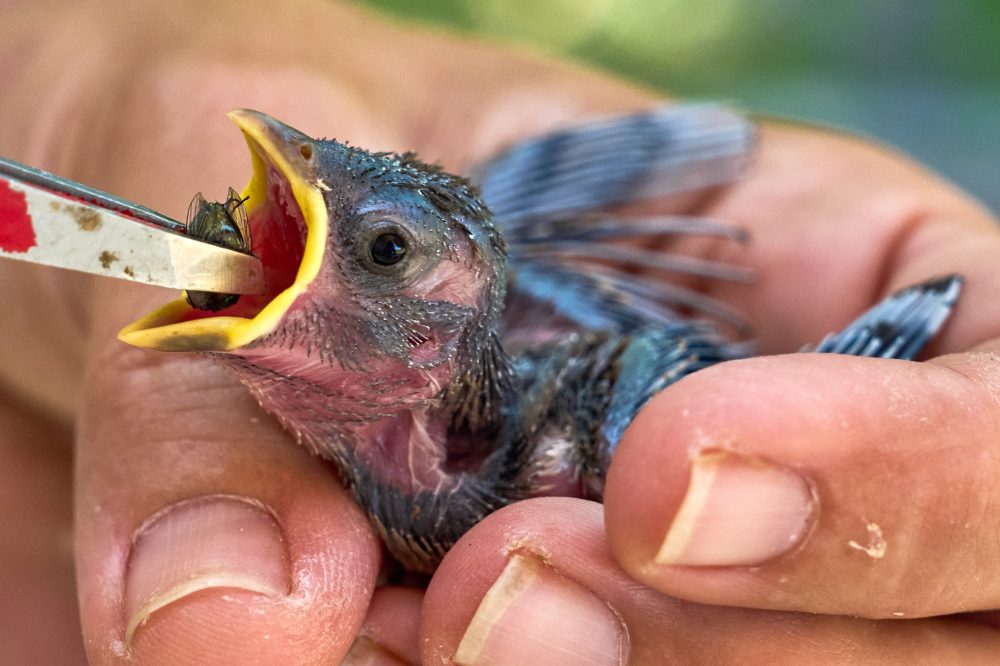
Keeping bird feeders stocked is another way to help, giving birds an easy meal so they don’t have to forage in the blazing sun. This is especially important because insect populations — a primary natural food source for many birds — have declined sharply in recent years, partly due to climate change and pollution.
For those with more space, Professor Bird suggested planting layered vegetation over time, such as small shrubs and larger trees, to create shaded areas in yards.
That said, sometimes the best option is simply to leave birds alone. Jack Kottwitz, an assistant professor at Michigan State University’s College of Veterinary Medicine, pointed out that birds are often capable of finding their own comfort. “These birds know better than what we do about what is comfortable for them,” he said. Birds will naturally seek out cooler spots, lower perches, or even areas near fans.
The same general advice applies to other wildlife. Experts warn against offering wild animals unfamiliar food or water, or attempting to bring them inside. Signs of heat stress in wild animals can look similar to symptoms of diseases that those animals may carry.
The best course of action when encountering a sick or injured wild animal is to contact a local wildlife rehabilitator, who has the training and tools to provide proper care.
Lisa Duke, sanctuary grounds manager at the W.K. Kellogg Bird Sanctuary, which is affiliated with Michigan State, summed it up simply: “The best thing for wildlife is to let them be wild. They know what to do with their bodies.”