
Ukrainian President Volodymyr Zelenskyy delivered sharp criticism Thursday toward Hungarian Prime Minister Viktor Orban, who has prevented approval of a vital $104 billion European Union assistance package that Ukraine desperately needs in its ongoing conflict with Russia.
The financial support from international partners has become essential for Ukraine’s budget operations, as the country redirects most government resources toward military defense. Hungary, an EU nation that has kept friendly relations with Moscow, rejected the aid package earlier this month during disagreements over petroleum supply issues.
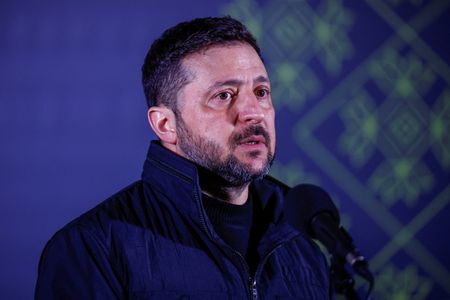
“We hope a certain person in the EU will not keep blocking the 90 billion… and Ukrainian soldiers will have weapons,” Zelenskyy stated during a press conference in Kyiv.
“Otherwise, we will give the address of this person to our armed forces, our guys. Let them call him, speak with him in their own language.”
These comments are expected to increase friction between the two leaders as Russia’s four-year military campaign against Ukraine continues, while Orban – who will face voters on April 12 – has avoided directly criticizing Moscow’s actions.
Hungary’s rejection of both the financial aid and additional EU penalties against Russia stems from what Budapest claims was Ukraine’s intentional disruption of oil flowing through the Druzhba pipeline that transports Russian petroleum to European markets.
Ukrainian officials maintain that petroleum shipments ceased following Russian strikes on pipeline facilities in January, and repair crews are working to restore operations as quickly as possible. Zelenskyy announced Thursday that the Soviet-built pipeline system could resume functioning within six weeks.
“They (the Russians) are killing us, and we’re supposed to give poor little Orban oil, because without it he won’t win elections?” he said.
Orban has positioned the Ukrainian conflict as a central issue in his upcoming reelection campaign.
Ukrainian forces continue defending against persistent Russian offensives across multiple sections of the 750-mile battle line, while Kyiv navigates American pressure for peace negotiations and resists Russian demands for territorial concessions.
Although facing disadvantages in weaponry and personnel, Ukraine’s military has reclaimed ground in recent weeks, with February marking the first month since 2023 where territorial gains exceeded losses, according to analysis from the Finland-based Black Bird Group.
European foreign ministers attempted unsuccessfully this month to convince Budapest against penalizing Ukraine for delays in pipeline restoration, which also affects Slovakia, another EU neighbor of Ukraine.
Slovakia, led by Prime Minister Robert Fico who also maintains sympathetic views toward the Kremlin, announced it would deny Ukrainian requests for emergency electrical power until oil deliveries restart through the Druzhba system.