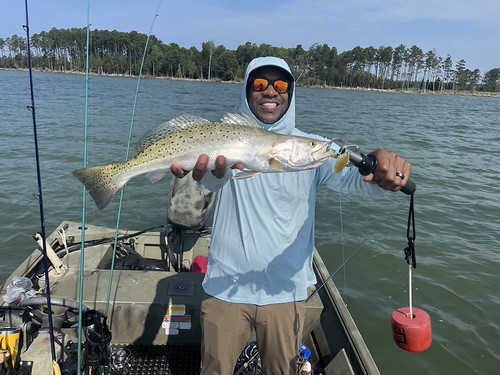

Cooler weather has been welcoming anglers back to the water across Maryland, from inland freshwater spots to the Chesapeake Bay and the Atlantic Ocean. The Maryland Department of Natural Resources (DNR) is reminding fishermen to take extra care when targeting striped bass, as both water and air temperatures remain elevated.
Once anglers have reached their daily limit for striped bass, they are encouraged to stop targeting the species and move on to other fish in order to reduce the number being caught and released. Any striped bass that does not meet keeper size should be released directly into the water without being lifted out. Safe catch-and-release guidelines are available on the DNR website.
Forecast Summary: July 8 – July 14
Surface water temperatures in the main Bay and at river mouths have climbed into the low 80s and are expected to keep rising throughout the week. Smaller rivers and streams are holding in the upper 70s. As water warms, oxygen levels near the bottom are dropping. Adequate oxygen currently exists in most Bay bottom waters, with the exception of the Potomac River between Indian Head and the Wicomico River, and the Bay between the Sassafras River and the Bay Bridge area. These warm, low-oxygen zones reduce the amount of livable habitat available for striped bass.
River and stream flows across most of Maryland are expected to run below average. Water clarity in the Bay and rivers should be near normal. Strong tidal currents are anticipated from Sunday through Tuesday due to the July 14 full moon and the resulting King Tides.
Upper Chesapeake Bay
At the Conowingo Dam pool, turbines are running in the evenings in a typical summer power generation pattern. Anglers there are landing Chesapeake Channa — also known as snakeheads — along with three types of catfish: blue, flathead, and channel. Casting paddletail lures is a go-to method for targeting snakeheads, while catfish are biting on cut bait drifted near the bottom. Early morning and late evening are the best windows for catching striped bass on topwater lures and crankbaits.
The lower Susquehanna and North East rivers are also producing striped bass along flat edges in the early morning, often before daylight. As the sun heats the water, striped bass push into deeper areas. Catfish can be found in those deeper channel zones as well.
Water temperatures in the mid-80s are prompting DNR to urge anglers to move away from catch-and-release striped bass fishing. Blue catfish is suggested as a more sustainable alternative. Zones with insufficient oxygen at depth are beginning to form, making it harder for released striped bass to recover from the stress of being caught.
This week, striped bass are being found near Pooles Island, Swan Point, and Love Point. Live-lining spot is the most effective technique, and spot can be located in the shallows near the mouths of the Magothy and Chester rivers and other upper Bay shallows. The influx of spot and small croaker has drawn growing numbers of bottlenose dolphins into the upper Bay. White perch and small striped bass are also on the dolphins’ menu. Large groups of cownose rays are also present, stirring up shallow bottom areas as they hunt for clams.
The best time to fish the shallows for striped bass is just before and at sunrise. Poppers, Zara Spooks, and paddletails work well along shoreline structure and drop-off edges. As the morning progresses, jigging along channel edges is a solid option for those not live-lining. Trolling with umbrella rigs is another viable approach. White perch can be found in tidal rivers and creeks, with grass shrimp, peeler crab, or bloodworm pieces on a bottom rig working well near docks and structure during a moving tide.
Middle Bay
There is quality fishing this week for a combination of striped bass and bluefish along the main shipping channel edges. The Bay Bridge, Kent Narrows, and the mouth of the Choptank River are also productive spots for striped bass and white perch.
Sea nettles have moved into the middle Bay due to elevated salinity levels and are creating headaches for anglers by fouling lines. If stung, rinsing with Bay water to remove tentacles and applying vinegar can help ease the sting.
Bay water temperatures are now in the 80s, with salinity measuring 15 parts per thousand in the middle of the Bay and as high as 5 ppt up the Choptank at the mouth of Tuckahoe Creek. Anglers who fill their striped bass limit are urged to stop targeting the species and consider switching to bluefish or blue catfish instead.
Live-lining spot remains the top method for striped bass this week. Good locations include the 30-foot channel edges off Kent Island, Thomas Point, south of Bloody Point down to Sharps Island, and below the mouth of the Choptank River. Kent Narrows is also a productive spot for live-lining or jigging. Bluefish frequently cut off the back half of spot, so saving the remains for cut bait drift fishing is an efficient strategy. Trolling with Drone spoons and surge tube lures behind inline weights is effective for targeting bluefish along channel edges. Bluefish in the middle Bay are running 3 to 6 pounds and are good table fare whether broiled, baked, grilled, or smoked.
Blue catfish in the Choptank River are offering great action and have moved as far up as the Denton area, where anglers are catching plenty on various baits in deeper channel water. A boat ramp is available at Crouse Landing in Denton, though a Caroline County boat ramp pass is required. Shoreline fishing is also available at that site. The Tuckahoe River is another good option for blue catfish.
White perch are scattered through the region’s tidal rivers and creeks this month. Fishing near docks and oyster reefs during a moving tide with grass shrimp, peeler crab, or bloodworm on a single-hook bottom rig is a popular and effective approach — especially for younger anglers, since no casting is needed.
Lower Bay
Water temperatures in the lower Bay have climbed into the mid-80s this week. Reports indicate the Potomac River above the Route 301 Bridge has reached temperatures in the 90s.
Striped bass fishing remains solid, with anglers catching fish in the 19-to-24-inch slot by live-lining spot, jigging, or casting. Key locations include the channel edge from St. Georges Island to Piney Point, below the Route 4 Bridge in the Patuxent, Cedar and Cove Points, and channel edges off Hoopers Island and Tangier Sound. Non-offset circle hooks are required when using live or cut bait for striped bass. Bluefish are also in the mix, and drifting fresh-cut spot is a reliable way to catch them.
Jigging along channel edges works well for striped bass, particularly at dawn and dusk. Soft plastic jigs, poppers, Zara Spooks, and paddletails are popular choices for fishing the shallows. Speckled trout have also been showing up in some locations.
Anglers are again reminded to minimize catch-and-release fishing for striped bass. If a fish must be released, it should go back in the water without being removed from it. Low-oxygen zones are beginning to form in the lower Potomac, limiting the fish’s ability to recover after release.
Bluefish are chasing bait throughout the lower Bay. Anglers are advised to approach from upwind and drift toward the action rather than motoring directly in and breaking up the surface feeding. Metal jigs and spoons are effective in these situations. Large marks on depth finders could indicate big red drum or cobia lurking below feeding bluefish.
Cobia anglers are having success by chumming and drifting live eels behind chum slicks. Large red drum are providing exciting catch-and-release opportunities when spotted near slicks or chasing menhaden. Sheepshead are being found near the Target Ship and other submerged structures.
Spot fishing is excellent right now, with many fish at eating size. Croakers are mixed in, and a good share of them are measuring above the 9-inch minimum. White perch are also part of the mix and can be found further up tidal rivers and creeks.
Blue Crabs
Recreational crabbing has been producing some interesting results. Crabbers are pulling up 8-inch crabs in waters up to 20 feet deep, and many believe the resource will be caught up on soon. Waters shallower than 12 feet are yielding 5.5-to-6-inch crabs, with the shallows holding a large number of smaller ones. Commercial trot liners are averaging 2 to 3 bushels of large and extra-large crabs per trip, while recreational crabbers are averaging a few dozen to a bushel depending on location. The lower Eastern Shore tends to offer some of the best crabbing.
Freshwater Fishing
While last week’s extreme heat has eased somewhat, water temperatures in coldwater trout management streams in the western and central regions remain elevated. DNR warns that during hot, dry stretches, many coldwater streams reach temperatures that put trout under stress. These fish require cold, clear water to survive, and even carefully handled trout face a higher risk of dying after being caught and released when water temperatures are high. Advisory information for trout anglers during summer is available on the DNR website.
The upper Potomac River received a boost in water flow from recent rainfall but is still running at typical summer levels. Anglers targeting smallmouth bass are making long casts with light line during the early morning and evening hours. Root beer-colored tube baits, swimbaits, and small crankbaits are good choices around pools and current breaks. Topwater lures are a thrilling option along grass bed edges at dawn.
Both largemouth and smallmouth bass are following typical summer patterns, feeding mostly at night in shallow grass and structure before retreating to shaded spots — under docks, fallen trees, brush piles, and floating grass mats — as the day heats up. Wacky rigged worms and urchin soft plastics are good slow presentations for holding bass. Soft frogs, chatterbaits, and buzzbaits can work well over grass beds, while spinnerbaits, jerkbaits, and paddletails are effective along grass bed edges in open water.
Chesapeake Channa are thriving in the warm water and are actively feeding after the spawn. Targeting grass beds in the upper sections of tidal rivers is productive. Soft frogs, chatterbaits rigged with a white soft plastic craw or creature bait, and white paddletails are all excellent choices.
Atlantic Ocean and Coastal Bays
The Ocean City beaches were a popular escape during last week’s heat wave, and the fishing along Assateague was also worth the trip. Kingfish are being caught in the surf during morning hours on bloodworm pieces or artificial bloodworm baits. Soft plastic jigs tipped with a strip of squid are a good bet for flounder or an occasional blowfish. Anglers using larger cut bait continue to catch and release big red drum and various small inshore sharks. Finger mullet rigs are working well for bluefish in the surf.
At the inlet and the Route 50 Bridge area, striped bass and bluefish are being caught during early morning, late evening, and nighttime hours. Flounder fishing has been solid at the inlet, and sheepshead are being landed near jetty rocks, bridge piers, and bulkheads using sand fleas. Back bay channel flounder fishing is very good, with Gulp baits accounting for some of the larger fish.
Just outside the inlet, anglers are catching bluefish and Spanish mackerel by trolling Clark and Drone spoons behind inline weights. Flounder are biting well on many lumps and shoals. At offshore wrecks and reef sites, black sea bass fishing has been productive, with flounder and triggerfish also in the mix. The first small dolphinfish of the season have begun arriving in the area, with a few already being caught.
Further offshore, yellowfin tuna fishing has been good and catch-and-release white marlin action continues to improve. Offshore anglers are eagerly awaiting more dolphinfish at the lobster pot buoys for light tackle fun. Most charter boats are also scheduling deep drop sessions for blueline and golden tilefish. Anglers and boat captains are reminded that tilefish catches must be reported electronically, with instructions available on the NOAA website.
The Maryland Fishing Report is written and compiled by Keith Lockwood, a fisheries biologist with the Maryland Department of Natural Resources. The Forecast Summary is written by Tidewater Ecosystem Assessment Director Tom Parham. Maryland anglers are encouraged to participate in DNR’s Volunteer Angler Surveys to help scientists monitor and manage important fish species.