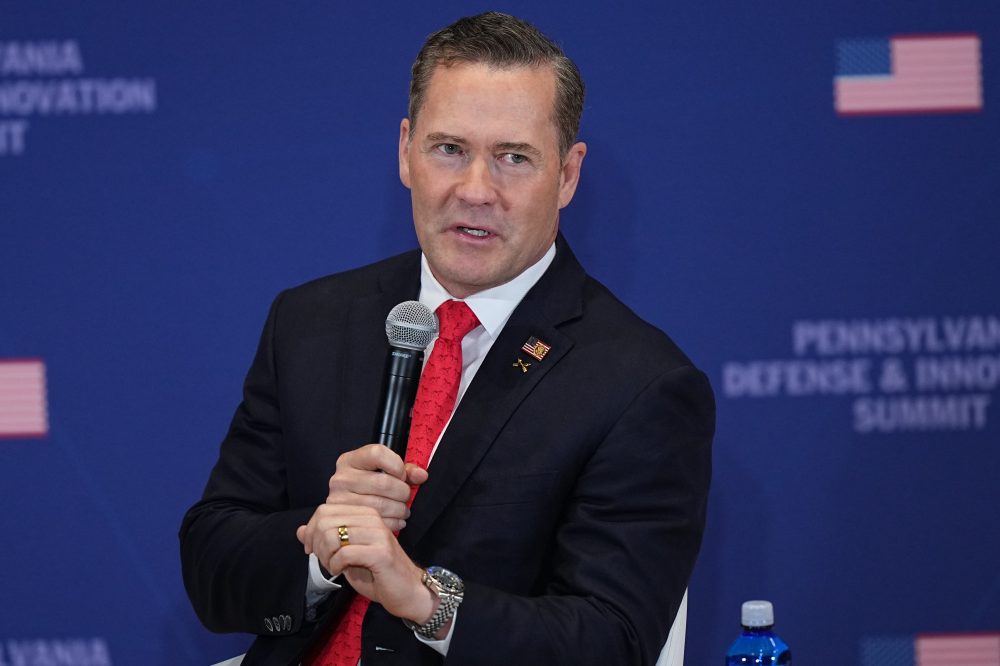

Speaking at a United Nations Security Council meeting in New York on Monday, U.S. envoy Mike Waltz announced that the American government plans to cut off violent gangs in Haiti from using social media as a source of income.
Gang leaders in the struggling Caribbean nation have become heavy users of social media platforms, where they post videos celebrating killings, make threats, and share personal commentary. Younger members of these gangs post music videos and flash cash to lure impoverished children into their ranks.
Waltz described the behavior as “incredibly disturbing” and promised the U.S. would “shut that down” in the coming weeks, though he offered no additional specifics during his remarks at the Security Council.
Attempts to restrict gang activity on social media are not without precedent. Back in 2023, YouTube removed the account of Johnson André — known as Izo and widely regarded as Haiti’s most powerful gang leader — after significant public backlash when the platform recognized him for surpassing 100,000 subscribers.
Waltz also urged nations with available aircraft to assist in transporting foreign troops participating in the latest United Nations-backed mission aimed at combating gangs in Haiti, specifically naming Sri Lanka and Côte d’Ivoire. He argued that moving troops by sea takes too long and that the Haitian people need immediate help.
Gang violence across Haiti has forced a record-breaking nearly 1.5 million people from their homes. More than half of the country’s roughly 12 million residents are currently in need of humanitarian aid.
Since January, more than 2,300 people have been killed and over 1,100 injured, according to United Nations figures. Clashes in the Cite Soleil slum in Haiti’s capital alone resulted in 542 deaths and 355 injuries earlier this year. The U.N. also documented at least 176 cases of rape targeting women and girls in that area.
Waltz recounted a harrowing incident in which gangs surrounded an armored vehicle that had become stuck in a ditch and set it on fire, forcing Haitian police officers to abandon it.
“They were flayed alive on the streets,” Waltz said, adding that the officers’ bodies were then displayed on the side of the vehicle as a warning to others.
“I want everyone to understand the fight ahead,” he added.
Waltz emphasized that Haiti requires heavy equipment such as bulldozers to clear roads and dismantle gang-controlled checkpoints. He noted that armed groups have seized control of roads, ports, hospitals, prisons, and other critical government infrastructure.
“Haiti’s just a few hundred miles from Florida,” he said. “In that regard, it’s a critical interest to the United States.”
His comments came as the U.S. prepares this week to end temporary protected status for approximately 350,000 Haitians currently living in the country, leaving them vulnerable to deportation — a decision that has drawn widespread criticism from legal and human rights advocates.
Gangs are estimated to control roughly 70% of Port-au-Prince, and the U.N. reports that as many as one in two gang members is a child. Poverty and hunger continue to worsen throughout the country.
“The situation of children in Haiti is among the most alarming anywhere in the world,” said Vanessa Frazier, the U.N.’s special representative for children and armed conflict. “Children are being killed, maimed, abducted, recruited and used by armed gangs, displaced from their homes, denied access to education, and deprived of basic protection and legal identity.”
Jack Christofides, the special representative overseeing the international gang suppression force operating in Haiti, reported that the mission has set up its headquarters, launched its first forward operating base, and begun targeting gang infrastructure.
“The political and humanitarian environment nevertheless remains extremely challenging,” he said. “Armed gangs are likely to adapt their tactics to stay in control. Meanwhile, humanitarian needs continue to soar.”
International pressure continues to mount on Haiti to hold general elections — which would be the first in more than a decade. The country is currently led by Prime Minister Alix Didier Fils-Aimé and has been without a president since Jovenel Moïse was assassinated at his private home in July 2021. Gang violence has escalated sharply in the years since.
Haiti’s foreign affairs minister, Raina Forbin, said seven of the country’s ten departments are ready to begin electoral activities, while the gang suppression force is essential to restoring order in the remaining three.
Forbin also noted that by the end of the year, an additional 4,000 officers are expected to join Haiti’s National Police force, which is currently understaffed and underfunded. An additional 1,500 recruits are also expected to enlist in Haiti’s newly revived Armed Forces.