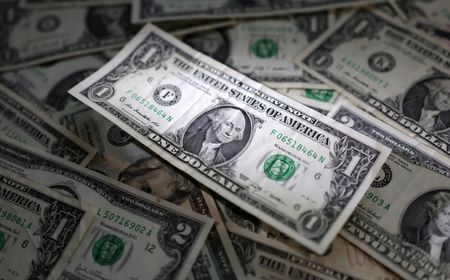

The U.S. dollar is on track for its most impressive weekly gains in four months, powered by encouraging economic reports, shifting Federal Reserve policy signals, and escalating geopolitical tensions with Iran that have investors seeking stability.
Fresh unemployment data released Thursday evening showed fewer Americans applied for jobless benefits than economists predicted, reinforcing signs of a resilient employment market and giving the greenback additional momentum.
The currency maintained its strength during early Friday trading in Asian markets, pushing the British pound down to a one-month low of $1.3457, marking a weekly decline of nearly 1.5%. The euro also struggled, dropping slightly to $1.1768 and facing a 0.8% weekly loss, with additional pressure from uncertainty surrounding European Central Bank leadership under Christine Lagarde.
Measured against a collection of major currencies, the dollar remained close to Thursday’s one-month high at 97.89, positioning itself for a weekly increase exceeding 1% – its strongest showing in over four months.
Commonwealth Bank of Australia strategist Joseph Capurso expressed confidence in the dollar’s continued rise, stating: “It wouldn’t surprise me if the U.S. dollar keeps lifting for a while longer.” He pointed to this week’s Federal Reserve meeting minutes, which revealed several policymakers’ willingness to raise interest rates if inflation remains persistent.
Growing concerns about potential U.S.-Iran military conflict have also boosted the dollar’s appeal as a safe investment this week.
President Donald Trump issued a stern warning to Iran Thursday, demanding the country negotiate on its nuclear program or face consequences, saying “really bad things” will happen. Trump established a 10 to 15-day timeline, prompting Tehran to threaten retaliation against American military installations in the region if attacked.
“That could really affect oil markets and currency markets if things go bad there. It’ll be a test also about whether or not the U.S. dollar is still a safe haven,” Capurso explained. “A major attack would call that into question.”
Market attention now shifts to upcoming releases of the U.S. core PCE price index and preliminary fourth-quarter GDP numbers, which could significantly influence currency movements.
Current investor expectations still anticipate approximately two Federal Reserve rate reductions this year, though the likelihood of a June cut has decreased to about 58% from 62% the previous week, based on CME FedWatch tool data.
Chris Zaccarelli, chief investment officer for Northlight Asset Management, outlined the central bank’s dilemma: “The big argument within the Fed is whether or not to proactively lower rates to support the job market, or to keep rates higher for longer in order to fight inflation.” He noted that Friday’s PCE report will “add to the debate.”
The Australian dollar declined 0.08% to $0.7055 but is positioned for only a 0.2% weekly loss, supported by expectations of tighter monetary policy domestically.
New Zealand’s currency faced greater challenges, heading toward a 1.2% weekly decline following dovish signals from the Reserve Bank of New Zealand. Investors betting on stricter policy were caught off guard after a series of rate cuts over recent months. The kiwi traded 0.12% lower at $0.5967.
In Japan, the yen weakened 0.05% to 155.08 against the dollar, erasing earlier session gains after Friday data showed the country’s annual core consumer inflation reached 2.0% in January, the slowest rate in two years.
Abhijit Surya, senior APAC economist at Capital Economics, analyzed the implications: “Today’s data won’t exactly instil a sense of urgency in the (Bank of Japan) to resume its tightening cycle, especially given the lacklustre rebound in activity last quarter.” However, he added: “If we’re right that the recent slump won’t prove enduring, while wage growth picks up and underlying price pressures remain relatively firm, there is still a strong case for the bank to hike rates again in June.”