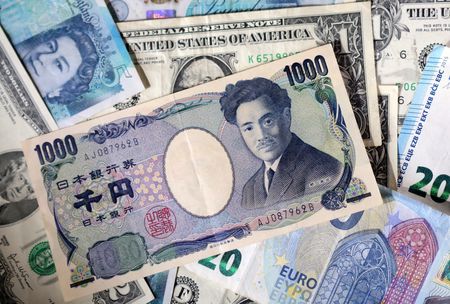

The U.S. dollar was on course Friday for its steepest weekly decline in nearly three months, after a lackluster June employment report caused markets to rethink how soon the Federal Reserve might raise interest rates again.
The dollar’s weakness carried into early Asian trading hours, with the euro hovering close to a two-week high at $1.1442. The British pound also held firm at $1.3361, putting it on pace for a 1.2% gain for the week — its strongest weekly performance in close to three months.
The Australian dollar, which tends to reflect investor appetite for risk, was trading at $0.6935 and appeared set to break a four-consecutive-week losing streak. New Zealand’s currency was at $0.5702, up 1.2% for the week.
The dollar index — a measure of the greenback’s value against a group of major currencies including the yen and the euro — slipped 0.2% to 100.77, following a 0.5% drop the day before. For the week overall, the index was down 0.58%, marking its worst weekly showing since early April.
The catalyst for the dollar’s retreat was a sharp slowdown in U.S. job growth last month. Nonfarm payrolls rose by just 57,000 in June, falling well short of the 110,000 increase analysts had anticipated. The labor force participation rate also fell to 61.5%, its lowest point in more than five years.
The soft data caused traders to reduce their bets on a Federal Reserve rate increase happening soon. Markets are now pricing in a 52% probability of a rate hike at the Fed’s September meeting, down from 64% the day before, according to CME FedWatch.
U.S. Treasury yields also retreated. The yield on two-year notes — which are especially sensitive to interest rate expectations — ended a three-day winning streak with a four basis-point decline.
Sim Moh Siong, an FX strategist at OCBC, said the jobs data sends a message that should ease some pressure on the Fed. “At the margin, it is dovish, helping to ease concerns about labour market overheating and the need for more aggressive policy tightening,” he said. He added, however, that the broader outlook still favors the dollar — especially against lower-yielding currencies — as long as expectations for Fed tightening remain in place.
The Japanese yen, which had been battered in recent weeks, got some breathing room from the dollar’s stumble. The yen was last trading at 161.01 per dollar after gaining nearly 1% in the prior session, bouncing back from multi-decade lows.
Investors remained watchful for possible government intervention in currency markets. Japanese officials have shifted away from their previous practice of issuing public warnings, instead signaling a more targeted effort to squeeze currency speculators and make it more costly to bet against the yen.
A member of a Japanese government advisory panel, Toshihiro Nagahama — known as an economic adviser to Prime Minister Sanae Takaichi — said Thursday that the Bank of Japan should continue raising interest rates at a gradual pace in order to address the yen’s excessive decline.
Tony Sycamore, an analyst at IG, said the situation leaves an important question unanswered. “The bigger question is what comes next,” he said, identifying 162.83 as a near-term ceiling for the dollar-yen exchange rate. “Whether it becomes a more meaningful medium-term high will ultimately depend on incoming U.S. data and, to some degree, developments in the Japanese government bond market.”