
CAIRO (AP) — American and Israeli forces have launched an unprecedented military campaign against Iran, targeting a far broader range of objectives than previous conflicts. Military analysts say the current strategy appears focused on dismantling Iran’s defense capabilities and undermining its religious government structure.
According to U.S. Central Command, more than 2,000 targets have been attacked in under seven days, representing the most intensive American bombing operation in the Middle East region in over ten years, based on data from Airwars, a conflict monitoring organization. Israeli officials report striking hundreds of additional locations.
The coordinated assault has reached from Tehran, the nation’s capital, to numerous cities throughout Iran, with airstrikes hitting government leadership, defense installations, weapons manufacturing plants, security forces, and state broadcasting facilities.
While the complete extent of destruction remains unclear, Armed Conflict Location and Event Data (ACLED), an independent monitoring organization, described it as “a more significant blow than anyone expected might happen in such a short time.” The group noted that despite the death of Supreme Leader Ayatollah Ali Khamenei, Iran’s emergency leadership still maintains “the ability for domestic coercion.”
Casualty figures are challenging to verify due to communication disruptions. Iranian government sources report at least 1,230 fatalities. State media indicates that 165 people, primarily children, died when airstrikes hit a school in southeastern Iran.
The bombing campaign eliminated Khamenei at his residential compound in central Tehran during initial attacks on February 28. Additional strikes killed Iran’s defense minister, Republican Guard commander, Khamenei’s chief security advisor, and other high-ranking officials.
Attacks also damaged a religious site associated with Khamenei’s predecessor and created a large hole in the dome of an Assembly of Experts building, which houses senior Shiite clerics responsible for selecting the next supreme leader.
The Revolutionary Guard, Iran’s primary military force, and the Basij paramilitary organization have been major targets. ACLED documented over 280 strikes by Wednesday, with more than 20% aimed at Revolutionary Guard or Basij positions, particularly in Tehran and Iran’s western and southern regions. Military bases, underground facilities, weapons storage sites, manufacturing plants, and command centers have all sustained damage.
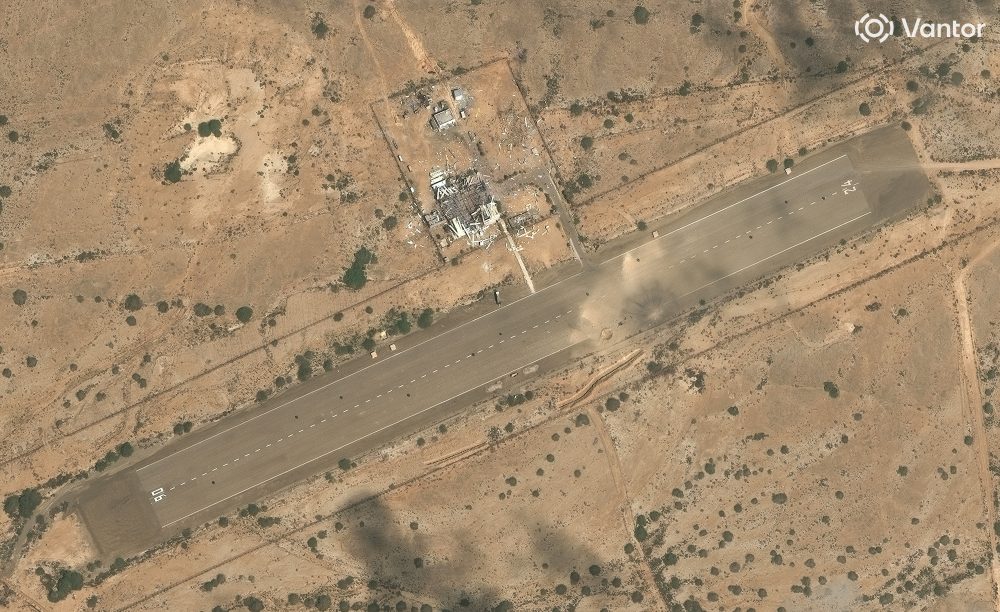
Satellite imagery from Vantor, a U.S. imaging company, shows multiple demolished buildings at the Revolutionary Guard’s northern Tehran headquarters. Local Basij offices have also been struck throughout the country.
Thursday’s attacks included two Tehran sports venues, notably the expansive Azadi Sports Complex, once considered as an Olympic host site. Verified video footage shows a massive hole in the roof of a 12,000-seat arena. Military analysts note that the Guard and Basij frequently use athletic facilities as assembly points.
However, ACLED observed that “a lot of empty buildings” have also been targeted, suggesting not every strike delivers strategic value.
American and Israeli officials identify Iran’s missile capabilities as a primary target. Strikes hit suspected missile installations in the mountains near Isfahan and outside Kermanshah, where satellite photos from Planet Labs PBC reveal crater-damaged roads leading to underground mountain tunnels. The Garmdareh missile facility near Tehran also suffered extensive building damage.
Iran previously possessed thousands of short and medium-range missiles. Despite ongoing attacks, the country continues launching missiles and drones at Israeli targets, American Persian Gulf bases, and regional energy infrastructure. A senior Western intelligence official, speaking anonymously, estimated Iran has several days of ballistic missile reserves at current firing rates, though it may conserve some for extended operations.
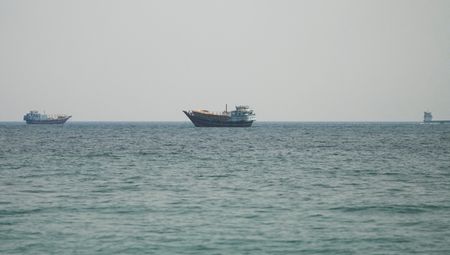
Naval assets have also been targeted. Vantor satellite photos show a capsized vessel at the Konarak Naval Base on Iran’s southern coast following strikes there. A U.S. submarine sank an Iranian warship near Sri Lanka, where authorities recovered 87 bodies and rescued 32 Iranian sailors on Wednesday.
Military-connected manufacturers have faced attacks as well. In Isfahan, ACLED documented strikes on Isfahan Optics Industries, which faces international sanctions due to suspected nuclear program connections.
Tehran’s main police headquarters sustained multiple building collapses, according to Planet Labs satellite imagery. The national police force, led by a Revolutionary Guard general, plays a crucial role in Iran’s internal security and has violently suppressed anti-government demonstrations.
Local police stations have also been targeted, including one near Tehran’s Grand Bazaar, where late December protests grew into massive nationwide demonstrations before being violently suppressed in early January.
The state television and radio network IRIB has endured repeated attacks while maintaining broadcasts. Its main headquarters in northern Tehran shows visible damage. Sunday strikes on another IRIB facility brought down transmission equipment and severely damaged the nearby Gandhi Hospital, shattering its exterior and scattering debris throughout patient areas.
Nuclear facilities have received limited attention so far, though Israel has indicated future targeting. Monday satellite images reveal new damage at the Natanz nuclear facility, Iran’s primary enrichment site. The International Atomic Energy Agency stated there was “no radiological consequence expected.”
Israeli military officials reported striking mountains north of Tehran where they claim Iran secretly relocated nuclear activities to underground bunkers following last summer’s 12-day conflict.
Iran continues asserting its nuclear program serves peaceful purposes, though officials previously threatened weapons development while enriching uranium to near-weapons-grade concentrations.