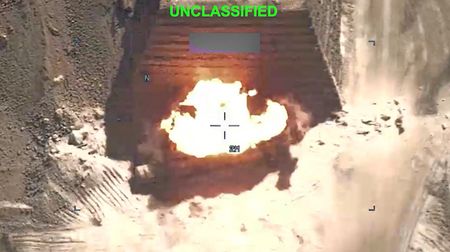

Video spreading across social media appears to capture the moment Iranian missiles slammed into a Jordanian airbase, killing two U.S. service members. A third American remains unaccounted for following the Friday attack. A separate U.S. service member also lost their life in Iraq on Saturday, underscoring the deadly dangers troops face even without a direct deployment into Iran.
The U.S. military’s Central Command announced Monday that its strikes focused on Iranian military command centers, air defense installations, coastal surveillance sites, maritime assets, missile and drone launch locations, and communications infrastructure.
Iranian officials reported Sunday that at least 50 people have died and 517 others were injured in the most recent rounds of American strikes. Since the conflict began on February 28, a total of 17 U.S. service members have been killed.
According to the military, the service member who died in Iraq on Saturday was killed during what was described as a “controlled detonation” of a downed Iranian drone.
President Trump addressed the ongoing military action, saying, “We hit them very hard again tonight. And we did that in honor” of the fallen soldiers.
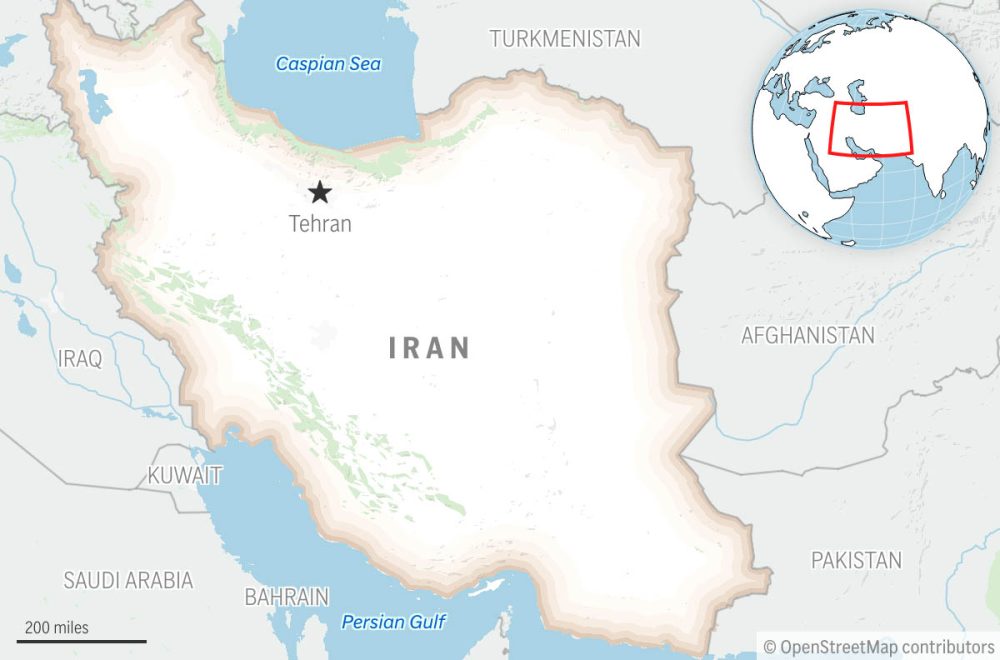
Reports indicate that U.S.-led strikes hit Iran’s Darkhovin nuclear facility — currently under construction — for the eighth night in a row. At least three missiles reportedly struck the site, drawing sharp condemnation from Tehran’s Atomic Energy Organization, which insists the facility is intended for peaceful purposes.
While the United States has not officially acknowledged the Darkhovin strike, the military action follows the deaths of the two American service members. Regional allies may also be participating in the strikes, responding to earlier Iranian drone and missile attacks on Kuwait, Bahrain, and Jordan. The situation represents a major escalation in an already volatile region.
Among the key developments: the Darkhovin nuclear power plant, still under construction, has been identified as the target. Tehran has condemned the strikes as a violation of international law, while the U.S. views the facility as a legitimate military objective. Gulf nations including Kuwait and Bahrain may be involved following Iranian attacks on their own soil.
As Monday’s strikes got underway, a ship caught fire in the Strait of Hormuz after being struck by a projectile near the Omani coastline, according to the British military’s United Kingdom Maritime Trade Operations center. The crew was forced to abandon ship, and the vessel remained adrift and burning hours after the initial strike.
The route skirting Oman is the same path the U.S. military has urged commercial ships to use to steer clear of Iranian-controlled waters. Iran’s Revolutionary Guard later claimed it was targeting tankers in the strait.
Earlier Monday, the United States launched another round of airstrikes on Iran — this time near a northwestern city believed to house underground missile bases — following the announcement of another American death. Iran retaliated by striking Bahrain, where the U.S. Navy’s 5th Fleet is based, as well as Kuwait.
On the economic front, benchmark Brent crude oil climbed above $90 per barrel Monday, deepening a global energy crisis tied to the ongoing conflict. The average price of a gallon of regular gasoline in the United States reached $4, adding financial strain on American households ahead of this fall’s midterm elections.