
SPRINGFIELD, Ohio — Two religious leaders with contrasting backgrounds have formed an unlikely partnership in their mission to defend Haitian immigrants facing uncertainty under the current administration’s immigration policies.
Pastor Reginald Silencieux of First Haitian Evangelical Church was raised in impoverished rural Haiti, while Pastor Carl Ruby of Central Christian Church describes himself as a “blue-collar farm kid” from Michigan’s heartland.
Despite their different origins, both ministers now share a faith-driven mission in Springfield, Ohio: protecting the city’s Haitian immigrant population amid fears of deportation under President Donald Trump’s intensified immigration enforcement.
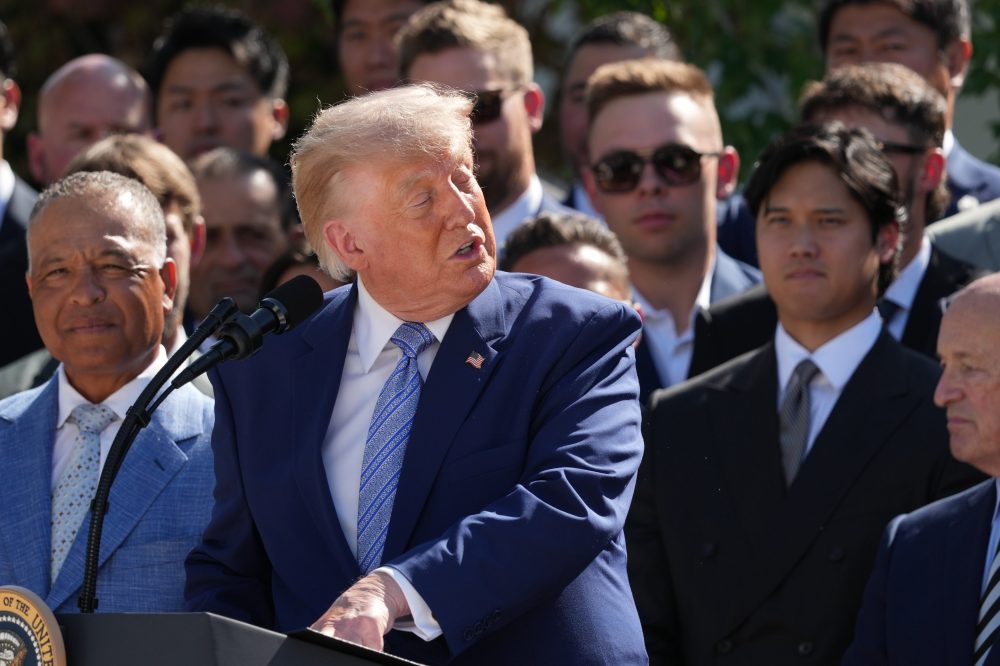
The two pastors developed mutual admiration and a shared purpose when they defended Springfield’s Haitian residents after Trump made unfounded claims in 2024 that Haitian immigrants were consuming residents’ pets.
Both ministers opened their church doors as sanctuaries and encouraged community members to participate in prayer gatherings and peaceful demonstrations against the false allegations that heightened anti-immigrant sentiment.
Following Trump’s remarks, educational institutions, government facilities, and officials’ residences were hit with numerous bomb threats. Ruby and Silencieux also became targets but refused to back down.
The pastors have organized workshops to document and oppose potential immigration raids, supplied legal assistance and meals, and maintained worship services in Creole along with English instruction.
While offering prayers for Trump, they have advocated for extending the Temporary Protection Status program that has enabled thousands of Haitians to legally settle in Springfield recently, fleeing chaos and criminal gang activity in their native country.
“Both of them have been great leaders for the community,” said Viles Dorsainvil, executive director of the Haitian Community Help and Support Center in Springfield, who collaborates closely with both ministers.
Dorsainvil describes Ruby as an immigrant advocate willing to risk personal safety to support and welcome newcomers.
He expresses appreciation to Silencieux for housing the Haitian community center within his church since 2021 and arranging for immigration lawyers to meet with church members following worship services.
“He prays for them; he’s fasting with them; he’s giving them spiritual advice,” Dorsainvil said.
Silencieux was raised in a devout Christian household, devoted to Jesus and serving God — though initially not as a minister. He pursued law instead.
However, by his mid-twenties, he began preaching part-time and eventually relocated to Port-au-Prince, where he led multiple congregations in the gang-dominated capital.
“Life in Haiti was not easy. But it shaped my character,” Silencieux said. “It taught me perseverance, responsibility and the importance of community.”
This experience prepared him for his current mission.
In 2021, he felt divinely called to relocate to Springfield, where Haitian workers were filling crucial roles in the city’s expanding manufacturing sector. He spoke no English and left behind his wife and children, who remain in Haiti.
Since arriving, he has assisted thousands of Haitians who legally relocated to Springfield under the TPS program. The United States initially granted TPS to Haitians after a catastrophic 2010 earthquake and has renewed it multiple times. However, the Trump administration seeks to terminate this protection, claiming Haiti’s conditions have stabilized.
A federal judge recently ordered the protection to remain temporarily active. Nevertheless, anxiety and fear persist throughout Springfield.
Following her decision, the judge received death threats. Bomb scares forced closures of schools, offices, and businesses in Springfield.
Silencieux sometimes feels helpless but encourages his community — and himself — to maintain faith.
“As a pastor, I don’t have any possibility to protect them,” he said. “Faith helps me to help the community.”
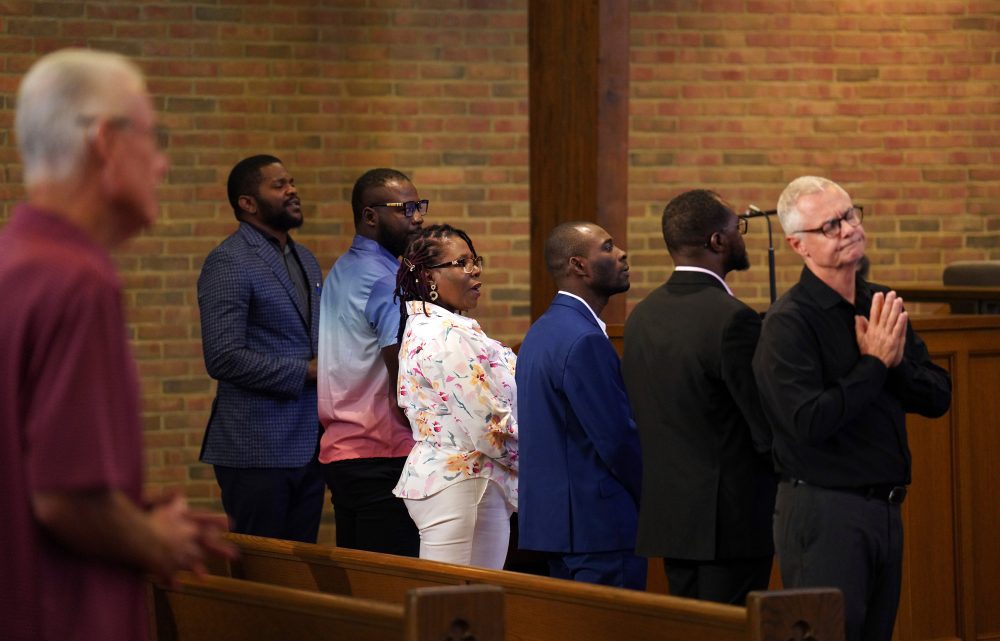
During a recent Sunday worship service, he advised congregants to remain home whenever possible due to potential immigration enforcement actions. He offered prayers for both Trump and the Haitian community.
“The president is our president. He can take decisions. But he is limited,” he said. “God is unlimited.”
Ruby was raised in a Baptist household in rural Michigan and spent decades identifying as both an evangelical Christian and Republican. When he first moved to Springfield — and for years afterward — he had no connections with Haitian residents.
However, conflicts escalated in 2023 following a tragic incident where a child died and dozens were injured when a Haitian immigrant driver collided with a school bus.
From his residence, Ruby watched a live city council session addressing the accident.
“I was hearing one ugly racist statement after another,” he said, describing how he immediately drove to the meeting to voice opposition.
“All I said was, ‘We need to remember that there are advantages of having immigrants come into our community; they’re good people.’ And I immediately became the friend of Haitians in town and the enemy of anti-immigrant people in town.”
After Trump’s disparaging 2024 comments, Ruby welcomed Springfield’s Haitian population to worship at his church. He urged his congregation to distribute cards throughout Springfield containing a supportive message for Haitians. Written in both Creole and English, the cards stated: “I’m glad you are here. Christ loves you and so do I.”
Ruby believes God began preparing him for this role 15 years earlier. At that time, he served as vice president of student life at Cedarville University, a Baptist institution near Dayton, Ohio, and organized a student trip following the footsteps of Rev. Martin Luther King Jr.
The group visited Birmingham, Alabama’s 16th Street Baptist Church, where four Black children were murdered in 1963 when a Ku Klux Klan bomb detonated during Sunday worship.
They also toured the Birmingham Civil Rights Institute, where Ruby encountered King’s “Letter from Birmingham Jail.” The correspondence was addressed to Alabama clergy who had urged King to postpone civil rights demonstrations in Birmingham.
“I didn’t know that was a letter addressed to pastors who had failed to stand because they wanted to be safe,” Ruby said.
“I made a commitment to myself that I wouldn’t do that; that if there were an opportunity for me to use my voice to help someone who was being oppressed, that I wouldn’t be silent.”
He organized a national conference for Christian colleges, hoping students would return to their campuses motivated to establish organizations focused on immigrant assistance.
His advocacy for migrants continued when he became pastor in 2015.
Collaborating with other faith leaders, he established G92, an immigrant rights organization named after the Hebrew term “ger,” meaning stranger or foreigner, which appears 92 times in the Old Testament.
Today, he takes satisfaction that Springfield’s opposition to Trump’s immigration enforcement is rooted in religious conviction.
“This is definitely a faith-led movement,” he said. “God loves immigrants and part of demonstrating that you’re one of God’s people is taking care of immigrants.”
He has endured threats and defamatory attacks but remains resolute.
“I’ve never lost a moment of sleep over worrying about someone harming me,” he said. “I believe God will protect me.”
On February 2, he helped organize an event where hundreds gathered at a church to sing and pray in solidarity with Haitians. Attendance was so overwhelming that a fire marshal required many people to leave due to capacity violations.
“Outside beautiful events with my family, it was the most beautiful day of my life,” Ruby said.
With the TPS program’s future in question, Ruby expresses concern about Springfield’s Haitian migrants’ destiny while maintaining optimism.
“I think God’s going to bless our city for doing the right thing.”