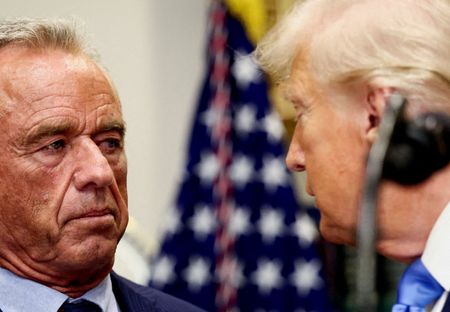

WASHINGTON – Supporters of the Make America Healthy Again movement who helped propel President Donald Trump back to the White House are now threatening to abandon him over a controversial executive order signed this week.
The order, which invokes the Defense Production Act to increase domestic manufacturing of glyphosate – a widely-used herbicide – has sparked outrage among MAHA followers who view the chemical as a public health threat.
These same activists were instrumental in Trump’s 2024 victory and have seen some of their priorities implemented during his second term, including cuts to recommended childhood vaccination schedules and promotion of whole food diets in federal nutrition guidelines.
However, Wednesday’s executive order has created a rift between the administration and its health-conscious supporters, who see it as betraying their core mission to reduce exposure to potentially harmful chemicals.
“I don’t feel like there’s much hope after this executive order in preserving the MAHA vote,” stated Kelly Ryerson, who serves as co-executive director of American Regeneration and has been vocal in opposing glyphosate use.
The presidential directive describes glyphosate as “crucial to the national security and defense, including food-supply security.”
The White House has not yet provided a response to requests for comment regarding the backlash.
The timing of Trump’s order coincides with Bayer’s announcement of a massive $7.25 billion settlement proposal to resolve tens of thousands of legal claims alleging their Roundup weedkiller causes cancer. Bayer remains the sole U.S. manufacturer of glyphosate and had previously warned they might cease domestic production without regulatory protection from ongoing litigation.
Currently, America relies heavily on Chinese imports to meet glyphosate demand, a dependency the executive order aims to reduce.
While Bayer continues to defend glyphosate’s safety profile, scientific studies present conflicting evidence, with some research suggesting potential links to cancer and endocrine system disruption.
Dave Murphy, who leads United We Eat and previously managed finances for Kennedy’s presidential campaign, characterized the executive order as a “strategic mistake” that could hurt Republicans politically.
“Trump would not be in the White House this second time without those followers, and we expect him to live up to his word,” Murphy emphasized.
Health Secretary Robert F. Kennedy Jr., despite his long history of criticizing glyphosate and previously calling it “one of the likely culprits in America’s chronic disease epidemic” on social media, defended the order as essential for national security.
“When hostile actors control critical inputs, they weaken our security,” Kennedy explained in his statement, though he didn’t identify specific countries. “By expanding domestic production, we close that gap and protect American families.”
The controversy comes at a politically sensitive time, with November’s midterm elections approaching. Republicans currently hold narrow control of both the House and Senate, but all House seats and one-third of Senate positions will face voters this fall.
Trump already faces potential electoral challenges from his immigration policies and persistent concerns about high living costs. Historical patterns show sitting presidents typically lose House seats during midterm elections, with the last exception being George W. Bush in 2006.
MAHA activists have taken to social media platforms to express their frustration, sharing posts and images declaring “we do not consent to being poisoned.”
Moms Across America, led by Zen Honeycutt who has close ties to Kennedy, has launched a petition drive urging Trump to reverse his decision.
“True national security is healthy families and the ability of the next generation to reproduce and thrive, which will not happen for as long as these pervasive, harmful herbicides are being used,” the petition argues.
While estimates of MAHA’s voter strength vary significantly, the movement represented a substantial portion of Kennedy’s support base during his presidential campaign before he withdrew and endorsed Trump.