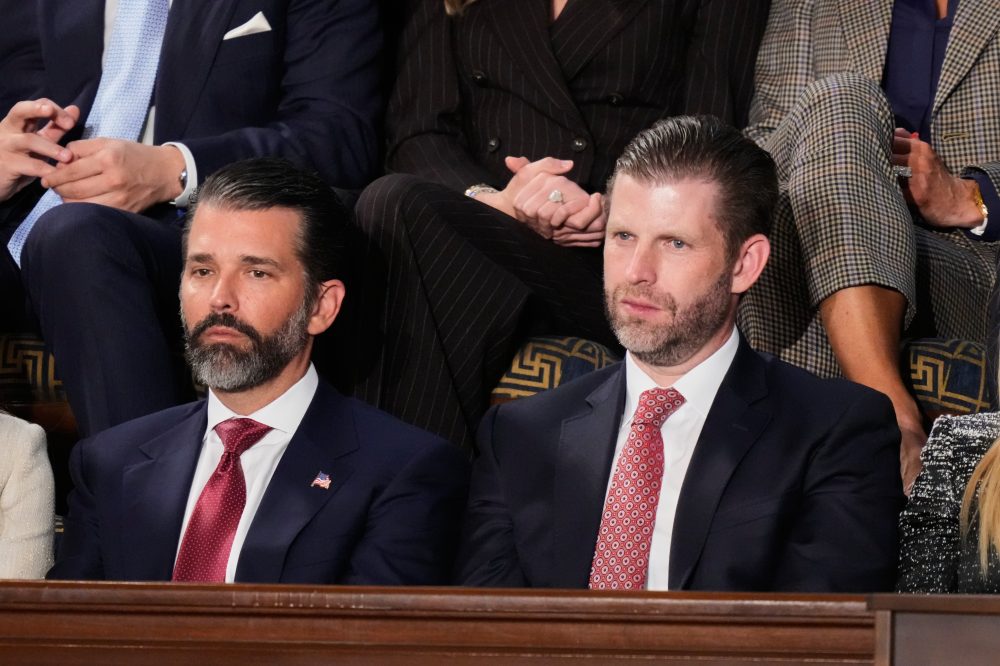

A Florida-based drone manufacturer with financial ties to Donald Trump Jr. and Eric Trump is actively marketing defensive interceptor systems to Middle Eastern nations currently facing Iranian drone attacks.
Powerus, which announced last month that the president’s two eldest sons joined the company with equity stakes, is conducting demonstrations across Gulf nations to showcase how their anti-drone technology could defend against Iranian strikes.
“Our team is doing many demos across the Middle East right now for our interceptors,” co-founder Brett Velicovich stated in a text message to reporters. “We have very incredible tech that can save lives.”
The timing raises ethical questions, as these same nations depend on U.S. military protection under the leadership of the Trump brothers’ father, who initiated the current conflict with strikes against Iran alongside Israel more than a month ago.
“These countries are under enormous pressure to buy from the sons of the president so he will do what they want,” commented Richard Painter, who previously served as chief White House ethics attorney under President George W. Bush. “This is going to be the first family of a president to make a lot of money off war — a war he didn’t get the consent of Congress for.”
Velicovich, an Army veteran who previously encountered similar Russian-made drones now deployed by Iran, defended the business arrangement. “We are at war, my friend, we are in an arms race and America will lose if we don’t build fast,” he explained. “We should be thankful anyone is trying to invest in American manufacturing now. That idea transcends politics.”
The company declined to identify specific countries involved in the sales discussions or provide additional details about ongoing negotiations.
Established by former U.S. Army Special Operations personnel approximately one year ago, Powerus initially focused on civilian drone applications including agricultural fertilizer distribution and wildfire suppression. The company is now rapidly expanding into military drone production.
Recent fundraising efforts brought in $60 million from investors, and the company plans to access additional capital through a reverse merger with a Trump-owned entity that trades on the Nasdaq and operates several Florida golf courses. This merger strategy allows private companies to become publicly traded more quickly by acquiring existing public companies rather than conducting traditional initial public offerings.
The venture targets a portion of the Pentagon’s $1.1 billion allocation designed to strengthen domestic drone manufacturing capabilities, filling gaps created when the previous Trump administration prohibited such imports from China.
Since their father’s return to office, the Trump sons have diversified their investments beyond traditional real estate and hospitality ventures into cryptocurrency, prediction markets, and federal contractors producing rocket components and rare earth materials.
When asked about potential conflicts of interest last month, Eric Trump responded: “I am incredibly proud to invest in companies I believe in. Drones are clearly the wave of the future.”
The Trump Organization, where both sons serve as executives, did not respond to requests for comment, though the company has previously rejected conflict of interest allegations. The brothers have indicated they plan to pursue business opportunities more aggressively during their father’s current term, citing their perceived restraint during his previous presidency.