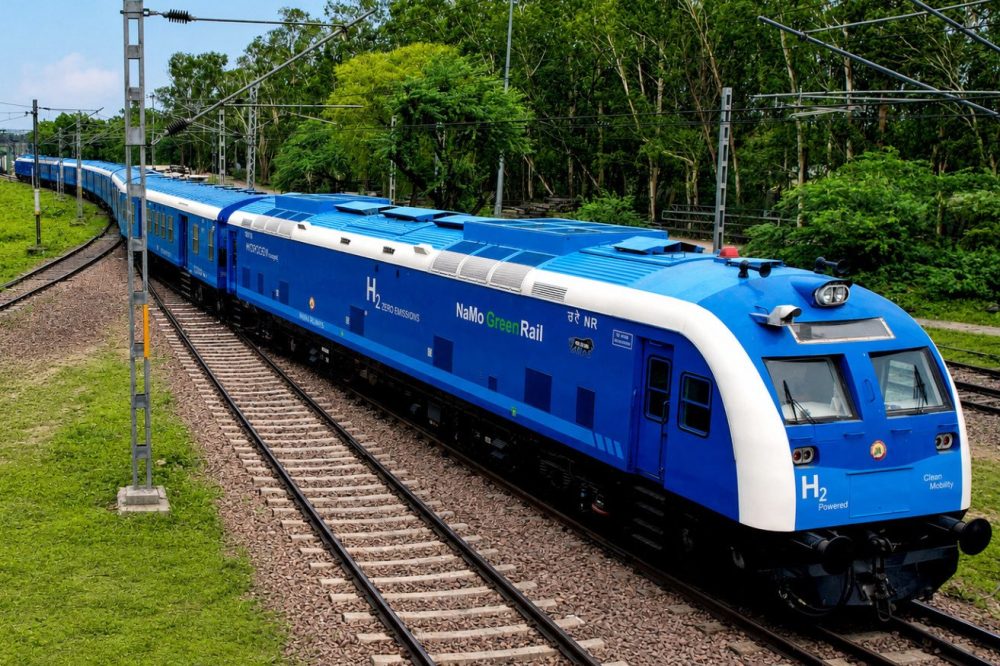

NEW DELHI (AP) — India has introduced its first domestically manufactured hydrogen-powered train, taking a significant step toward greener transportation across one of the world’s largest rail systems.
The train consists of two hydrogen-powered driving cars along with eight passenger coaches and will serve routes in the northern state of Haryana. Railway officials say it can reach speeds of up to 75 kilometers per hour — about 47 miles per hour — and has a passenger capacity of roughly 2,600 people.
Prime Minister Narendra Modi officially unveiled the train, named the “NaMo Green Rail,” at Jind railway station in Haryana on Friday. The name “NaMo” is a widely recognized shorthand combining Modi’s first and last names.
“This is a very significant day in the direction of self-reliant India and sustainable development,” Modi wrote in a post on X.
The project also includes hydrogen storage and refueling infrastructure, allowing officials to evaluate how the technology could function within India’s broader rail network.
Hydrogen fuel cells work by combining hydrogen and oxygen to produce electricity, with water vapor being the only direct byproduct of the process. A number of other nations have already deployed hydrogen-powered trains as a cleaner substitute for diesel on rail lines that have not been fully electrified.
Friday’s launch connects to India’s larger environmental goals, including a national target of achieving net-zero carbon emissions by 2070. Indian Railways has been exploring hydrogen technology as a potential replacement for diesel fuel on select routes.