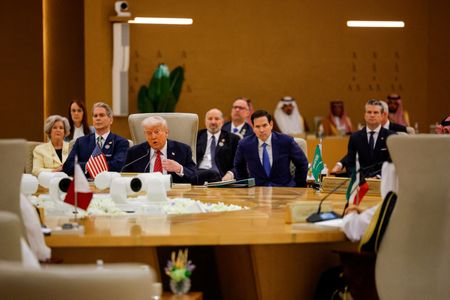

President Donald Trump has issued Iran a 48-hour deadline to completely reopen the Strait of Hormuz, threatening to destroy the country’s electrical infrastructure if Tehran fails to comply with his demands.
The ultimatum comes as Iranian missile attacks successfully penetrated Israeli air defenses late Saturday, striking the southern cities of Dimona and Arad near Israel’s primary nuclear research facility, marking a significant escalation in the month-long conflict.
From his Florida residence over the weekend, Trump delivered his warning through social media, declaring the United States would target Iran’s electrical grid starting with the largest facilities first. He stated America would “obliterate” power plants if Iran doesn’t fully open the crucial waterway within his specified timeframe.
Iranian officials responded swiftly on Sunday, with military representatives warning through state media that any assault on the nation’s energy infrastructure would trigger retaliatory strikes against American and Israeli energy facilities throughout the region.
The Strait of Hormuz serves as a vital corridor linking the Persian Gulf to international waters and represents a crucial route for global oil transportation. Commercial shipping has virtually ceased through the passage due to ongoing attacks and continued threats, forcing major oil-producing nations to reduce output as their petroleum products cannot reach markets.
Israeli defense forces acknowledged their inability to stop the missiles that impacted Dimona and Arad, both located in the sparsely inhabited Negev desert region. This represents the first successful Iranian missile penetration of Israel’s air defense network in the vicinity of the nuclear installation.
“If the Israeli regime is unable to intercept missiles in the heavily protected Dimona area, it is, operationally, a sign of entering a new phase of the battle,” Iran’s Parliament Speaker Mohammad Bagher Ghalibaf said on X before word of the Arad strike spread.
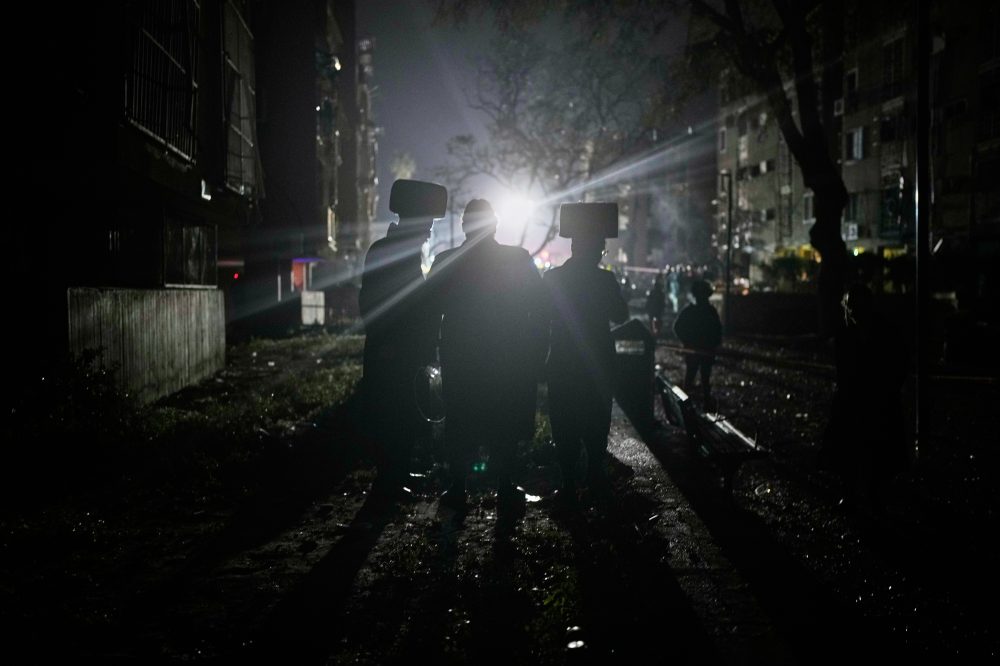
Emergency responders reported extensive destruction in Arad, where a direct missile impact damaged at least ten residential buildings, with three structures severely compromised and at risk of collapse. Medical facilities treated 64 individuals injured in the attacks.
Dimona sits approximately 20 kilometers west of the nuclear research facility, while Arad is located roughly 35 kilometers to the north of the installation.
While Israel is widely believed to possess nuclear weapons as the sole Middle Eastern nation with such capabilities, Israeli leadership maintains its policy of neither confirming nor denying their nuclear arsenal. The United Nations nuclear monitoring agency confirmed via social media that no damage reports or abnormal radiation readings had been received from the Israeli facility.
The Iranian missile strikes followed an earlier attack on Tehran’s primary uranium enrichment complex at Natanz, located approximately 220 kilometers southeast of Iran’s capital.
Israeli officials denied involvement in the Natanz strike earlier Saturday. Iran’s judicial news service, Mizan, reported no radiation leakage occurred at the facility.
The International Atomic Energy Agency has indicated that most of Iran’s estimated 440 kilograms of enriched uranium is stored at its Isfahan facility, buried beneath debris. The agency announced through social media it was investigating the Natanz incident.
Pentagon officials refused to provide comments regarding the Natanz attack, which has been targeted during the conflict’s opening week and in a previous 12-day war last June. Russian Foreign Ministry spokesperson Maria Zakharova characterized such strikes as creating “real risk of catastrophic disaster throughout the Middle East.”
American and Israeli officials have presented varying justifications for the ongoing conflict, ranging from encouraging domestic Iranian revolt against current leadership to dismantling the country’s nuclear and missile capabilities and ending support for regional militant groups. No evidence of internal uprising has emerged, while internet restrictions limit information flow from Iran.
The conflict’s impact extends well beyond Middle Eastern borders, driving up global food and energy costs.