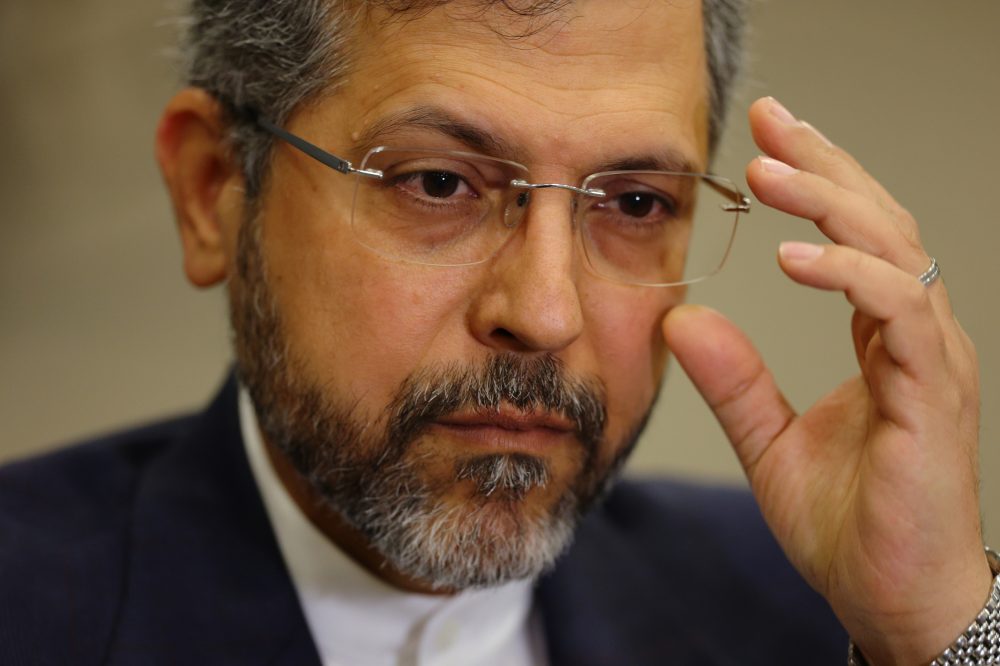

ANTALYA, Turkey (AP) — A high-ranking Iranian diplomat announced Saturday that Tehran remains unprepared for direct negotiations with American officials, blaming Washington’s unwillingness to drop what he characterized as “excessive” positions on critical matters.
Speaking with The Associated Press during a diplomatic conference in Turkey, Iranian Deputy Foreign Minister Saeed Khatibzadeh firmly dismissed President Donald Trump’s assertions about transferring enriched uranium, stating his nation would never surrender such materials to America.
“I can tell you that no enriched material is going to be shipped to United States,” Khatibzadeh stated. “This is non-starter and I can assure you that while we are ready to address any concerns that we do have, we’re not going to accept things that are non-starters.”
Trump declared Friday that America would enter Iran to “get all the nuclear dust,” referencing approximately 970 pounds (440 kilograms) of enriched uranium reportedly stored beneath nuclear facilities severely damaged during U.S. military operations last year.
While acknowledging ongoing message exchanges between both nations, Khatibzadeh criticized the United States for maintaining positions that Iran considers unreasonable.
“We are still not there yet to move on to an actual meeting because there are issues that the Americans have not yet abandoned their maximalist position,” Khatibzadeh explained. He noted Iran wants to complete a “framework agreement” before proceeding with face-to-face discussions.
The Iranian representative declined to detail specific negotiation points or identify outstanding disputes, but urged Washington to address Tehran’s primary concerns, particularly economic sanctions targeting Iran.
“The other sides also should understand and address our main concerns, which are illegal unilateral sanctions that Americans have imposed on Iranians and this economic terrorism which has targeted Iranian people to suffocate them and make them to revolt against the political structure inside Iran,” Khatibzadeh said.
Regarding potential Iranian responses to renewed Israeli attacks on Lebanon despite the ceasefire, Khatibzadeh declared: “Iran has no option, just to stop aggressors once and forever.”
Trump announced that Israel faces U.S. restrictions on additional Lebanese strikes, saying “enough is enough” regarding the Israel-Hezbollah conflict.
The State Department clarified these limitations apply solely to offensive operations, not defensive actions.
The Iranian official reaffirmed Tehran’s stance that its actions were defensive responses to unprovoked aggression during ongoing negotiations.
He also restated Iran’s demand that any ceasefire include Lebanon, where Israel has been battling the Iran-supported militant organization Hezbollah.
Following last week’s temporary U.S.-Iran truce, Pakistan and Iran claimed it covered Lebanon, but Israel and subsequently the U.S. rejected this interpretation. Israel then conducted multiple airstrikes on central Beirut, prompting Iran to announce another closure of the Strait of Hormuz. After Friday’s Lebanese truce implementation, Iran declared the strait reopened.
“Iran negotiated with good faith, accepted a ceasefire and told everybody that this ceasefire should include all countries, including Lebanon,” Khatibzadeh said. “Then the other side said that, it is not committed to this and then started atrocities.”
He indicated that negotiations with the U.S. would establish a “new protocol” for the Strait of Hormuz, ensuring it would “remain open and safe for all civilian passage.”
Trump has indicated the U.S. blockade of the Strait of Hormuz will continue and military action will resume without an Iranian agreement.