
Eighteen months into President Donald Trump’s second term, the American economy tells a complicated story — one of unexpected durability in the face of major disruptions, but also of stalled progress on the promises that defined his 2024 campaign.
Trump came into office pledging to slash prices, revive factory employment, and improve the financial lives of middle-class Americans. Those goals have yet to be achieved. Meanwhile, the administration has pushed through a sweeping immigration crackdown, imposed steep tariffs on imported goods, and found itself navigating an unanticipated war with Iran that has sent oil prices climbing and rattled global supply chains. Midterm elections are now fewer than four months away.
JOBS
The Bureau of Labor Statistics tracks employment through its household survey, which serves as the broadest measure of job activity in the country. A shift in population data in early 2026 makes year-over-year comparisons tricky, but the agency has produced an experimental data series going back to April 2020 that offers a more consistent look.
That data reveals a drop in both the number of people working and those actively seeking employment since Trump returned to the White House — a predictable outcome given the administration’s aggressive push to limit immigration and remove undocumented individuals from the country. Combined with an aging native-born workforce, there are simply fewer workers available to fill open positions.
WHO’S HIRING
Trump’s vision of a manufacturing renaissance has not materialized in the jobs data. There has been a significant surge in investment — particularly in artificial intelligence data centers — but the employment effects of that buildout remain unclear. Construction work tied to AI infrastructure has increased, yet payroll figures show fewer manufacturing jobs now than when former President Joe Biden left office in January 2025.
Some of the administration’s priorities do show up in the numbers, including a reduction in the federal government workforce. But reshaping the demands of an economy serving 342 million people is no simple task. Americans still flock to restaurants and bars, and an aging population continues to drive growing demand for healthcare services. Hiring patterns reflect those realities.
PRICES
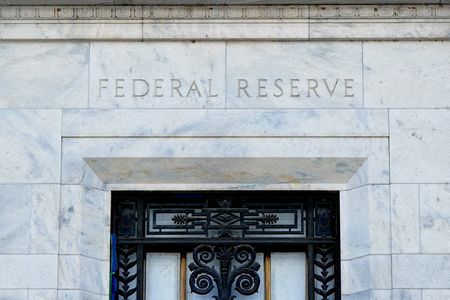
Inflation was a centerpiece of Trump’s 2024 campaign, with voters still frustrated by the price increases that followed the COVID-19 pandemic even as the Federal Reserve’s interest rate hikes had begun to ease those pressures.
But Trump’s pledge to actually lower prices was never grounded in historical reality — broad price declines in the U.S. have only occurred during severe economic downturns. At best, slowing inflation was achievable, and even that progress has been modest. Key price indexes show momentum stalling, with inflation still sitting above the Fed’s 2% target. Policymakers are now worried about the risk of prices moving even higher.
Several forces are pushing costs up: import tariffs have contributed to price increases, oil has surged to roughly $100 a barrel — about 50% higher than before the Middle East war began in late February — and the explosive growth of AI infrastructure is adding further demand-driven pressure.
When price increases are large, widespread, and keep cycling through different categories of goods and services, the result is broader inflation. Some Federal Reserve officials consider that outcome an immediate concern.
INCOMES
Consumer spending has held up despite the various economic shocks of the Trump era, even as income gains have been uneven — with higher earners faring much better than middle- and lower-income households. But questions are mounting about how long that spending strength can last.
The broadest gauge of household purchasing power — inflation-adjusted disposable personal income — has flattened and recently begun to dip. This measure captures what people have left after taxes, including wages and government payments like Social Security, to cover housing, food, and everyday expenses.
AFFORDABILITY
On housing, Trump has sent mixed signals — at times promising to make homeownership more attainable, and at other times dismissing the issue. He recently called newly passed congressional legislation aimed at improving home affordability “a big yawn” and declined to sign it.
Housing affordability is a deeply entrenched problem. After years of rock-bottom interest rates, the pandemic pushed home prices sharply higher. Then the Federal Reserve’s rate hikes to fight inflation drove mortgage rates to new peaks. Those rates remain elevated today, as do home insurance premiums tied to higher property values.
The federal government’s ability to meaningfully increase housing supply is limited. Tax credits and similar tools can help at the margins, but land-use and zoning decisions remain largely in the hands of local governments. The end result: homeownership continues to consume an unusually large portion of household income.
THE STOCK MARKET
Trump has long pointed to stock market performance as a measure of his success, and major indexes have recently hit record highs. But stocks have historically trended upward regardless of who occupies the Oval Office, and most modern presidents have seen record prices during their administrations.
Measured against predecessors going back to President Ronald Reagan, Trump’s second term ranks squarely in the middle. The S&P 500 has risen approximately 25% since January 2025, compared to a median gain of about 24% over the first 18 months of presidential terms dating back to 1981. That still compares favorably to the overall compound annual growth rate of 9.5% for stocks over that period.
AI AND THE BOND MARKET
Artificial intelligence has been the dominant force behind market gains since Trump’s return to power. AI is currently the single largest contributor to the business investment boom that has been propping up overall economic growth — and its influence extends well beyond stock prices.
Corporate bond issuance reached $1.52 trillion through the end of June, a record pace that surpasses even the post-pandemic borrowing surge of 2020. A significant portion of that debt has been issued to fund AI expansion. Strong bond demand, tight spreads, and healthy corporate balance sheets all point to an economy that, for now, remains on solid footing — even as many of the promises that defined Trump’s economic agenda remain unfulfilled.