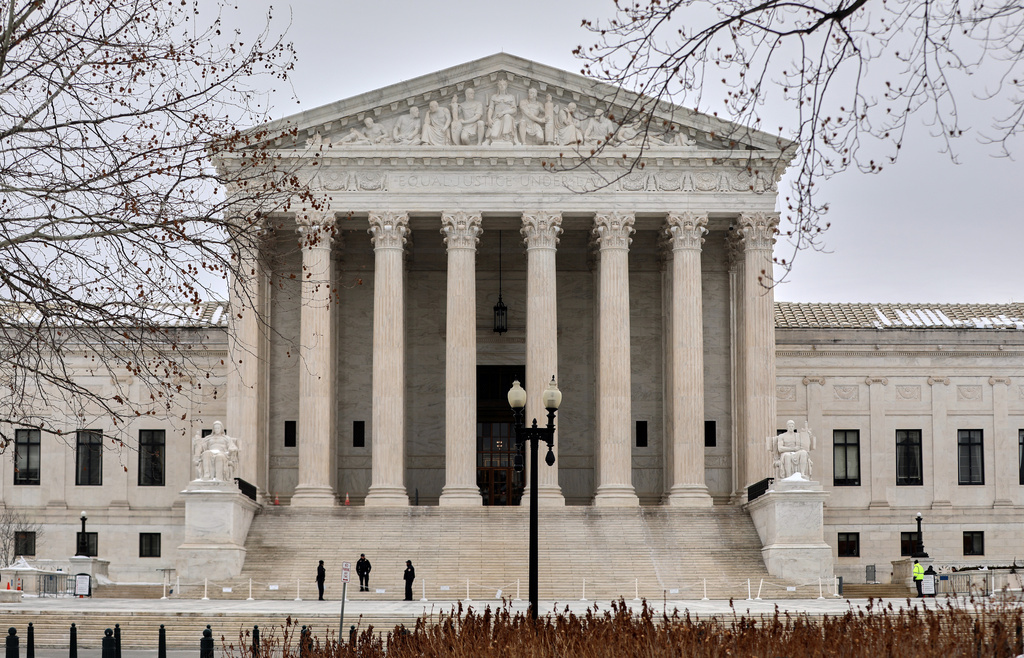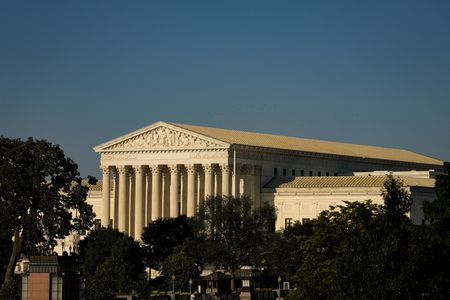

The Trump administration turned to the U.S. Supreme Court on Monday, asking the justices to allow a presidential executive order restricting mail-in voting to take effect nationwide before the November midterm elections, which will determine which party controls Congress.
The Justice Department filed a request with the high court to pause a lower court ruling that has been blocking enforcement of the order in 23 states — most of them governed by Democrats — as well as Washington D.C. Those states had filed legal challenges arguing the order is unconstitutional.
U.S. District Judge Indira Talwani had previously sided with the challenging states, rejecting the administration’s claim that the states had no legal grounds to sue. In June, Judge Talwani ruled that the president does not have the power to dictate how states manage federal elections, pointing to the U.S. Constitution’s designation of states as the authority on voter eligibility requirements.
The executive order, which President Trump signed in March, is one piece of his broader push to reshape how elections are conducted in the United States. Trump, who has repeatedly made unsubstantiated claims about widespread fraud in American elections — including his 2020 defeat to Democrat Joe Biden — has also been pushing the Republican-controlled Congress to pass a sweeping set of voting restrictions known as the SAVE America Act.
Trump has stated his intention to eliminate mail-in voting across the country before the midterms and has long questioned the security of such ballots, even though documented cases of voter fraud remain rare.
Analysts note that limiting mail-in ballots would likely give Republicans a political advantage, since Democratic voters have historically cast mail-in ballots at higher rates than Republican voters.
The executive order directed the Department of Homeland Security to put together lists of eligible voters in each state and share them with state officials. It also instructed the Justice Department to make it a priority to investigate and prosecute state and local election officials who send ballots to individuals considered ineligible to vote in federal elections.
Additionally, the order required the U.S. Postal Service to deliver ballots only to voters who appear on each state’s approved mail-in ballot list. The Postal Service has recently begun taking steps to comply with that directive.
The states challenging the order — including California and Massachusetts — brought their lawsuit in federal court in Boston. A coalition of 12 Republican state attorneys general stepped in to defend the order in court.
Judge Talwani determined that the states’ concerns were not premature and that they had sufficient legal standing to challenge the directive, citing potential disruptions to election administration, financial compliance costs, and a credible risk of criminal prosecution. She also noted that federal agencies are not equipped to produce accurate lists of eligible citizens for each individual state.
The Justice Department had previously asked the Boston-based 1st U.S. Circuit Court of Appeals to suspend Talwani’s ruling, but that court turned down the request on Saturday, prompting the administration to escalate the matter to the Supreme Court.
Earlier this month, the Supreme Court separately declined to take up a Republican-backed challenge to state laws that allow mail-in ballots arriving after Election Day to still be counted.