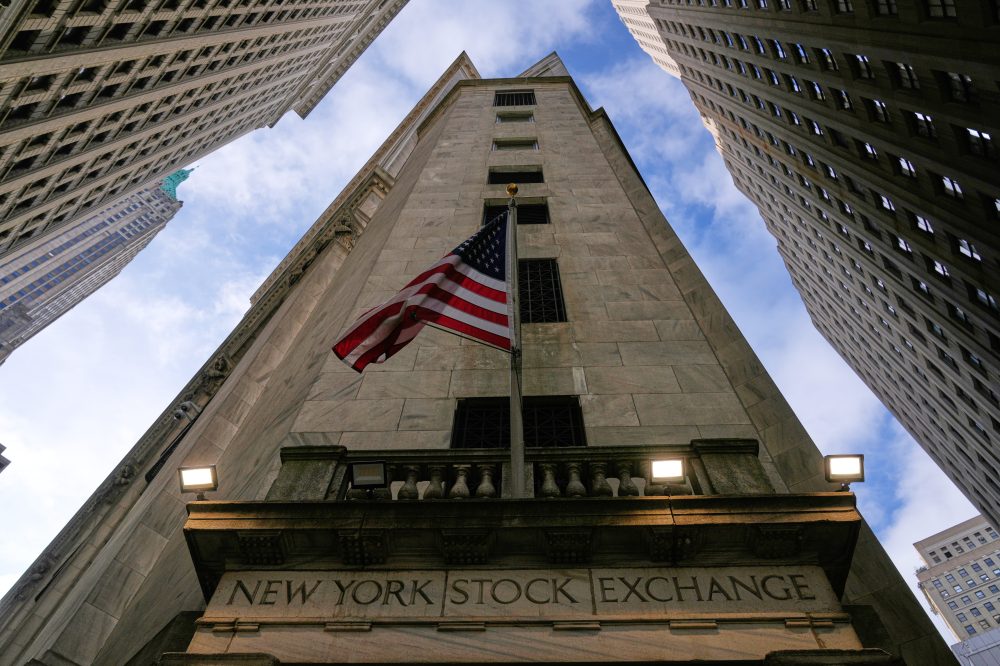

Japanese equities posted strong gains Wednesday morning while the majority of Asian financial markets remained shuttered for Lunar New Year festivities, following a subdued session on Wall Street.
American futures trading showed little movement, while petroleum prices climbed modestly higher.
Tokyo’s Nikkei 225 index surged 1.2% to reach 57,249.43 by the midday break as legislators prepared to confirm Sanae Takaichi for another term as prime minister after her ruling Liberal Democrats secured an overwhelming win in the February 8th election.
Tech firms powered the rally, with semiconductor manufacturer Tokyo Electron jumping 3.5%.
Bucking the trend, technology and energy conglomerate SoftBank Group dropped 2%, building on Tuesday’s decline of more than 5%. The slide came after President Donald Trump’s administration revealed that SoftBank’s SB Energy unit would take part in a $33 billion natural gas project near Portsmouth, Ohio, described as the world’s largest such facility.
This deal forms part of Japan’s pledge to invest $550 billion in American projects under a trade agreement that imposed 15% higher tariffs on Japanese goods entering the United States.
Down under, Australia’s S&P/ASX 200 climbed 0.4% to 8,993.20, while India’s Sensex inched up 0.1%. Bangkok’s SET index advanced 0.5%.
New Zealand’s S&P/NZX 50 bucked the regional trend, falling 0.7%.
American markets showed mixed results Tuesday, with indexes alternating between positive and negative territory.
The S&P 500 managed a 0.1% gain to close at 6,843.22, while the Dow Jones Industrial Average also added 0.1% to finish at 49,553.19. The Nasdaq composite similarly rose 0.1% to 22,578.38.
Entertainment company Paramount Skydance helped boost the market with a 4.9% surge after Warner Bros. Discovery announced it would give Paramount an opportunity to submit its “best and final” offer to acquire the media giant. Paramount is attempting to outbid streaming service Netflix.
Warner Bros. Discovery shares climbed 2.7%, while Netflix gained 0.2%.
Among the day’s losers, food giant General Mills plummeted 7% following warnings that consumers are growing increasingly cautious. The company responsible for Cheerios, Nature Valley and Pillsbury products reduced its profit outlook for 2026, indicating steeper declines than previously anticipated.
Recent consumer sentiment surveys have revealed weakening confidence among American families, who continue grappling with persistent inflation, a job market recovering from sluggish growth, and anxiety over potential tariff impacts.
Major technology stocks weighed on Tuesday’s session, including a 1.2% decline for Google parent Alphabet.
Trading remained hesitant, with chip giant Nvidia oscillating between being among the market’s biggest drags and strongest performers.
Last week witnessed sharp selloffs in software and related companies as investors identified potential casualties if artificial intelligence transforms entire industries.
Markets have experienced a dramatic shift from last year’s AI-fueled rally that propelled stock indexes to successive records. Companies across sectors from software to legal services and transportation now face investor skepticism amid fears that AI-powered rivals could capture their market share.
Even firms making substantial AI investments face mounting scrutiny.
International fund managers express growing concern that corporations are allocating excessive resources to AI infrastructure and semiconductor technology. These companies must generate substantial returns and productivity improvements to justify their spending. Alphabet, for instance, indicated its AI and related investments could reach approximately $180 billion this year, double the previous amount.
“So we have a market that simultaneously believes AI will destroy everything and, at times, deliver nothing. That tension is why single stocks are being whipsawed like penny names even though we are talking about trillion-dollar balance sheets,” commented Stephen Innes of SPI Asset Management.
A Bank of America survey found record numbers of global fund managers believe companies are “overinvesting,” potentially signaling future cutbacks in semiconductor purchases from Nvidia and competitors.
In early Wednesday commodity trading, U.S. benchmark crude oil rose 20 cents to $62.53 per barrel. International Brent crude increased 24 cents to $67.66 per barrel.
Currency markets saw the dollar strengthen to 153.54 Japanese yen from 153.29 yen. The euro weakened to $1.1845 from $1.1854.
Precious metals gained ground with gold prices rising 0.9% and silver jumping 2.2%.
Bitcoin declined 1.2% to approximately $67,700.