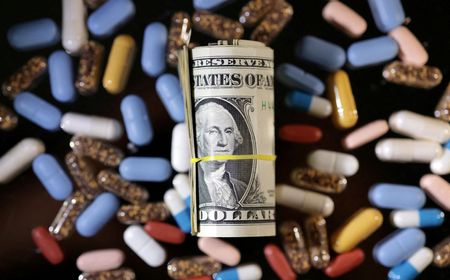

Launch prices for newly approved prescription drugs in the United States dropped in 2025 compared to the year before — but don’t let that fool you. The median annual cost still came in at $216,000, driven largely by treatments for rare diseases, according to a new analysis.
That figure marks a notable decline from 2024, when the median annual list price for a new drug topped $370,000 — itself a jump from $300,000 in 2023 and $222,000 in 2022.
Drug pricing specialists say the drop has less to do with any meaningful shift in how companies set prices or new government policies, and more to do with the types of drugs that received approval. The Food and Drug Administration greenlit five cell and gene therapies in 2025, compared to seven in each of the two prior years. Gene therapies, which are typically administered just once, can carry price tags in the millions of dollars.
The pharmaceutical industry trade group Pharmaceutical Research and Manufacturers of America said via email that many new medications target serious, complex conditions with few or no existing treatment options, and that comparing those prices to other drug types is “misleading.”
More than 67% of FDA approvals in 2025 involved small-molecule drugs — things like pills made from chemical compounds — rather than the more expensive biologics, which are derived from living cells. That share was up from 62% in 2024 and 57% in 2023.
Richard Frank, director at the Brookings Institution’s Center on Health Policy, noted that new biologics are often the first of their kind and face no competition, which gives drugmakers the freedom to set high prices.
The average launch price across all drugs approved in 2025 was $416,000. That figure reflects a wide range — from lower-cost options like LENZ Therapeutics’ Vizz eye drops for blurry vision at $1,050 and LIB Therapeutics’ cholesterol drug Lerochol at $5,400, all the way up to Mighty Therapeutics’ Forzinity, a treatment for the rare genetic condition Barth syndrome, priced at nearly $800,000 per year.
Politics Enters the Picture
Dr. Benjamin Rome, an assistant professor at Harvard Medical School who studies drug pricing, urged caution when drawing conclusions. “It is hard to make a lot of assessments about trends based on a single year,” he said, adding that “2025 was an odd year.”
Rome pointed to disruptions at the FDA stemming from the Trump administration’s reorganization efforts, including staff reductions and leadership changes. The agency rejected several gene therapies, which sparked pushback from patient advocates and political controversy. The FDA later indicated it would take a more flexible stance.
Drug companies also faced pressure from President Donald Trump, who has sought to highlight his administration’s efforts on prescription drug costs through the TrumpRx platform — a direct-to-consumer sales initiative — and through agreements with major pharmaceutical companies aimed at aligning U.S. prices with those in other developed countries.
Frank of the Brookings Institution said those deals are unlikely to outlast the current administration. Rome added that without legislation backing them up, the agreements won’t meaningfully change how companies price their products.
Geoffrey Joyce, director at the University of Southern California’s Schaeffer Center for Health Policy and Economics, was blunt in his assessment. “There’s been this broad trend to say look what I’m doing to lower drug prices,” he said, but a lot of it is “performative.”
Cancer and Rare Diseases Dominate Approvals
The FDA approved 51 new drugs in 2025 — 46 through its main division and five cell and gene therapies. That compares to 57 approvals in 2024 and 55 in 2023. Those counts don’t include imaging agents, blood testing reagents, or vaccines.
The analysis, which examined 42 drug prices compiled by 3 Axis Advisors, left out drugs used on an as-needed basis like antibiotics, as well as products not yet commercially available.
Cancer treatments made up the largest share of approvals, accounting for roughly one-third of all drugs the FDA cleared in 2025.
As has been the case in recent years, more than half of the approvals were for so-called “orphan” drugs — treatments for conditions affecting fewer than 200,000 Americans. Drugmakers receive incentives to develop therapies for rare diseases, including extended market exclusivity, and frequently charge premium prices for those niche products.
Joyce called the orphan drug incentive program “wise public policy” but acknowledged that companies have “gamed” the system. He explained that a drug effective across a broad range of conditions might seek approval specifically for a low-prevalence disease in order to access those benefits and tax advantages. “The logic is to launch (at a price) as high as you think you can get away with,” he said.
The pharmaceutical industry has argued that new medications can ultimately save money by reducing emergency room visits and hospitalizations.
The analysis focused solely on list prices and did not factor in the confidential discounts and rebates that insurers may negotiate with manufacturers.
Rome summed it up plainly: “You’re still paying hundreds of thousands of dollars for most new drugs… irrespective of whether they offer a huge benefit over existing drugs or are sort of novel products that don’t offer much benefit.”