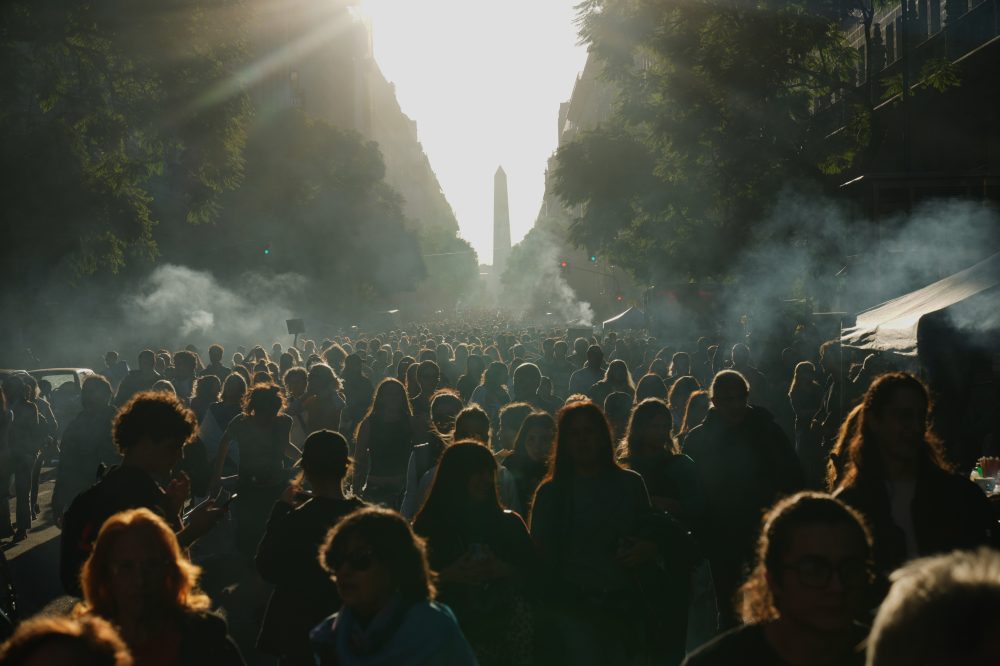

BUENOS AIRES, Argentina — Massive demonstrations swept through Argentina’s major cities Tuesday as citizens rallied against President Javier Milei’s severe budget reductions targeting the nation’s public university system, a beloved institution that serves as a source of national pride in the economically troubled South American country.
Large crowds gathered in central Buenos Aires and marched toward government buildings to condemn the financial shortfalls threatening the foundation of Argentina’s higher education network. The country’s public universities have operated without tuition since 1949 and serve as a pillar of its educated middle class, having graduated five Nobel Prize winners over the decades.
Lawmakers approved legislation last year designed to cover universities’ operating expenses and increase faculty pay to match soaring inflation rates. However, Milei’s administration has refused to enact the measure while mounting a legal challenge against it in court.
Similar to his supporter and ally former U.S. President Donald Trump, Milei frequently condemns university environments as centers of “woke” ideology. The libertarian leader has dramatically reduced public education spending as part of his broader strategy to drastically cut government expenditures, marking a stark departure from what he calls decades of irresponsible financial management that bred corruption under previous left-wing administrations.
Tuesday’s demonstrations drew participants from diverse age groups and political backgrounds as Milei confronts dropping public support amid economic decline, reduced wages, and rising joblessness. Recent corruption allegations have also damaged his standing, particularly an ongoing probe into excessive spending by close associate and Cabinet chief Manuel Adorni that seems incompatible with his government salary and reported wealth.
“How much does Adorni cost us?” read one of several student protest signs alluding to the alleged misuse of public funds.
Alejandro Álvarez, Milei’s undersecretary for university policies, dismissed Tuesday’s demonstration as “completely political” and claimed the administration had provided universities with compensation for increased operational expenses — minimal adjustments that labor groups have denounced as inadequate.
In their effort to overturn the university funding law, Milei’s team contends the legislation lacks details on how the government will provide the required financial increases during a period of strict budget constraints. The dispute is anticipated to reach the Supreme Court, with student demonstrators Tuesday urging the nation’s top judicial body to “listen to the outcry throughout the country’s public squares.”
Faculty salaries at universities have dropped approximately 33% in real terms since Milei assumed office in late 2023, accounting for persistent inflation, according to the primary teachers’ union.
Ricardo Gelpi, who leads the renowned University of Buenos Aires, reported that declining purchasing power has prompted at least 580 research faculty members in engineering and science fields to abandon the public system for private institutions or higher-paying positions elsewhere.
“It’s very clear this government is determined to defund public education,” said Sol Muñíz, 24, a law student at the University of Buenos Aires at the march. “University is a source of pride for us. It is the best thing we have.”