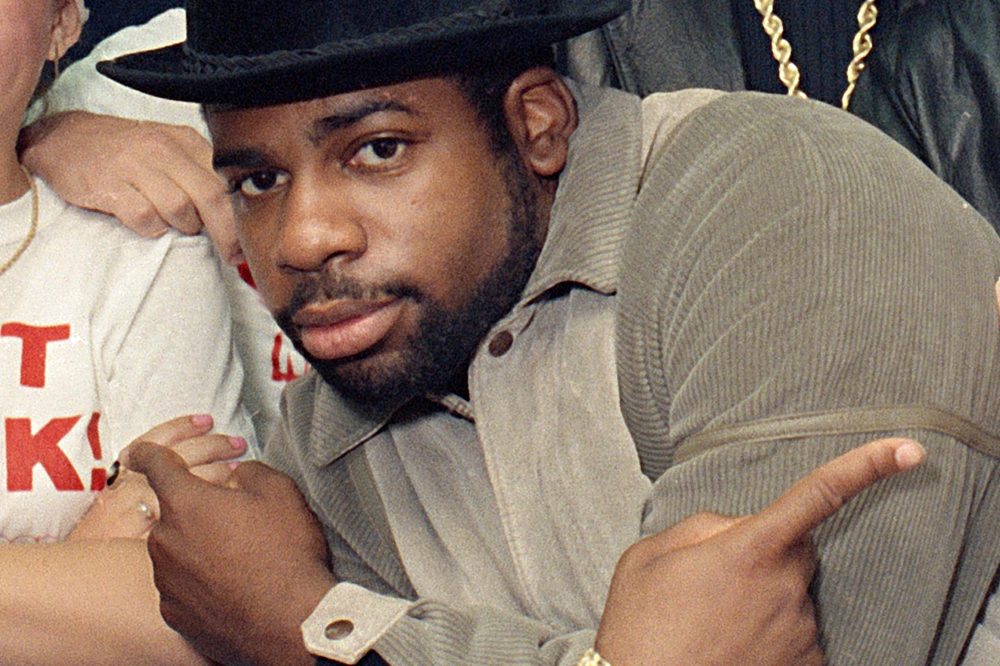

NEW YORK — More than two decades after the shocking murder of Run-DMC’s DJ Jam Master Jay, another piece of the puzzle fell into place Monday when a third suspect confessed his involvement in the legendary rapper’s death.
Jay Bryant, age 52, entered a guilty plea on federal murder charges, acknowledging before a judge that he assisted others in accessing the building where they would later ambush Jason Mizell, the iconic turntablist, inside his Queens recording studio.
“I knew a gun was going to be used to shoot Jason Mizell,” Bryant stated to the federal magistrate. “I knew that what I was doing was wrong and a crime.”
Bryant’s confession provides some answers while simultaneously complicating an already tangled investigation that has spanned nearly 25 years.
The defendant did not identify his co-conspirators during his court appearance. However, a 2024 jury found two additional suspects guilty: Karl Jordan Jr. and Ronald Washington. A judge later overturned Jordan’s conviction, while Washington continues fighting his own.
Mizell operated the turntables for Run-DMC, the groundbreaking hip-hop group he created alongside childhood friends Darryl “DMC” McDaniels and Joseph Simmons, who performed as DJ Run and Rev. Run.
The trio revolutionized music during the 1980s with chart-toppers including “It’s Tricky,” “My Adidas,” and their collaboration with Aerosmith on “Walk This Way,” successfully bridging rap music from urban communities to mainstream audiences. Run-DMC achieved multiple firsts: the initial rap act to earn gold and platinum certifications, grace Rolling Stone’s cover, and receive MTV airplay. The Rock & Roll Hall of Fame honored them with induction in 2009. Mizell additionally guided emerging hip-hop talent, notably mentoring a young 50 Cent.
The 37-year-old musician was fatally shot in his studio located in the same Queens community where he was raised. His October 2002 murder came after the late 1990s deaths of fellow hip-hop icons Tupac Shakur and the Notorious B.I.G. Law enforcement faced significant challenges solving all three homicides for many years.
Authorities apprehended Jordan and Washington in 2020 — Mizell’s godson and longtime friend, respectively. Federal prosecutors alleged both men harbored resentment over being excluded from profits in a botched cocaine transaction that Mizell had attempted to arrange. Despite Run-DMC’s well-known anti-drug stance, prosecutors and courtroom testimony revealed the DJ had become involved in cocaine trafficking during his final years to manage expenses and continue supporting friends as music revenue declined.
Trial evidence and prosecutor statements indicated Jordan fired the fatal shots while Washington prevented escape by blocking the studio entrance and forcing one of Mizell’s employees to lie down. Both defendants maintained their innocence. Jordan’s defense team claimed he was at his girlfriend’s residence during the shooting, while Washington’s attorneys argued he had no motive to harm the famous friend who provided him financial assistance.
Almost three years following their arrests, prosecutors unexpectedly added Bryant to their theory of the crime.
Investigators discovered Bryant’s DNA on headwear recovered from the studio crime scene and obtained evidence of him entering the building, leading prosecutors to include him in the murder indictment. He was already incarcerated on separate federal narcotics and firearms violations, to which he has subsequently admitted guilt.
Trial testimony revealed Bryant shared mutual acquaintances with Jordan and Washington. However, unlike the other two defendants, Bryant maintained minimal or no personal relationship with Mizell.
Bryant’s relative has claimed his nephew confessed to shooting Mizell after the artist attempted to reach for a weapon. No other witnesses, however, testified to Bryant actually entering the recording studio, and former prosecutor Artie McConnell argued in 2024 that Bryant was “involved, but he’s not the killer.”
Prosecutors instead maintained that Bryant was recruited to infiltrate the studio building and unlock a rear fire exit, enabling Washington and Jordan to enter without using the intercom system that would have warned Mizell of their arrival.
Although neither Jordan’s nor Washington’s genetic material was found on the recovered cap, McConnell theorized that one defendant had inadvertently dropped it, with Bryant having handled it at an earlier time.