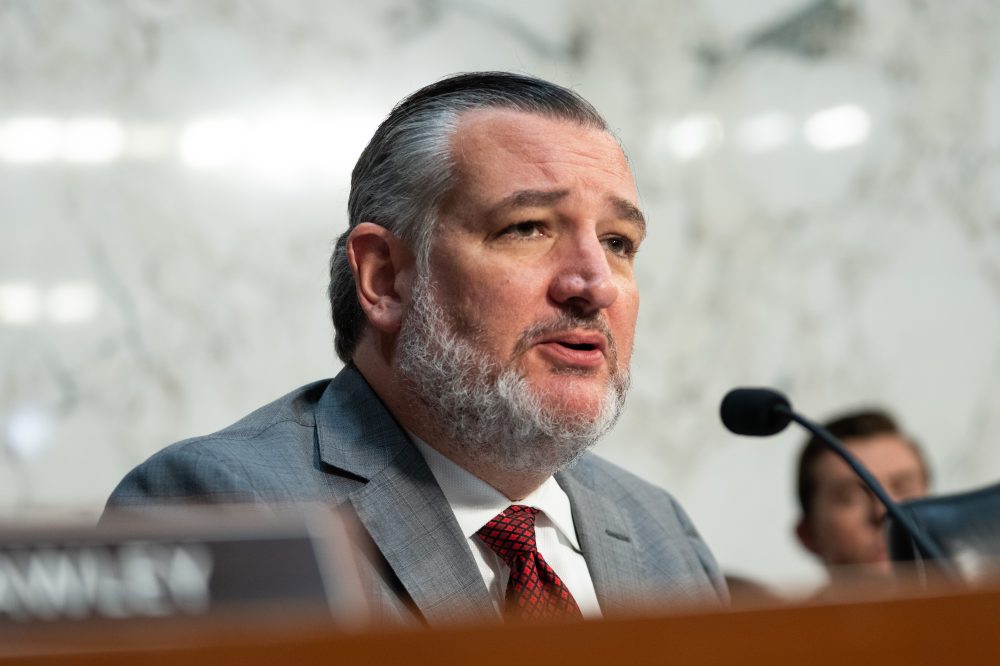

ARLINGTON, Va. — One of the lawmakers behind a major piece of federal college sports legislation says he believes the bill is on track to clear the Senate.
“We probably have 60 votes,” said Sen. Eric Schmitt, R-Mo., speaking Friday at the Associated Press Sports Editors meeting.
Schmitt described the coming two weeks as a pivotal stretch for the Protect College Sports Act, warning that failure to pass the legislation could have serious long-term consequences for college athletics.
“The trajectory of this in three years will be even further unrecognizable,” Schmitt said, painting a picture of women’s sports programs collapsing under financial pressure if no action is taken.
He noted that leaders from the Southeastern Conference and the Big Ten — both of which currently oppose the bill in its current form — have held talks with the bill’s lead sponsors, Sens. Ted Cruz, R-Texas, and Maria Cantwell, D-Wash., in hopes of negotiating changes that could win their backing.
The legislation, introduced by Cruz and Cantwell, would give the NCAA and athletic conferences limited protection from lawsuits and would override the inconsistent web of state laws that currently govern name, image and likeness payments to college athletes. It also includes a provision allowing conferences to combine their media rights deals — a move supporters argue could bring in billions of additional dollars, though the SEC and Big Ten have pushed back on that idea.
College sports has been grappling with how to fairly compensate athletes for their name, image and likeness ever since a federal court approved such payments last summer.
Last month, SEC commissioner Greg Sankey sent a letter to university presidents raising concerns that the bill could create more problems than it resolves. Among his objections, Sankey argued that a section allowing athletes to file civil lawsuits in certain situations should be rewritten, saying it could actually increase legal battles rather than cut them down.
Even if the Senate passes the bill, it would still need to survive the closely divided House, where a separate measure — the SCORE Act — drew criticism from both parties and never made it to a floor vote.