
Andrew and Tristan Tate say they plan to fight any attempt to send them from the United States to the United Kingdom — but legal experts warn that winning such a battle is a steep uphill climb.
Under a treaty between the two nations, the U.S. can honor a U.K. extradition request as long as the alleged crimes would also be considered illegal on American soil. The Tate brothers face accusations of rape, assault, human trafficking, and other offenses allegedly committed in southeastern England between 2010 and 2017.
Jacques Semmelman, a New York-based attorney who specializes in extradition law, explained that defendants have very little leverage in these proceedings. “The government holds all the cards in an extradition proceeding because the rules of evidence allow the government to submit any evidence they wish,” he said. “It is very hard for the defense to defeat an extradition.”
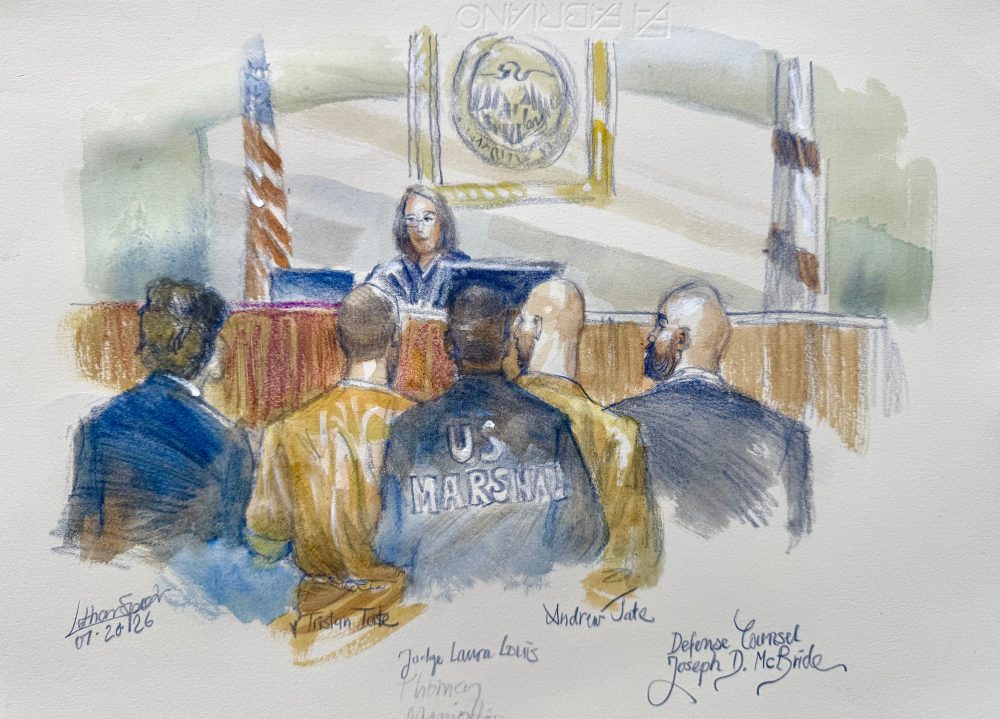
Defense attorney Joseph McBride pushed back on the charges, saying, “They’ve never done nothing wrong. They shouldn’t be extradited for crimes they did not commit.”
A federal judge would be tasked with reviewing arrest warrants, investigative documents, and other materials submitted by the U.S. government to determine whether there was a “reasonable basis” to bring charges against the brothers in the U.K. Semmelman, of the Katten Muchin Rosenman law firm, noted the hearing would look nothing like a traditional trial.
“A partial victory might mean a reduction in the charges to be extradited upon,” he said. “An across-the-board victory — no extradition — is very difficult to achieve.”
If a judge rules that the U.K. has cleared the legal threshold and all appeals are exhausted, the final decision would land with U.S. Secretary of State Marco Rubio — or whoever holds that office at the time. Semmelman noted that in most cases, the secretary of state signs off on extradition. “In most cases the secretary of state will sign the warrant of extradition,” he said.
Since 2020, the U.S. has agreed to extradite more than 20 individuals to the U.K. on various criminal charges, according to the U.K. Parliament. With potential appeals, the process could stretch on for several years.
Not every extradition request has succeeded, however. In 2015, a judge ruled there was not enough evidence to prove that an art dealer was aware that an 18th-century painting — taken from a Polish museum by the Nazis during World War II — was stolen when he inherited it.
In 2020, during President Donald Trump’s first term in office, the U.S. declined to hand over an American woman named Anne Sacoolas, who fatally struck a young man while driving in eastern England. Sacoolas, the wife of a U.S. intelligence officer, had already returned to the United States. She later acknowledged responsibility before a U.K. court via video link.