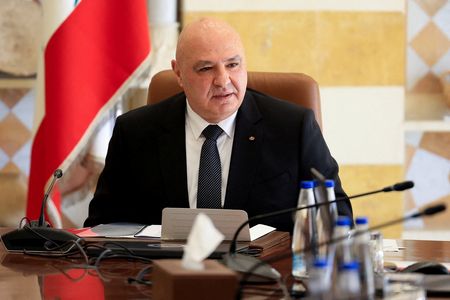

Lebanese President Joseph Aoun is traveling to the White House on Tuesday for a face-to-face meeting with U.S. President Donald Trump, bringing with him a detailed plan for disarming the Iran-backed militant group Hezbollah and pushing for Israeli forces to leave Lebanese territory.
Aoun, who previously led Lebanon’s U.S.-supported military before winning the presidency last year, is the first Lebanese head of state to set foot in the White House in close to two decades. It will be his first in-person encounter with Trump.
The timing of the visit is significant. Israeli soldiers are currently occupying a portion of southern Lebanon, hundreds of thousands of Lebanese citizens remain displaced in the aftermath of Israeli strikes, and Hezbollah has flatly refused both direct government talks with Israel and any attempt to take away its weapons.
Aoun arrived in Washington over the weekend and sat down with U.S. Secretary of State Marco Rubio on Sunday. He told Rubio that Israel should begin pulling its troops out of southern Lebanon in accordance with a U.S.-brokered agreement reached on June 26 between Lebanon and Israel. That deal calls for Hezbollah’s disarmament, a gradual Israeli troop pullout, and the eventual establishment of peaceful relations between the two countries.
According to a Lebanese official, Aoun believes Trump is the only leader with enough influence to compel Israel to withdraw. In addition to making that appeal, Aoun plans to hand Trump a written proposal outlining how Hezbollah’s extensive weapons stockpile could be dismantled.
Aoun, 62, took office just before Trump began his second term. Washington welcomed his election. As a Maronite Christian, Aoun fills the role designated for that community under Lebanon’s sectarian power-sharing arrangement, which also requires the prime minister to be a Sunni Muslim and the parliament speaker to be a Shi’ite Muslim. A career military officer, Aoun was wounded twice during his service and still carries shrapnel from one of those injuries.
His rise to the presidency reflected a significant shift in Lebanon’s political landscape, coming after a devastating Israeli military campaign against Hezbollah in 2024 and the fall of Hezbollah’s Syrian ally, President Bashar al-Assad — developments that considerably weakened the group’s grip on the country.
At his swearing-in, Aoun pledged to uphold